
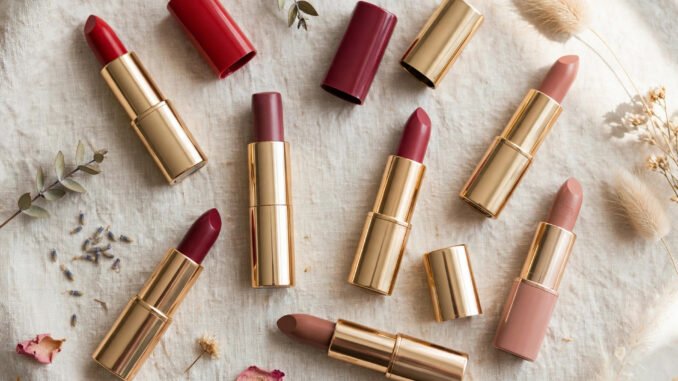
You’ve bought seventeen lipsticks. Three get worn. The rest sit in a drawer, each a slightly wrong shade of good intentions. Choosing lipstick shades for your skin tone doesn’t have to be expensive trial-and-error — the color theory behind it is straightforward, the tests are free, and the right shade genuinely transforms your face while the wrong one fights it. Is now a good time to start? Yes — because every lipstick you buy before understanding your undertone is a gamble, and the knowledge takes an afternoon. Here’s the complete guide.
Step 1: Find Your Undertone (The Foundation of Everything)
Your skin has a surface tone (fair, medium, deep — what foundation matches) and an undertone (the subtle hue beneath): warm (golden, yellow, peachy), cool (pink, red, blue), or neutral (a mix). Undertone never changes — not with tanning, not with seasons. And it’s the undertone, not the surface tone, that determines which lipstick shades harmonize with your face.
The vein test: look at the veins on your inner wrist in natural daylight. Greenish = warm; blue/purple = cool; in-between = neutral. (It’s the skin’s tint over the veins creating the color difference.)
The jewelry test: which looks better against your skin — gold or silver? Gold flattering = warm; silver flattering = cool; both = neutral.
The white-vs-cream test: hold pure white and cream/off-white fabric near your face. Stark white brightening you = cool; cream looking better = warm.
Two out of three agreeing is your answer. For a deeper dive into working with warm coloring specifically, colors that look best on warm skin tones extends the principle beyond lips to your whole wardrobe.
Step 2: Match Lipstick Families to Undertones
Warm undertones: reach for warm shades — orangey reds, coral, peachy nudes, warm browns, brick, terracotta. These echo the golden hues in your skin. Cool blue-based reds will clash, making skin look sallow.
Cool undertones: reach for cool shades — blue-based reds, berry, plum, mauve, pinky nudes, wine. These harmonize with pink/blue skin. Orangey corals will fight your coloring.
Neutral undertones: the lucky middle — most shades work. Lean warm or cool based on the look you want; neutrals can wear the full spectrum. When in doubt, true neutral reds and rosy nudes are foolproof.
Depth matters too: as a rough guide, fair skin shines with softer shades (sheers, soft berries, nude pinks) while deeper skin tones carry bold shades beautifully (deep plums, rich reds, vibrant corals) — though rules are made to be broken, and contrast preference is personal. The undertone rule is firm; the depth guidance is flexible.
The Nude Lipstick Problem (Solved)
“Nude” is the most returned lipstick category in existence, because nude isn’t a color — it’s a relationship between the lipstick and your skin. The rule: your perfect nude is 1–2 shades deeper than your natural lip color, in your undertone family. Swatch on your lips (not your hand — hand skin differs), and check in daylight.
Common failures: nude lighter than your lips (washes you out, the “concealer lips” effect — especially unflattering on deeper skin tones), nude in the wrong undertone (a cool pinky nude on warm skin looks ashy; a warm beige nude on cool skin looks muddy), and nude without liner (nudes erase the lip line — a matching lip liner restores definition). Get these three right and nude becomes the most-worn shade you own.
Red Lipstick: Finding Your Red
Everyone has a red — the trick is undertone matching. Warm skin: orangey, brick, and tomato reds. Cool skin: blue-based, cherry, and berry reds. Neutral: true classic reds. The “one universal red” myth (usually a blue-based red marketed as suiting everyone) genuinely suits cool and neutral undertones best — warm-undertoned wearers often find it harsh.
Application matters as much as shade: exfoliate lips first (a damp toothbrush works), apply lip liner in a matching shade (prevents feathering, extends wear 2–3x), fill with lipstick, blot once, reapply a light second layer. Red forgives nothing in application — crisp edges are the difference between polished and messy.
Finish and Formula: What Actually Affects Wear
Matte: longest wear, most modern look — but emphasizes lip texture (exfoliate first) and can be drying. Best for: bold shades, long days, oily skin types.
Satin/cream: the versatile middle — comfortable, flattering on most, moderate wear. Best for: everyday, beginners, anyone unsure. If you buy one lipstick, make it a satin in your best red or nude.
Sheer/gloss: most forgiving (sheer color hides application sins), least wear time. Best for: low-maintenance wearers, youthful looks, dry lips.
Long-wear liquid: bulletproof 8+ hour wear — but drying, unforgiving during application (mistakes set fast), and removal requires oil-based remover. Best for: events, not daily use for most people.
Drugstore formulas ($8–$12) now rival luxury ($35–$45) in pigment and wear — the price gap buys packaging, shade range depth, and texture refinement, not fundamentally better color. The FDA’s cosmetics safety resources regulate what’s in them regardless of price, and the AAD’s skin care basics cover keeping lips healthy underneath. For experimenting with new shade families, drugstore is the smart money; invest in luxury for the shades you’ll wear daily.
Is Now the Right Time? (The Timing Question)
Yes — with one caveat. Learn your undertone now (free, permanent knowledge), then buy strategically: one perfect nude, one perfect red, one fun shade per season. That’s a complete lipstick wardrobe — three tubes replacing seventeen. The drawer of regrets stops growing the day you stop gambling.
The seasonal angle is real but minor: deeper berries in fall/winter, brighter corals in spring/summer flatter most people — but undertone-matched shades work year-round. Don’t let seasonal trends override the undertone rule.
And the coordination angle: lipstick doesn’t exist in isolation. Building a capsule wardrobe on a budget applies the same “few perfect pieces” philosophy to clothing — a curated lipstick wardrobe and a curated closet are the same skill.
Conclusion
Choosing lipstick shades for your skin tone comes down to a free afternoon of undertone detective work (veins, jewelry, white-vs-cream), then matching shade families to what you found: warm shades for warm undertones, cool for cool, everything for neutral. Nail the nude (1–2 shades deeper than your lips, right undertone, with liner), find your red (undertone-matched, applied with liner), choose finishes for your lifestyle, and buy drugstore for experiments and quality for daily wearers. Three right lipsticks beat seventeen wrong ones — and now you know how to find them.
Frequently Asked Questions
How do I find my skin undertone?
Three free tests in natural daylight: vein color (greenish = warm, blue/purple = cool), jewelry (gold flattering = warm, silver = cool), and white vs. cream fabric near your face (white brightens = cool, cream better = warm). Two out of three agreeing is your undertone — and it never changes.
What lipstick shades suit warm skin tones?
Warm shades: orangey reds, coral, peachy nudes, terracotta, warm browns, brick. These echo the golden hues in warm skin. Avoid cool blue-based shades, which can make warm skin look sallow.
How do I choose the right nude lipstick?
Pick a shade 1–2 shades deeper than your natural lip color, in your undertone family. Swatch on your lips (not your hand) in daylight. Avoid nudes lighter than your lips (washing-out effect) and always pair with a matching lip liner to restore definition.
Is there really a universal red lipstick?
Not truly — the “universal red” (usually blue-based) suits cool and neutral undertones best. Warm undertones generally look better in orangey or brick reds. Everyone has a red; it’s found through undertone matching, not universal claims.
Are expensive lipsticks better than drugstore ones?
For pigment and wear, the gap has narrowed dramatically — $8–$12 drugstore formulas now rival luxury. You pay for packaging, shade range, and texture refinement in luxury tiers. Smart strategy: experiment with drugstore shades, invest in luxury for daily-wear staples.
Leave a Reply