
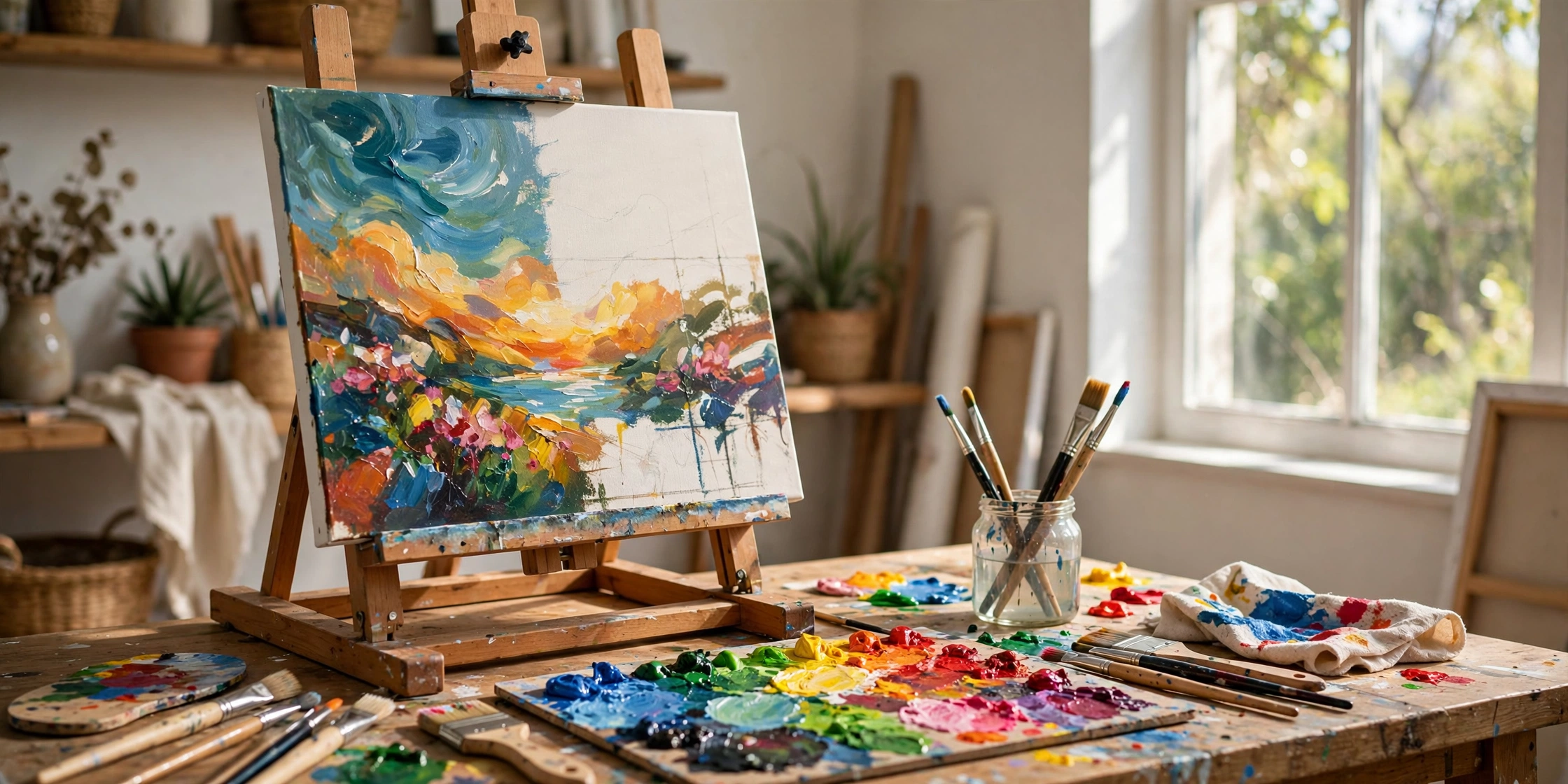
Acrylic paint is famous for drying fast — which is both its greatest strength and its most frustrating quirk. If you have ever wondered how long does acrylic paint take to dry, the honest answer is: it depends on how thick you apply it, but a normal layer is touch-dry in 10 to 30 minutes.
That speed is wonderful when you want to layer colours quickly, and maddening when you want to blend. This guide covers exact drying times, the difference between dry and cured, and how to control the process either way.
The Short Answer
- Thin wash or normal brush layer: 10 to 30 minutes to touch-dry.
- Medium thickness (palette-knife texture): 1 to 2 hours.
- Thick impasto: several hours to a few days, depending on depth.
- Fully cured (safe to varnish): 1 to 3 weeks for normal work; longer for very thick paint.
- how to find art inspiration
Acrylics dry through evaporation — the water in the paint leaves, and the acrylic polymer particles fuse into a flexible film. Anything that speeds up evaporation (warmth, airflow, low humidity) speeds up drying, and anything that slows it (cold, damp air, thick paint) slows it down. The Wikipedia article on acrylic paint explains the chemistry in more detail.
Touch Dry vs Fully Cured: An Important Difference
Beginners often confuse these two stages, and it matters. Touch dry means the surface feels dry and you can paint over it without disturbing it. Cured means the paint film has fully hardened all the way through and reached its final durability.
A painting can feel dry in an hour but still be soft underneath for days. This is why manufacturers recommend waiting at least a week — ideally two to three — before varnishing. Varnishing too early traps moisture and can cause cloudiness or cracking later. Patience here genuinely protects your work.
Drying Times by Technique
Washes and Glazes
Thin, watery layers dry in 5 to 15 minutes. This makes acrylics brilliant for watercolour-style washes and for building up glazed colour in layers. The downside: you cannot easily lift or rework a wash once it sets.
Normal Brushwork
Standard brush painting — the kind most beginners do — dries in 10 to 30 minutes. You can usually start your next layer within half an hour, which is why acrylics are so popular for alla prima style work.
Impasto and Palette Knife Work
Thick, sculptural paint is where drying times stretch out. A 5mm ridge of paint might take 24 hours to feel firm and several days to cure through. Very heavy impasto can take a week or more. Paint thickly with confidence, but plan your varnishing schedule accordingly.
7 Factors That Affect Drying Time
- Humidity: the single biggest factor. Damp air can double drying time; dry air halves it.
- Temperature: warm rooms dry paint faster. Cold studios slow everything down.
- Airflow: a gentle fan across your work speeds evaporation noticeably.
- Paint thickness: doubling the thickness more than doubles the drying time, because the surface skins over and traps moisture beneath.
- Pigment and brand: some pigments (like burnt umber) dry faster than others; student-grade paints with more filler behave differently from professional ones.
- Surface absorbency: raw canvas and paper pull water out of paint quickly; sealed or non-absorbent surfaces keep it wet longer.
- Additives: retarders extend working time dramatically, while fast-dry mediums do the opposite.
How to Make Acrylics Dry Faster
Sometimes you are in a hurry — a gift deadline, a class ending, layers you want to build quickly. Here is what actually works:
- Paint thin. Multiple thin layers dry far faster in total than one thick one.
- Use a hair dryer. Low or medium heat, held at least 15cm away, moving constantly. High heat can bubble the paint or crack it.
- Improve airflow. Open a window or aim a fan at the work (not directly at wet paint at full blast, which can cause rippling).
- Reduce humidity. A dehumidifier in a damp studio makes a remarkable difference.
- Try fast-dry mediums. Acrylic glazing liquid and similar products are formulated to speed things along.
How to Slow Drying Down
Just as often, artists fight the opposite battle — they want more time to blend. Acrylics can be coaxed into behaving more like oils:
- Use a retarder medium. A few drops mixed into your paint can extend working time by 30 minutes or more.
- Get a stay-wet palette. These use a damp sponge and permeable paper to keep your mixed colours workable for hours or even days.
- Mist your palette. A light spritz from a water spray bottle every 15 minutes keeps paint fresh.
- Work in a cooler, more humid room. The opposite of the speed-up advice, and just as effective.
- Paint in thinner sessions. Mix only what you need for the next 20 minutes.
If blending is your main frustration, you might also enjoy our piece on how to find art inspiration — sometimes a fresh idea matters more than a fresh technique.
Common Mistakes to Avoid
Varnishing too soon. The classic error. Wait at least a week for normal paintings, longer for impasto.
Using high heat to force drying. A hair dryer on full blast held close to the canvas can blister paint and craze the surface.
Stacking paintings face-to-face. Even ‘dry’ paintings can stick together if the paint has not cured. Store with spacers or wax paper between them.
Adding too much water. Beyond about 30 percent water, the acrylic binder breaks down and the paint film becomes weak and chalky. Use mediums instead for heavy thinning.
Acrylic vs Oil: Drying Time Compared
It helps to understand why acrylics behave the way they do by comparing them with oils. Oil paint dries through oxidation, a slow chemical process — a thin oil layer takes days to feel dry and months to cure fully. Acrylics, drying by evaporation, are touch-dry in minutes and cured in weeks.
This is why acrylics dominate classrooms, workshops, and plein-air painting: you can finish a painting in a single session and take it home the same day. Oils reward patience with blendability; acrylics reward decisiveness with speed. Neither is better — they are simply different tools, and many artists happily use both.
Storing Paintings While They Dry and Cure
Fresh acrylic paintings need a little care before they are fully cured. Keep them upright or flat in a dust-free spot with decent airflow — a spare room or a drying rack is ideal. Avoid leaning wet canvases against walls, which can transfer paint or leave marks.
If you are short on space, a simple wooden drying rack (or even two chairs with dowels across them) lets you store several canvases with air circulating around each one. And resist the urge to stack finished pieces face-to-face for at least a couple of weeks; even fully touch-dry paint can bond under pressure before it has cured.
Frequently Asked Questions
Can I use a hair dryer on acrylic paint?
Yes — low to medium heat, kept moving, at least 15cm from the surface. Never use the hottest setting at close range.
How long before I can varnish an acrylic painting?
Wait a minimum of one week for thin work and two to three weeks for thicker paint. When in doubt, wait longer.
Why is my acrylic paint still tacky after a day?
Usually high humidity, very thick application, or painting on a non-absorbent sealed surface. Give it airflow and time; it will get there.
You May Also Like
- How to Find Art Inspiration — 15 ideas to spark your next painting.
- How to Press Flowers in a Book — a gentle craft for artistic downtime.
Leave a Reply