
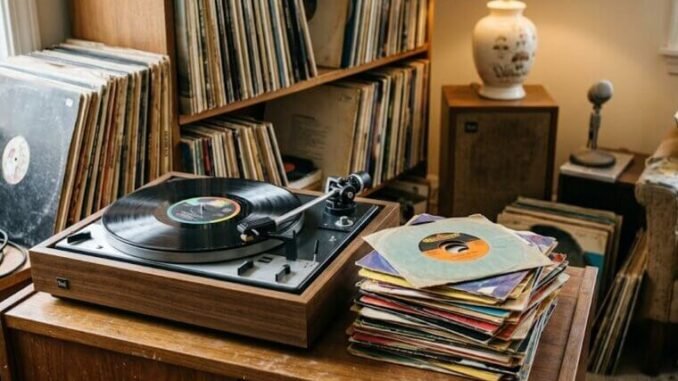
Vinyl is the most satisfying way to own music — the ritual, the artwork, the warm sound — but it’s also a hobby with infinite ways to overspend. If you’re asking how do I start collecting vinyl records without overspending, the good news is that a smart starter setup costs less than a year of streaming, and the records themselves can be found cheap if you know where to look.
I’ve built a 300-record collection over six years without ever paying full price for a turntable or more than $25 for a record. Here’s the budget collector’s playbook.
How do I start collecting vinyl records without overspending: The Short Answer
Start collecting vinyl cheaply with: a quality entry turntable (Audio-Technica AT-LP60X ~$150 or Fluance RT80 ~$200 — avoid suitcase players that damage records), powered speakers you may already own, used records first ($1–10 at thrift stores, flea markets, Discogs), new records only for all-time favorites ($25–35), and a $15 carbon-fiber brush + inner sleeves for care. Total starter cost: $200–300. The golden rule: buy records you’ll actually play, not records that look cool.
Why This Matters More Than You Think
Vinyl’s resurgence created a two-tier market: new pressings at $30–40 (often from the same digital masters as streaming) and a vast used market at $1–15. Discogs’ vinyl marketplace and database The budget collector exploits this arbitrage — used records in good condition sound identical to new ones for classic albums, and thrift stores are full of them. The equipment hierarchy matters too: the turntable and cartridge affect sound far more than expensive cables or accessories, so spend the equipment budget there and cheap out on everything else.
6 Tips That Actually Work
Buy the right starter turntable
Audio-Technica AT-LP60X (~$150): fully automatic, built-in preamp, decent cartridge — the default recommendation for good reason. Fluance RT80 (~$200): step-up sound with an upgradeable cartridge. Avoid: suitcase-style players (Crosley Cruiser and clones) — heavy tracking force wears records out, and they sound bad. Buy used: quality vintage turntables (Technics, Dual) appear on Facebook Marketplace for $75–150, often serviced.
Speakers: use what you have, then upgrade
Powered bookshelf speakers (Edifier R1280T, ~$100) plug straight into the turntable’s preamp — no receiver needed. Already own a Bluetooth speaker with aux input? Start there; upgrade later. The speaker matters more than the turntable for sound quality, so allocate budget accordingly: $150 turntable + $100 speakers beats a $300 turntable into bad speakers.
Hunt used records first
Thrift stores (Goodwill, Salvation Army): $1–3 per record — dig through everything; classic rock, jazz, and soul hide in the bins. Flea markets and estate sales: $1–5, often whole collections. Discogs.com: the collector’s marketplace — filter by condition (VG+ or better) and buy from highly-rated sellers; median prices beat retail by half. Record store used bins: $5–15, curated and graded. Always inspect: hold the vinyl at an angle to light to check for scratches.
Buy new strategically
New vinyl ($25–40) is for: all-time favorite albums you’ll play forever, new releases from artists you love, and audiophile pressings worth the premium. Don’t buy new copies of common classics available used for $5 — a VG+ original pressing of Fleetwood Mac’s Rumours sounds as good as the $35 reissue. Set a monthly record budget ($30–50) and stick to it; the hunt is the hobby, not the spending.
Care for records cheaply
Carbon fiber brush ($15): brush before every play — removes dust that causes pops and wear. New inner sleeves ($15 for 50): replace paper sleeves that scratch. Store vertically, never stacked; keep away from heat and sunlight. A spin-clean washer ($80) is the only ‘advanced’ care worth buying, and only after you own 100+ records. Proper care makes $2 thrift finds play like new.
Build taste, not just shelves
The rookie mistake: buying 50 records in month one because they’re cheap. Instead: buy 5 records you love deeply, play them constantly, and let taste develop. Keep a wantlist on Discogs (with price alerts) for specific pressings rather than impulse-buying. A 50-record collection you adore beats a 500-record collection you never play — curation is the actual hobby.
My Favorite Tools and Brands
For independent reviews and current availability before you spend any money, Billboard’s vinyl industry coverage is a solid reference.
- Audio-Technica AT-LP60X — ~$150 — The starter turntable that doesn’t damage records or disappoint.
- Edifier R1280T speakers — ~$100 — Powered bookshelves; plug-and-play with the turntable.
- Carbon fiber brush — ~$15 — The single most important record-care purchase.
- Discogs account (free) — The marketplace + wantlist + collection tracker in one.
Common Mistakes to Avoid
- Buying a suitcase player. They track too heavy, sound bad, and damage records. The $150 AT-LP60X is the minimum viable turntable.
- Paying full price for common records. Rumours, Thriller, Dark Side — all available used for $5–10 in great shape. Save new-vinyl money for the irreplaceable.
- No monthly budget. Vinyl spending creeps. Set $30–50/month; the constraint makes the hunt more fun, not less.
- Stacking records flat. Warping is forever. Store vertically, snug but not tight, away from heat.
Frequently Asked Questions
How much does it cost to start collecting vinyl?
$200–300 total: turntable ($150), speakers ($100 or use existing), brush ($15), and your first records ($1–10 used). Monthly upkeep is whatever you set — $30–50 sustains a healthy habit.
Is vinyl sound quality actually better?
It’s different, not objectively better: vinyl’s warmth comes from analog mastering and the ritual of listening. Well-pressed vinyl on decent equipment sounds wonderful; poorly-pressed vinyl sounds worse than streaming. The experience — artwork, intentionality, no skips — is the real upgrade.
Where are the best places to buy cheap vinyl?
Thrift stores ($1–3), flea markets/estate sales ($1–5), Discogs ($5–15 for graded used), record store used bins ($5–15). New: independent record stores on RSD drops, Amazon/Target for sales ($20–25 on deals).
The Crate-Digging Mindset
The deeper skill of vinyl collecting isn’t buying — it’s digging: the patience to flip through 200 records at a flea market for the three worth owning, the knowledge to recognize a first pressing by its label, the discipline to walk away from a $30 record you’ll find for $8 next month. Crate digging is meditation with a soundtrack, and the finds feel earned in a way that clicking ‘buy’ never replicates. Slow down, dig deep, and let the collection build itself one dusty crate at a time.
AT-LP60X, used records first, $30–50 monthly budget, brush before every play — that’s vinyl collecting that respects your wallet. The hunt is the hobby; the shelf is just the trophy case. For more ways to enjoy music deeply, see horror movies for people who scare easily, start a book club that people actually show up to, and sci-fi books to read this year.
Leave a Reply