
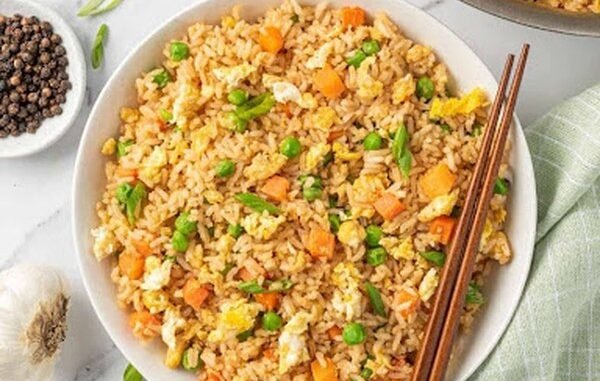
Homemade fried rice usually fails in the same three ways: mushy, bland, and soggy. Restaurant fried rice is smoky, distinct-grained, and savory — and the gap is entirely technique. Learning how to make restaurant-style fried rice at home requires day-old rice, brutal heat, and restraint with the sauce. I’ve chased the takeout flavor for years, and the method below finally nailed it — my family now requests “your fried rice” over ordering in. Here’s the full technique.
Rule #1: Day-Old Rice (Non-Negotiable)
Fresh rice is too moist — it steams into mush in the pan. Day-old refrigerated rice has dried out and firmed up, so individual grains fry instead of clumping. The method: cook rice (jasmine is ideal — fragrant, distinct grains), spread on a sheet pan, refrigerate uncovered overnight. No time? Spread fresh rice on a sheet pan and freeze 30–40 minutes — the emergency shortcut that works surprisingly well. Long-grain white or jasmine only — short-grain/sushi rice is too sticky, brown rice too chewy (though it works in a pinch).
Rule #2: Screaming-Hot Pan (Wok Hei at Home)
Wok hei — the smoky “breath of the wok” — comes from extreme heat vaporizing oil and sauce on contact. At home:
- Use your largest skillet or wok — crowding steams instead of fries. Cook in batches if needed; two small batches beat one soggy big one.
- Heat until the oil shimmers and just starts to smoke — then add ingredients. If nothing sizzles violently on contact, the pan wasn’t hot enough.
- High-smoke-point oil: avocado, peanut, or refined vegetable — not olive oil, not butter (butter burns; a teaspoon of sesame oil at the end gives the flavor without the burn).
- Don’t stir constantly — let the rice sit 30–60 seconds between tosses so it actually fries and gets crispy bits. Those crispy bits are the point.
The Method (15 Minutes)
- Prep everything first (mise en place — this cooks too fast to chop mid-way): 4 cups day-old rice (clumps broken up by hand), 3 eggs beaten, protein of choice (diced chicken, shrimp, or pork — cooked separately first, set aside), diced veggies (carrots, peas, scallions — whites and greens separated), sauce mixed.
- Scramble eggs in the hot oiled wok, 60 seconds, remove. (Separate cooking = fluffy egg ribbons, not lost-in-rice bits.)
- Stir-fry aromatics and hard veggies (carrot, scallion whites) 2 minutes until charred at edges.
- Add rice, press into an even layer, let it sit undisturbed 1 minute — this creates the crispy bottom. Toss, repeat 2–3 times.
- Sauce around the edges: drizzle sauce on the hot wok surface, not on the rice — it caramelizes instantly (mini wok hei). Toss everything through.
- Fold in eggs, protein, peas, scallion greens, and 1 teaspoon sesame oil. One final toss. Serve immediately.
The Sauce Ratio (Per 4 Cups Rice)
- 2 tablespoons soy sauce (low-sodium if sensitive — regular for color)
- 1 tablespoon oyster sauce (the umami depth most home versions lack)
- 1 teaspoon sesame oil (added at the end, not during frying)
- 1/2 teaspoon white pepper (not black — white pepper is the takeout flavor)
- Optional: 1 teaspoon Shaoxing wine drizzled on the hot wok for aroma
Restraint note: too much soy sauce = brown, salty mush. The rice should be lightly tanned, not dark brown — if yours looks like soy-sauce soup, halve the sauce next time.
How Do I Make Restaurant-Style Fried Rice at Home? Variations
- Shrimp fried rice: sear shrimp 90 seconds per side first, remove, add back at the end (overcooked shrimp = rubber).
- Pineapple fried rice: add 1 cup pineapple chunks with the veggies + a pinch of curry powder — sweet-savory Thai-style.
- Kimchi fried rice: swap half the soy for kimchi + 2 tablespoons gochujang; top with a fried egg. Fermented funk meets crispy rice — elite.
- Egg-free / vegan: skip eggs, add crumbled firm tofu (pressed, seared separately) and use mushroom “oyster” sauce.
Total cost: under $8 for 4 generous servings using leftover rice and fridge vegetables. Serious Eats‘ fried rice testing confirms the fundamentals: dry rice, maximum heat, sauce discipline. Nail those three and your homemade version doesn’t just match takeout — the crispy bits make it better.
Fried Rice Mistakes to Avoid
- Fresh rice: the #1 fried rice killer — fresh rice is too moist and steams into mush. Day-old refrigerated rice (dried out, firmed up) fries into distinct grains. No time? Freeze fresh rice on a sheet pan 30–40 minutes.
- Crowded pan: too much rice at once steams instead of fries — no crispy bits, no wok hei. Cook in batches; two small batches beat one soggy big one. Your largest skillet or wok, always.
- Too much soy sauce: the rice should be lightly tanned, not dark brown — drowning it in soy makes salty mush. 2 tbsp per 4 cups rice, drizzled on the hot wok surface (not the rice) so it caramelizes.
- Constant stirring: let the rice sit undisturbed 30–60 seconds between tosses — contact with the hot pan creates the crispy bits that are the entire point. Stirring constantly just moves warm rice around.
Fried Rice FAQs
What rice is best for fried rice?
Day-old jasmine rice — fragrant, distinct grains, ideal texture. Long-grain white works well too. Avoid: short-grain/sushi rice (too sticky), fresh rice of any kind (too moist). Brown rice works in a pinch (chewier).
How do I get the smoky “wok hei” flavor at home?
Maximum heat + sauce on the hot wok surface (not on the rice — it vaporizes and caramelizes on contact) + undisturbed searing time for crispy bits. Home burners can’t match restaurant wok BTUs, but ripping-hot + dry rice + patience gets you 80% there.
Can I make fried rice without a wok?
Yes — a large cast-iron or stainless skillet works well (better heat retention than thin woks on home burners, actually). Non-stick is the worst option — it can’t take the high heat needed and prevents the crispy bits from forming.
What’s the best oil for fried rice?
High-smoke-point neutral oil — avocado, peanut, or refined vegetable. Not olive oil (burns), not butter for frying (burns) — but a teaspoon of sesame oil at the end (off heat) adds the signature flavor without burning.
Leave a Reply