
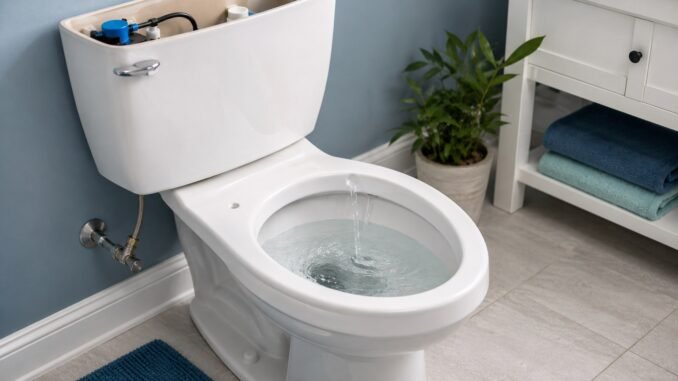
A running toilet can waste 200+ gallons of water per day — that’s up to 6,000 gallons a month, and it shows up on your water bill like a second household moved in. Learning how to fix a running toilet that wastes water is a 15-minute, $10 job in most cases. The toilet tank has only a few moving parts, and one of them is almost always the culprit. Let’s diagnose yours.
First: Confirm It’s Actually Running
Take the tank lid off (carefully — porcelain lids crack easily and cost $40+ to replace) and look. Then do the dye test: drop food coloring (or a dye tablet, $3) into the tank, wait 15 minutes without flushing. If color appears in the bowl, water is leaking from tank to bowl — the flapper or flush valve is the problem. If the bowl stays clear but you hear running, the fill valve is the issue. This 15-minute test tells you exactly which $10 part to buy.
Culprit #1: The Flapper (80% of Running Toilets)
The flapper is the rubber seal at the tank’s bottom that lifts when you flush. They warp, crack, and get mineral-crusted every 3–5 years. Symptoms: toilet “phantom flushes” (runs briefly on its own every few minutes) or runs continuously.
- Turn off the water at the valve behind the toilet, then flush to empty the tank.
- Unhook the old flapper from the overflow tube pegs and detach the chain.
- Take it to the store to match size (2-inch vs. 3-inch — measure the drain opening) or buy a universal flapper ($5–$10 — Fluidmaster and Korky make excellent ones).
- Hook the new flapper on, reconnect the chain with 1/2 inch of slack (too tight = won’t seal; too loose = weak flush).
- Turn water on, let the tank fill, test flush twice.
Pro tip: Korky flappers resist chlorine and hard water better than basic rubber ones — worth the extra $3 if your water is harsh.
Culprit #2: The Fill Valve
If water keeps flowing into the overflow tube or the tank never quite shuts off, the fill valve (the tall column on the left) is worn out. Replacement: $10–$15, 15 minutes:
- Turn off water, flush, sponge out remaining tank water.
- Disconnect the water supply line (have a towel ready) and unscrew the plastic lock nut under the tank.
- Lift out the old valve, drop in the new Fluidmaster 400A ($12 — the industry standard, fits almost everything).
- Adjust the height so the waterline sits 1 inch below the overflow tube top, tighten the nut (hand-tight plus a quarter turn — overtightening cracks the tank), reconnect everything.
Culprit #3: The Float Level
Sometimes nothing’s broken — the water level is just set too high, flowing constantly into the overflow tube. Fix: bend the float arm down slightly (old ball-float style) or squeeze the adjustment clip on modern cup floats to lower it. Water should stop 1 inch below the overflow tube. Free, 30 seconds, and embarrassingly often the whole problem.
How Do I Fix a Running Toilet That Wastes Water? When to Call a Plumber
- Cracked tank or bowl: replace the toilet ($200–$400 installed for a basic model) — cracks don’t repair reliably.
- Corroded shutoff valve that won’t turn or leaks when touched — a plumber should replace it ($150–$250).
- Multiple simultaneous issues in a 20+ year old toilet — sometimes a full tank rebuild kit ($25–$30, includes flapper + fill valve + flush valve) or a whole new WaterSense toilet ($200–$350, uses 1.28 gal/flush vs. 3.5+ for old ones) is the smarter move.
The EPA WaterSense program notes that fixing a running toilet can save a household $100+/year on water bills — and a $10 flapper pays for itself in the first week. Pop the lid, run the dye test, and spend your Saturday on literally anything except listening to that hiss.
Running Toilet Mistakes to Avoid
- Ignoring a “phantom flush”: a toilet that runs briefly on its own every few minutes is leaking tank-to-bowl constantly — up to 200+ gallons daily. The flapper is a $8 fix; the water bill is not.
- Setting the chain too tight or too loose: too tight = flapper can’t seal (constant leak); too loose = weak flush (double-flushing wastes more). Half an inch of slack is the spec — check it.
- Overtightening the fill valve nut: the plastic lock nut under the tank needs hand-tight plus a quarter turn — gorilla-tightening cracks the porcelain tank, turning a $12 repair into a $250 toilet replacement.
- Replacing parts without the dye test: the food-coloring test (15 minutes, free) tells you exactly which part failed. Guessing wastes trips to the store and still-running toilets.
Running Toilet FAQs
How much does a running toilet add to the water bill?
A moderate leak: $50–$150/month. A severe run: $200+/month — some households discover their “high water bill” was a single toilet wasting 6,000+ gallons monthly. A $10 flapper pays for itself in the first week.
How often should toilet parts be replaced?
Flappers: every 3–5 years (chlorine and minerals degrade rubber). Fill valves: 5–7 years. If your toilet is 15+ years old with original parts, a $25–$30 full tank rebuild kit (flapper + fill valve + flush valve) is smarter than piecemeal fixes.
Should I just replace the whole toilet?
Consider it if: the toilet uses 3.5+ gallons per flush (pre-1994), the porcelain is cracked or stained, or you’ve repaired it three times. A new WaterSense toilet ($200–$350, 1.28 gal/flush) saves thousands of gallons yearly — many utilities offer $50–$100 rebates.
Why does the toilet run only sometimes?
Intermittent running = slow flapper leak — the tank drains over minutes to hours, then refills (“phantom flush”). Constant running = fill valve or float issue. The dye test distinguishes them definitively.
Leave a Reply