
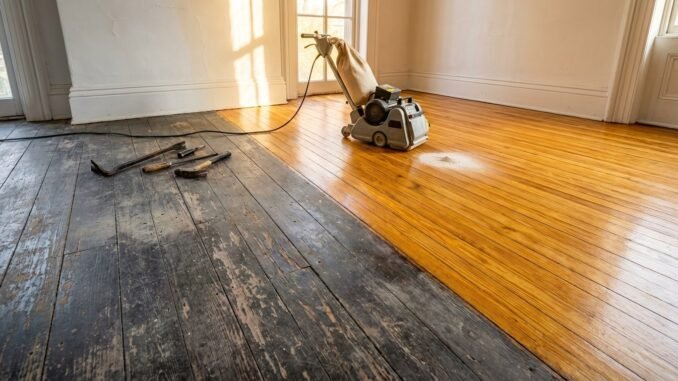
How much does it cost to refinish hardwood floors? Professional refinishing runs $3–$8 per square foot in 2026, putting a typical 500 sq. ft. job at $1,500–$4,000. The national average lands around $4–$5/sq. ft. for sanding, staining, and three coats of polyurethane. It’s one of the best-value floor projects: refinishing costs half to a third of replacement, and the results look brand new. Here’s everything that affects the price.
What’s Included in the Price
A standard professional refinish includes:
- Sanding: 3–4 passes with progressively finer grits (36 → 60 → 80 → 100), including edging along walls
- Staining (optional, adds $1–$2/sq. ft.): color change or refresh
- Finish: 2–3 coats of polyurethane (oil-based or water-based)
- Between-coat abrasion and final buff
What costs extra: repairs (board replacement $10–$30/board), stair refinishing ($40–$80/stair — labor-intensive), furniture moving ($200–$500), and dustless systems (some pros charge a 10–20% premium for dust containment — worth every penny).
Oil-Based vs. Water-Based Finish
- Oil-based polyurethane: richer amber tone (deepens over time), slightly more durable, strong fumes (vacate 24–48 hours), slower dry (24 hrs between coats — longer project). $0.50–$1/sq. ft. less in material.
- Water-based polyurethane: clear (no ambering — shows true stain color), low odor (stay in the house), fast dry (2–4 hrs between coats — job done in 2–3 days), slightly less forgiving of scratches. Modern water-based finishes (Bona Traffic HD) rival oil durability now.
- My take: water-based for most homes in 2026 — the speed, low odor, and color clarity win. Oil-based if you love that classic amber glow and can vacate.
DIY Refinishing: $500–$1,000 (But Read This First)
Renting a drum sander ($60–$80/day) + edge sander ($40/day) + sandpaper, stain, and finish runs $500–$1,000 for 500 sq. ft. The savings are real — but so are the risks:
- Drum sanders are aggressive — pause for 2 seconds and you’ve gouged a dip that shows forever. Keep it moving, always.
- Dust is extreme — seal every doorway with plastic, wear a P100 respirator ($30), not a dust mask.
- The screen-and-recoat alternative: if floors just need refreshing (no deep scratches, finish intact), a screening (light abrasion) + new topcoat runs $1–$2/sq. ft. pro or ~$200 DIY — no full sanding needed. This handles 70% of “tired floor” cases.
Honest advice: DIY the screen-and-recoat; hire the full sand — unless you’re experienced. A botched sanding job costs more to fix than the pro would have charged.
How Much Does It Cost to Refinish Hardwood Floors? Getting Quotes
- Get 3 quotes specifying: sand grit sequence, stain brand/color, finish type and number of coats (insist on 3), and dust containment method.
- Ask about cure time: water-based = light foot traffic in 24 hrs, furniture in 3–5 days, rugs in 7–14 days. Rugs too early = finish damage.
- Check references with photos — finish quality varies enormously between pros.
- Timing: schedule when you can vacate or seal off the area — 3–5 days total including cure.
- When NOT to refinish: floors sanded too many times (less than 1/8″ of wood above the tongue), engineered floors with thin veneer (check manufacturer specs), or extensive water damage — these need replacement.
The National Wood Flooring Association recommends screening and recoating every 3–5 years in high-traffic areas to avoid ever needing a full sand — maintenance beats restoration. At $4/sq. ft., refinishing 500 sq. ft. costs less than a mid-range sofa and transforms every room it touches. Get the quotes, demand three coats, and keep the rugs off for two weeks.
Floor Refinishing Mistakes to Avoid
- DIY drum-sanding without experience: drum sanders are aggressive — pause 2 seconds and you’ve gouged a permanent dip. A botched sanding costs more to fix than the pro would have charged. DIY the screen-and-recoat; hire the full sand.
- Skipping the dust containment: sanding dust is extreme — it infiltrates every room, electronics, and HVAC. Plastic-sheet every doorway, wear a P100 respirator ($30, not a dust mask), and consider pros with dustless systems.
- Putting rugs down too early: finish needs 7–14 days to fully cure — rugs trap solvents and damage the finish permanently. Wait the full cure time, however painful.
- Refinishing floors sanded too many times: below 1/8 inch of wood above the tongue-and-groove, sanding destroys the floor. Check thickness at a vent or threshold first — some old floors are on their last sand.
Hardwood Refinishing FAQs
How much does it cost per square foot?
$3–$8/sq. ft. professionally (national average ~$4–$5) — sanding, staining (optional, +$1–$2), and three coats of polyurethane. A 500 sq. ft. job: $1,500–$4,000. Screen-and-recoat (no full sand): $1–$2/sq. ft. — the budget refresh for floors with intact finish.
Oil-based vs. water-based finish?
Water-based for most homes in 2026: low odor (stay in the house), fast dry (2–4 hrs between coats, done in 2–3 days), clear finish (true stain color). Oil-based for the classic amber glow and slightly tougher film — but strong fumes (vacate 24–48 hrs) and slower project.
How long before I can walk on refinished floors?
Light foot traffic (socks): 24 hours for water-based. Furniture: 3–5 days. Rugs: 7–14 days (full cure). Pets: 3–5 days minimum — claws on uncured finish leave permanent marks.
Can engineered hardwood be refinished?
Sometimes — check the veneer thickness. Thick veneers (3mm+) can handle 1–2 light sands; thin veneers (1–2mm) cannot — sanding burns through to plywood. Check manufacturer specs before anyone touches a sander to engineered floors.
Staining: Color Without Regret
Changing floor color with stain is permanent-ish — choose carefully. Test on an inconspicuous area (inside a closet) because stain looks drastically different on your specific wood than on the sample chip. Trends to trust: natural/clear (timeless), medium browns (warm, forgiving). Trends to question: gray washes (already dating), ultra-dark ebony (shows every speck of dust). Water-based stains dry fast and don’t blotch as much; oil-based give richer color but need longer dry times. And remember: stain adds $1–$2/sq. ft. — skipping it (natural finish) is the budget move that also happens to be timeless. When in doubt, go natural — you can always go darker later, but you can’t go lighter without sanding to bare wood again.
Leave a Reply