
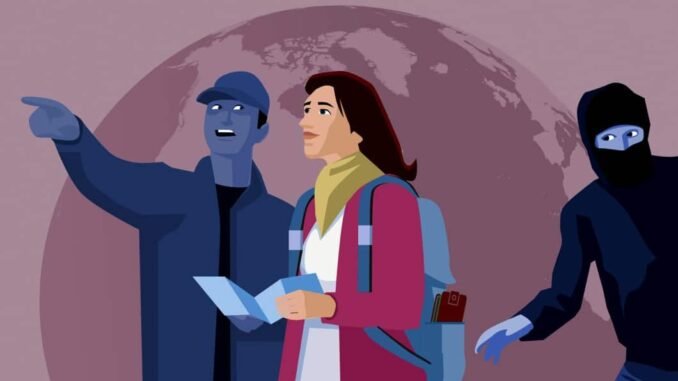
I got scammed in Bangkok on my first solo trip — the classic “temple is closed today” tuk-tuk routine that ended at a gem shop. I lost $40 and gained something more valuable: a permanent education in how tourist scams work. If you’re asking how do I avoid tourist scams when visiting a new country, the core insight is that scams aren’t about intelligence — they’re about psychology. Scammers exploit helpfulness, greed, confusion, and politeness. Understanding the patterns protects you everywhere, because the same dozen tricks recycle worldwide with local costumes.
The golden rule: unsolicited help from strangers in tourist areas is a sales pitch until proven otherwise. That sounds cynical; it’s just accurate. Friendly locals exist everywhere — but the ones who approach you near major attractions have an agenda roughly 90% of the time.
How Do I Avoid Tourist Scams When Visiting a New Country? Know the Classics
Transportation scams
- “Hotel closed / temple closed”: a friendly local informs you your destination is closed, then directs you to their cousin’s shop/hotel. Your hotel is open. Walk away.
- Rigged meters: taxis with “broken” meters or scenic routes. Fix: use Uber/Grab/Bolt where available; otherwise agree the price before getting in, or ask your hotel the fair fare first.
- The airport helper: someone grabs your bag to “help” then demands payment. Keep your hands on your luggage; a firm “no, thank you” suffices.
- Fake damage claims: rental scooters/cars with pre-existing damage blamed on you. Photograph everything before driving off — timestamped video is best.
Money scams
- Currency confusion: rushed transactions with unfamiliar bills — the “wrong change” or the sleight-of-hand bill swap. Slow down, learn the denominations on day one, count change deliberately.
- ATM helpers: someone “helping” at the ATM is skimming your card or watching your PIN. Use ATMs inside banks, cover the keypad, never accept help.
- The inflated bill: restaurants/bars adding items or using a different menu with tourist prices. Check prices before ordering; photograph the menu if it seems shifty.
- Fake police: “officers” demanding to see your wallet for counterfeit checks. Real police don’t inspect tourist wallets on the street. Offer to walk to the nearest station together — they’ll vanish.
Distraction and street scams
- The spill/smudger: something gets on your clothes; a “helpful” stranger cleans you while an accomplice lifts your wallet. If something lands on you, step into a shop to clean up — never let a stranger do it.
- Friendship bracelets/flowers: item forced into your hand, then aggressive payment demands. Hands in pockets, keep walking, “no” without engagement.
- Overly friendly new best friend: at bars or tourist sites — leads to a rigged card game, an expensive bar tab you’re pressured to split, or a “tea ceremony” with a shocking bill. Genuine friendships don’t start with financial transactions.
- Fake petitions/surveys: clipboard thrust at you while a partner pickpockets. Don’t stop, don’t sign.
- The gem/jewelry deal: “buy cheap here, sell for profit at home” — the stones are worthless. There is no version of this that’s legitimate.
Booking and accommodation scams
- “Your hotel is overbooked/closed”: taxi driver takes you to a commission-paying alternative. Insist on your address; call the hotel yourself.
- Fake listings: vacation rentals that don’t exist. Book through platforms with verified reviews and never wire money or pay off-platform.
- Timeshare presentations disguised as tours: “free” excursions requiring a 3-hour sales pitch. There’s no free lunch — decline.
Your Anti-Scam Defense System
- Research before you go: 15 minutes googling “[country] common tourist scams” (Wikivoyage’s “Stay safe” sections are excellent) inoculates you against 90% of tricks. Forewarned is forearmed — literally.
- Separate your money: daily cash in one pocket, backup cash and cards in another location (money belt or hotel safe). A pickpocketed front pocket shouldn’t end your trip. This is core solo travel safety too.
- Learn key phrases: “no thank you,” “how much?”, “too expensive,” and numbers in the local language. Effort signals you’re not a fresh-off-the-plane mark.
- Walk with purpose: scammers target the confused-looking. Study the map before leaving the café, then walk like you know where you’re going (even when you don’t).
- Trust the pause: every scam relies on rushing you. When pressured, stop, breathe, and say “I need a minute.” Scammers hate pauses; legitimate vendors accept them.
- Verify independently: “closed today?” — check Google Maps hours yourself. “Special price just for you?” — check two other vendors. Your phone defeats most scams.
- It’s okay to be rude: politeness is the scammer’s favorite weapon. A firm “NO” and walking away is not rude — it’s self-defense. You don’t owe strangers your attention.
If It Happens Anyway
Don’t let shame compound the loss. Even experienced travelers get caught by novel local variants. Report to local tourist police (many cities have dedicated English-speaking units), dispute fraudulent card charges immediately, and warn fellow travelers via reviews. Then let it go — a $40 lesson in Bangkok taught me more than any guidebook. Just don’t let one scam make you distrust every local; the vast majority of people you’ll meet are genuinely kind.
Scam-Proofing Your Phone (Your Best Defense Tool)
Your phone defeats most scams — if it’s set up right. Before departure: download offline maps for every city, save your hotel’s address in the local language (show it to taxi drivers), and screenshot key bookings. Install a currency converter app and learn the rough exchange rate — “is 500 of these a lot?” should never be a mystery. At the scene: when someone quotes a price, check it. When someone says “closed,” verify on Google Maps. When a “police officer” demands your wallet, you now have the station’s number saved.
The photo evidence habit: photograph taxi meters at trip start, restaurant menus before ordering, and rental vehicles from every angle. These 10-second photos end 90% of disputes instantly — scammers back down when they see you’re documenting. Stay connected: an eSIM or local SIM ($5–$20) means you can always verify, translate, or call for help. The scammer’s greatest ally is your disconnection; your greatest defense is a charged phone with data. Pair these digital habits with solid physical safety practices for your belongings, and check the State Department’s country-specific safety pages before each trip — 10 minutes of reading there inoculates you against the local variants of every classic trick.
The Bottom Line
Avoid tourist scams by: researching common tricks before you go, treating unsolicited help as a sales pitch, separating your money, slowing down when pressured, verifying claims independently, and giving yourself permission to say a firm no. The patterns are universal — learn them once, and you’re protected in every country you’ll ever visit.
Leave a Reply