Gary Barlow: net worth, age, height, wife and children
 By
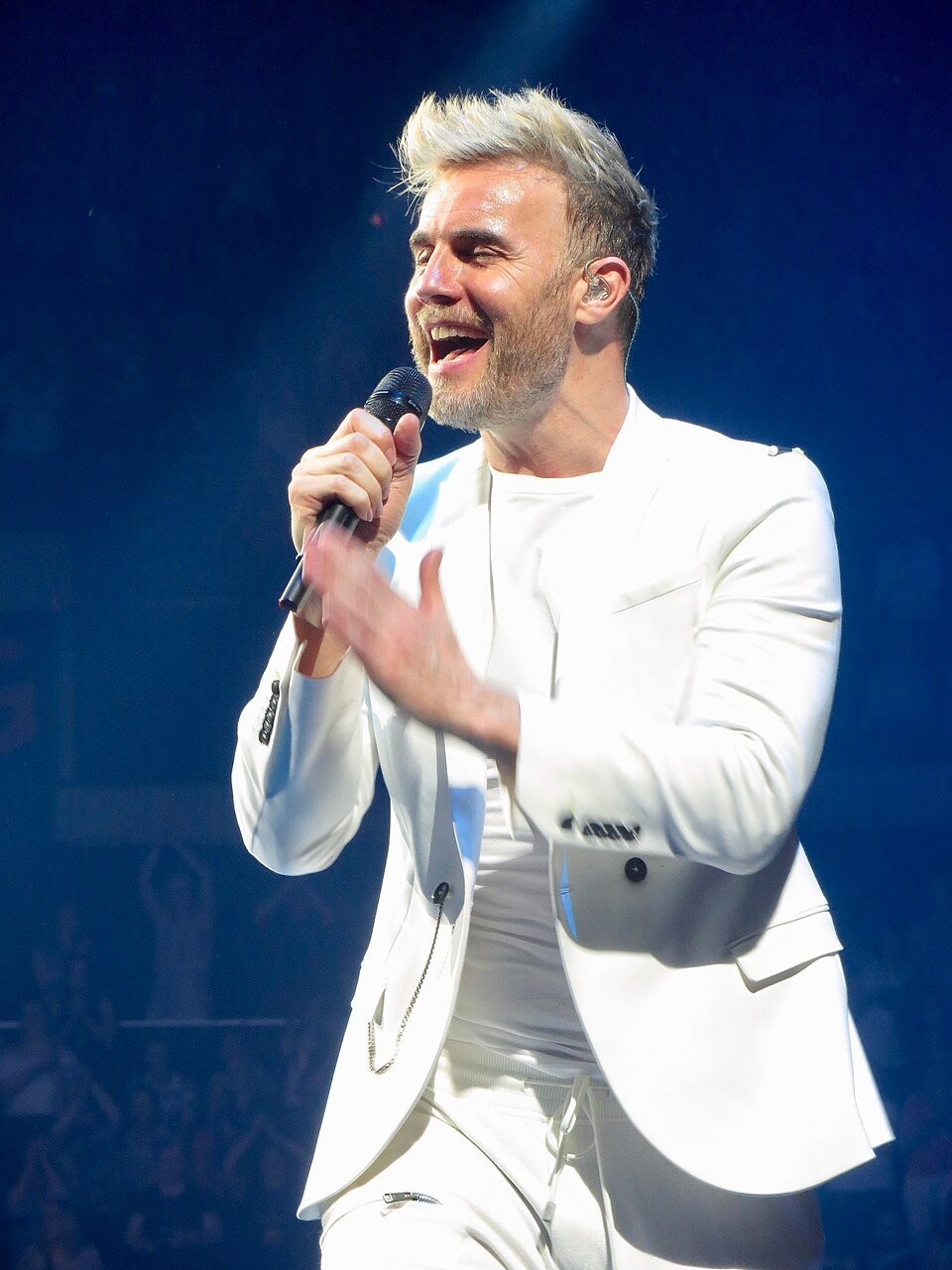
Gary Barlow, born on January 20, 1971, in Frodsham, Cheshire, England, is a 55-year-old English singer and songwriter whose estimated net worth is $125 million, according to Celebrity Net Worth. He is the lead vocalist and principal songwriter of Take That, one of Britain’s most successful pop groups, and he has written fifteen UK number-one singles. He has been married to former dancer Dawn Andrews since 2000, and they have three children.
Quick facts
| Full name | Gary Barlow |
|---|---|
| Born | January 20, 1971, in Frodsham, Cheshire, England |
| Age | 55 years old as of November 2026 |
| Height | 5 feet 9 inches (175 centimeters) |
| Weight | No reliable official figure is published. Online listings repeat estimates, so no single weight is stated as fact here. |
| Wife | Dawn Andrews (married 2000) |
| Children | 3: Daniel, Emily and Daisy Barlow |
| Parents | Colin Barlow (father) and Marjorie Barlow, née Cowan (mother) |
| Net worth | $125 million, according to Celebrity Net Worth |
| @officialgarybarlow |
Biography and early life
Gary Barlow was born on January 20, 1971, in Frodsham, Cheshire, so his birthday falls in mid-January and he turned 55 in January 2026. He was the second son of Colin Barlow and Marjorie Barlow, whose maiden name was Cowan. His father Colin died on October 15, 2009. Barlow attended Weaver Vale Primary School and then Frodsham High School from 1982. In his autobiography he describes a childhood spent dancing in front of the television, and his love of music took hold early: at the age of ten, after watching Depeche Mode perform on Top of the Pops, he got his first keyboard and practiced constantly. He has cited Elton John, Trevor Horn and Orchestral Manoeuvres in the Dark as early influences, and the first CD he bought was by the Pet Shop Boys, who later supported Take That on tour.
At fifteen, in 1986, Barlow entered a BBC Pebble Mill at One Christmas song competition with his own song, “Let’s Pray for Christmas.” He reached the semi-finals, recorded the song in London, and began performing on the northern club circuit, singing covers alongside his own material. By 1989 he had a manager, Wigan agent Barry Woolley, and had recorded a single under the stage name Kurtis Rush. He was then introduced to casting agent Nigel Martin-Smith, who heard Barlow’s self-written demo of “A Million Love Songs” and decided to build a new vocal group around his voice and his songwriting. That decision produced Take That, and it shaped the next three decades of British pop.
Career
Take That — Barlow with Howard Donald, Jason Orange, Mark Owen and Robbie Williams — signed to RCA Records and, after early top-40 hits including “A Million Love Songs,” “It Only Takes a Minute” and “Could It Be Magic,” reached number one with Barlow’s song “Pray.” Their debut album, Take That & Party (1992), reached number two in the UK. The follow-up, Everything Changes (1993), built almost entirely on Barlow’s writing, went straight to number one and produced four number-one singles. Nobody Else (1995) also topped the chart and included “Back for Good,” his most famous composition, which reached number seven on the Billboard Hot 100 in the United States. When the group split in 1996, Barlow was widely expected to become the breakout solo star.
His solo start was strong: “Forever Love” and “Love Won’t Wait,” the latter written by Madonna and Shep Pettibone, both reached number one in the UK, and his debut solo album Open Road (1997) topped the album chart and sold about two million copies worldwide. The second album, Twelve Months, Eleven Days (1999), stalled at number 35, his label parted company with him, and Barlow stepped away from performing, later saying he did not sing for six or seven years. He worked as a songwriter and producer for other artists instead. Take That reformed without Williams in 2005, and the comeback single “Patience” spent four weeks at number one. The reunion albums Beautiful World (2006) and The Circus (2008) were multi-platinum successes, and Williams returned for Progress (2010), the fastest-selling album of the century in the UK at the time. The group continued as a trio with III (2014), Wonderland (2017) and This Life (2023).
Barlow’s later solo career recovered fully. He co-wrote the official Diamond Jubilee song “Sing” with Andrew Lloyd Webber in 2012; it reached number one, as did the album of the same name. Since I Saw You Last (2013) reached number two and went double platinum in the UK, and Music Played by Humans (2020), a big-band-style record made with an 80-piece orchestra, returned him to number one. He has also written for the stage and screen, judged The X Factor UK from 2011 to 2013, and fronted the talent shows Let It Shine and Walk the Line. He has received six Ivor Novello Awards, including one for Outstanding Services to British Music, was appointed OBE in 2012, and has sold more than 50 million records worldwide. In February 2026 he signed an exclusive global publishing agreement with BMG covering his entire songwriting catalog, according to Celebrity Net Worth.
Beyond the charts, Barlow built a second career in musical theater and charity work. He composed the score for the Broadway and West End musical Finding Neverland, which opened in New York in 2015, and co-wrote Calendar Girls The Musical with playwright Tim Firth, based on the film about the Yorkshire Women’s Institute members who posed for a charity calendar; it opened in London in 2017 and toured extensively. His one-man stage show A Different Stage, built around his songs and his life story, toured in 2022, and he followed it with a Songbook tour celebrating his catalog. For charity, he organized the Children in Need Rocks concerts at the Royal Albert Hall, bringing together acts including Paul McCartney and Take That, and in 2009 he climbed Mount Kilimanjaro with a team of celebrities for Comic Relief. He also recorded “Sing” performances with the Military Wives choir, whose album accompanied the Diamond Jubilee project. These projects explain why his Ivor Novello for Outstanding Services to British Music cited more than hit singles: the theater work, the charity concerts and the television judging all rest on the same reputation for reliability that made producers build a group around him at nineteen.
His judging years also shaped a generation of television talent formats. On The X Factor UK he sat alongside established judges for three series and was known for the songwriter’s critique — assessing whether a contestant’s material and phrasing would survive outside a television studio. Let It Shine, his own format in 2017, auditioned performers for the Take That stage musical The Band, folding his theater and television careers into a single project. The through line is consistent: Barlow’s public work since 2010 has repeatedly returned to other people’s songs and other people’s chances, from the Military Wives to young performers, while his own releases have become less frequent and more deliberately framed — a Christmas album, a big-band record and stage projects rather than a yearly pop cycle.
Songs
The songs most associated with Barlow divide into his Take That writing and his solo work. With Take That he wrote “Pray,” “A Million Love Songs,” “Back for Good,” “Never Forget,” “Everything Changes,” “Patience,” “Shine,” “Rule the World,” “Greatest Day” and “The Flood,” along with “Candy,” which he co-wrote for Robbie Williams’s solo career. His best-known solo songs are “Forever Love,” “Love Won’t Wait,” “Open Road,” “Shame,” his 2010 duet with Williams, “Sing,” “Let Me Go” and “Elita,” recorded with Michael Bublé and Sebastián Yatra. Across his career he has written fifteen UK number-one singles — twelve with Take That, two as a solo artist and one with Williams — and twenty-four top-ten hits.
Albums
Barlow’s solo studio albums are Open Road (1997), Twelve Months, Eleven Days (1999), Sing (2012), Since I Saw You Last (2013) and Music Played by Humans (2020), followed by the seasonal album The Dream of Christmas (2021). Three of them reached number one in the UK. With Take That, the studio albums are Take That & Party (1992), Everything Changes (1993), Nobody Else (1995), Beautiful World (2006), The Circus (2008), Progress (2010), III (2014), Wonderland (2017) and This Life (2023), nine number-one albums in total for the group. Learning an instrument as an adult is a different challenge from starting at ten, as Barlow did, and readers picking up a keyboard later in life may find practical help in guidance on the best way to learn a new skill as an adult, since the patience Barlow describes from his own childhood practice is exactly what adult learners have to rebuild.
Net worth
According to Celebrity Net Worth, Gary Barlow has a net worth of $125 million. Lower estimates circulate elsewhere, in a range from about $60 million to $105 million on less authoritative roundups, so the figure should be read as an estimate rather than an audited total. The structure behind the Celebrity Net Worth figure is his songwriting. Because Barlow wrote most of Take That’s hits and a long list of songs for other artists, publishing royalties have continued to flow through the group’s split, his own quiet years and the reunion era alike, on top of touring income from some of the biggest British tours ever staged, solo album sales, television judging fees and his stage and screen writing. The February 2026 BMG publishing agreement, covering both his existing compositions and future releases, underlines how central that catalog remains to his earnings.
Personal life and family
Barlow’s wife is Dawn Andrews, who danced on Take That’s Nobody Else tour in 1995. They married on January 12, 2000, and the marriage is current: in January 2026 the couple marked their 26th wedding anniversary, with Barlow posting tributes to Dawn on his Instagram account. They have three children: a son, Daniel, born in 2000, and daughters Emily, born in 2002, and Daisy, born in 2009. In August 2012 the couple announced that their fourth child, a daughter named Poppy, had been stillborn; Barlow later wrote about the loss and performed through it during a period when he was also organizing concerts for charity. His family background is the one described above: parents Colin and Marjorie, with Gary the second of their sons, raised in Frodsham in Cheshire.
Instagram and public presence
Gary Barlow’s official Instagram account is @officialgarybarlow, the verified handle he uses for tour announcements, new music and occasional family milestones such as his wedding anniversary. Because follower counts change daily and vary by source, no exact figure is stated as fixed fact here; readers should rely only on the verified @officialgarybarlow account and treat similarly named profiles as fan pages.
Closing summary
Gary Barlow’s profile is a songwriting story first and a fame story second. Born on January 20, 1971, in Frodsham to Colin and Marjorie Barlow, he built Take That around his own songs, survived the group’s split and a failed second solo album, then returned with the reunion, three further solo number-one albums and a Diamond Jubilee anthem. His estimated net worth is $125 million, according to Celebrity Net Worth. Married to Dawn Andrews since 2000 and the father of Daniel, Emily and Daisy, he remains, at 55, the musical center of one of Britain’s biggest pop acts.