Frank Sinatra: net worth, age, height, wife and children
 By
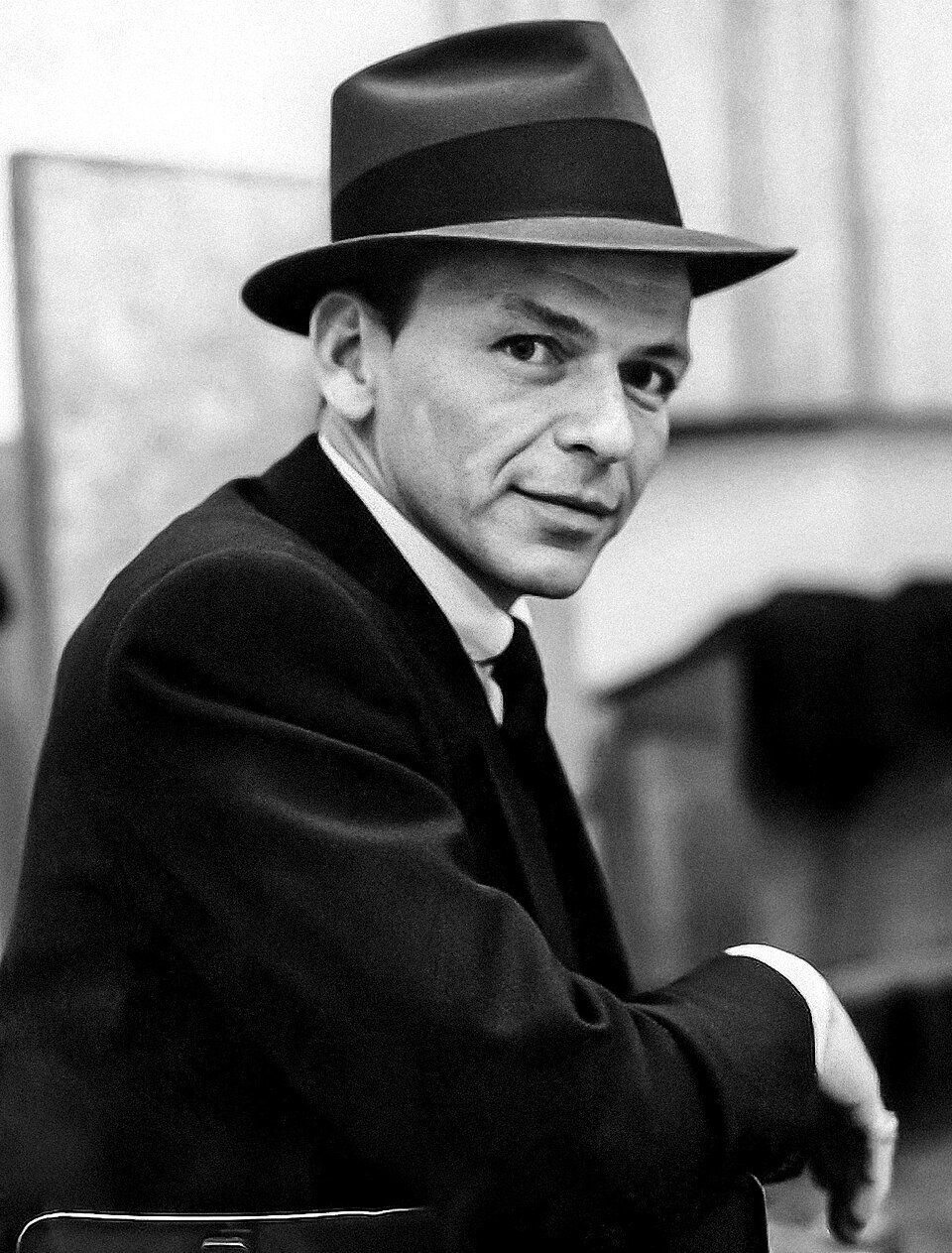
Frank Sinatra, born Francis Albert Sinatra on December 12, 1915, in Hoboken, New Jersey, was an American singer and actor who died on May 14, 1998, in Los Angeles, aged 82. His net worth at the time of his death was estimated at $200 million, according to Celebrity Net Worth, although the site notes that contemporary estimates of his fortune ranged as high as $600 million. Nicknamed “Ol’ Blue Eyes” and the “Chairman of the Board,” he sold an estimated 150 million records, won an Academy Award, and was married four times, most lastingly to Barbara Marx, from 1976 until his death.
Quick facts
| Full name | Francis Albert Sinatra |
|---|---|
| Born | December 12, 1915, in Hoboken, New Jersey, United States |
| Died | May 14, 1998, in Los Angeles, California, aged 82 |
| Height | About 5 feet 8 inches (173 centimeters); published listings vary between 5 feet 7 inches and 5 feet 8 inches |
| Weight | No reliable official figure was ever published for his adult life, so no weight is stated as fact here. |
| Wives | Nancy Barbato (married 1939, divorced 1951); Ava Gardner (married 1951, divorced 1957); Mia Farrow (married 1966, divorced 1968); Barbara Marx (married 1976, until his death in 1998) |
| Children | 3: Nancy Sinatra, Frank Sinatra Jr. and Tina Sinatra, all with Nancy Barbato |
| Parents | Antonino Martino “Marty” Sinatra (father) and Natalina “Dolly” Garaventa (mother) |
| Net worth | $200 million at the time of his death, according to Celebrity Net Worth (contemporary estimates ranged from $200 million to $600 million) |
Biography and early life
Francis Albert Sinatra was born on December 12, 1915, in a tenement at 415 Monroe Street in Hoboken, New Jersey, so his birthday fell in mid-December; he lived to 82 and died in 1998. He was the only child of Italian immigrants: his mother, Natalina “Dolly” Garaventa, came from Genoa and worked as a midwife before becoming a force in Hoboken’s local Democratic politics, while his father, Antonino Martino “Marty” Sinatra, came from Sicily, boxed as a bantamweight under the name Marty O’Brien, and later worked his way up to captain in the Hoboken Fire Department. His parents also ran a tavern, where the young Sinatra occasionally sang for spare change. His birth was difficult: he weighed 13.5 pounds and had to be delivered with forceps, which scarred his left cheek, neck and eardrum. That 13.5 pounds is his documented birth weight, not an adult weight; no reliable published figure for his adult weight exists, and none is claimed here.
Sinatra was raised Catholic and attended David E. Rue Jr. High School and then A. J. Demarest High School, but he left without graduating, having been expelled, by his own account and the standard biographies, for general rowdiness after only 47 days. He enrolled at Drake Business School to please his mother but left after 11 months, and worked as a delivery boy for the Jersey Observer newspaper and as a riveter at the Tietjen and Lang shipyard. Music was the constant. He idolized Bing Crosby, received a ukulele from his uncle for his fifteenth birthday, arranged bands for school dances and began singing in local Hoboken social clubs and, for free, on Jersey City radio. He never learned to read music; everything that followed was learned by ear.
Career
His break came in 1935, when his mother persuaded a local group, the 3 Flashes, to let him join their audition for Major Bowes’ Amateur Hour. Renamed the Hoboken Four, the group won first prize and a six-month touring contract, with Sinatra quickly its lead singer. In June 1939 bandleader Harry James signed him for $75 a week, and that November he moved to the far bigger Tommy Dorsey band as its featured vocalist. With Dorsey he recorded more than 40 songs in his first year, including “I’ll Never Smile Again,” which topped the charts for twelve weeks in 1940. After a legal fight over a contract that gave Dorsey 43 percent of his lifetime earnings, Sinatra went solo in 1942. His appearances at New York’s Paramount Theatre that December triggered the screaming devotion of the teenage “bobby soxers,” a phenomenon the press called Sinatramania. He signed with Columbia Records in 1943 and released his debut album, The Voice of Frank Sinatra, in 1946.
By the early 1950s the career had collapsed: tastes changed, his voice faltered, Columbia dropped him and film roles dried up. The comeback ranks among the most famous in entertainment. Cast as Private Angelo Maggio in From Here to Eternity (1953), he won the Academy Award for Best Supporting Actor. At the same time, at Capitol Records, he and arranger Nelson Riddle built a run of albums now treated as landmarks: In the Wee Small Hours (1955), Songs for Swingin’ Lovers! (1956), Come Fly with Me (1958), Frank Sinatra Sings for Only the Lonely (1958) and Nice ‘n’ Easy (1960). He acted throughout, earning a Best Actor nomination for The Man with the Golden Arm (1955) and starring in Guys and Dolls, Pal Joey and The Manchurian Candidate (1962). In 1960 he left Capitol to found his own label, Reprise Records, and with Dean Martin, Sammy Davis Jr., Peter Lawford and Joey Bishop he became the center of the Rat Pack, whose Las Vegas shows and the 1960 film Ocean’s 11 defined an era of American nightlife.
The hits continued: “Strangers in the Night” reached number one in 1966, “That’s Life” followed, and in 1969 he recorded “My Way,” which became his signature song despite his own reported ambivalence about it. He announced his retirement in 1971 and returned two years later with Ol’ Blue Eyes Is Back. In 1980 his recording of “Theme from New York, New York” gave him a late-career anthem. He returned to Capitol for Duets (1993) and Duets II (1994), the second of which won a Grammy, and he sang in public for the last time in February 1995 at Palm Desert, California. Wikipedia credits him with 13 Grammy Awards, including the Grammy Trustees Award, the Grammy Legend Award and the Grammy Lifetime Achievement Award; he also received the Kennedy Center Honors in 1983, the Presidential Medal of Freedom in 1985 and the Congressional Gold Medal in 1997.
Songs and albums
The albums most often named as his essential work are The Voice of Frank Sinatra (1946), In the Wee Small Hours (1955), Songs for Swingin’ Lovers! (1956), Come Fly with Me (1958), Only the Lonely (1958), Nice ‘n’ Easy (1960), September of My Years (1965), Sinatra at the Sands (1966), Francis Albert Sinatra & Antonio Carlos Jobim (1967) and the two Duets albums of the 1990s. His signature songs include “Fly Me to the Moon,” “I’ve Got You Under My Skin,” “Come Fly with Me,” “Strangers in the Night,” “That’s Life,” “My Way,” “Somethin’ Stupid,” his duet with his daughter Nancy, and “Theme from New York, New York.” Together they explain the estimated 150 million records sold worldwide during and after his lifetime.
Net worth
According to Celebrity Net Worth, Frank Sinatra had a net worth of $200 million at the time of his death. The site is careful about that headline, and the caution belongs in any honest answer: it reports that contemporary estimates of his fortune at death ranged between $200 million and $600 million, and that the exact amount was never publicly established because a significant share of his holdings sat in a living trust and never passed through public probate. The same source records a surprising low point: in 1981, while seeking renewal of a Nevada gaming license, Sinatra filed a financial statement putting his net worth at just over $14 million, even though he was still earning enormous live fees, including more than $2 million for four concerts in Buenos Aires that year and a reported $16 million three-year deal with the Golden Nugget in 1982. His will guaranteed his widow Barbara at least $3.5 million plus substantial real estate, while his three children each received $200,000 directly under the will, with far more valuable assets and rights held in trusts and other entities outside it. The value kept growing after his death: in 2007 Warner Music Group paid $50 million for a 50 percent interest in Frank Sinatra Enterprises, the company managing his name, likeness and legacy.
Personal life and family
Sinatra was married four times. His first wife was Nancy Barbato, whom he married in 1939; they had all three of his children, Nancy (born 1940), Frank Jr. (born 1944, died 2016) and Tina (born 1948), and they divorced in 1951. Later that year he married the actress Ava Gardner, after a relationship that had begun while he was still married; the marriage was turbulent, the couple separated in 1953 and divorced in 1957. In 1966, aged 50, he married the 21-year-old actress Mia Farrow; that marriage ended in divorce in 1968. His fourth wife was Barbara Marx, whom he married in 1976; theirs was his longest marriage, lasting more than 20 years, until his death. His family, in other words, spanned two generations of American entertainment: his parents Marty and Dolly in Hoboken, his three children, and a daughter, Nancy, who became a pop star in her own right in the 1960s.
House and homes
The house most closely associated with Sinatra was Twin Palms in Palm Springs, California. In 1947 he commissioned architect E. Stewart Williams to design the roughly 4,500-square-foot modernist home, with four bedrooms and a swimming pool shaped like a grand piano; it became one of the best-known examples of mid-century celebrity architecture in Palm Springs, as Celebrity Net Worth’s real estate account describes it. He later moved his desert base to a much larger compound in Rancho Mirage, which grew over the years to include multiple buildings and extensive guest and entertaining space; in 1995 he and Barbara listed that estate for $4.9 million as they spent more time in Malibu and Beverly Hills. He also kept a secluded mountain retreat, Villa Maggio, named after the character who had won him his Oscar. At his death, his will specifically left Barbara residences in Beverly Hills and Malibu as well as properties in the Palm Springs area. Desert evenings at those houses belonged to an era of long dinners, and readers recreating a smaller version at home can work from guidance on cooking the perfect steak at home without a grill, a skill every Palm Springs host of that generation was expected to have covered, one way or another.
Closing summary
Frank Sinatra’s profile is a complete twentieth-century arc: a Hoboken tenement, a teenage craze, a collapse, an Oscar-winning comeback and four decades at the top. Born Francis Albert Sinatra on December 12, 1915, to Marty and Dolly Sinatra, he defined the art of the popular singer across the Capitol and Reprise albums, the Rat Pack years and songs from “Strangers in the Night” to “My Way.” His net worth at death was estimated at $200 million, according to Celebrity Net Worth, within a contemporary range that ran to $600 million. Married four times and the father of Nancy, Frank Jr. and Tina, he died on May 14, 1998, aged 82, and his recordings have never left circulation since.