
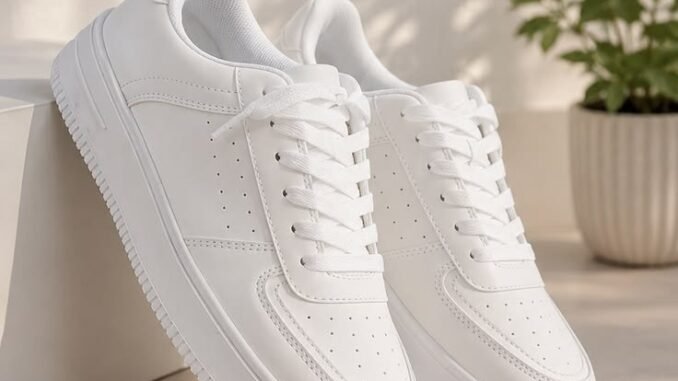
White sneakers are perfect for exactly one day — then the city happens. Scuffs, dirt, mysterious gray tint, the slow slide from “crisp” to “dingy.” How do I keep white sneakers clean and bright? Here’s what sneakerheads know: keeping white sneakers white isn’t about one deep clean — it’s a system of prevention, regular light cleaning, and periodic whitening. The people with perpetually crisp white sneakers aren’t lucky; they’re disciplined about 5-minute maintenance. I’ve kept white leather sneakers bright for two years of regular wear with the routine below.
How Do I Keep White Sneakers Clean and Bright? Phase 1: Prevention
An ounce of prevention beats a pound of scrubbing:
- Protectant spray before first wear. Crep Protect or Jason Markk Repel ($12–$15) — spray evenly, let dry, second coat. Creates an invisible barrier so dirt sits on the shoe instead of in it. Reapply monthly. This single step does 60% of the work.
- Rotate pairs. Daily wear in the same white sneakers grinds dirt in relentlessly. A 2-pair rotation (even one white + one not) dramatically extends crispness.
- Avoid the danger zones when possible: mud, wet grass, dusty construction areas, anything that splashes. Not always avoidable — that’s what cleaning is for — but choose your battles.
- Wipe after wear. 30 seconds with a damp cloth or sneaker wipe (Jason Markk wipes, $8 for a pack — keep them by the door) prevents dirt from setting. The #1 habit of crisp-sneaker people.
Phase 2: Regular Cleaning (Weekly/Biweekly, 10 Minutes)
- Remove laces and insoles. Laces wash separately (soak in warm soapy water or OxiClean — or just replace them, $5 for new laces = instant refresh). Insoles air out.
- Dry brush first. Soft brush or old toothbrush to remove loose dirt. Always dry before wet.
- Mild soap + warm water + soft brush/cloth. Dish soap or dedicated sneaker cleaner (Jason Markk, Reshoevn8r). Work in gentle circles. For leather: wipe, don’t soak. For canvas/knit: gentle scrubbing is fine.
- Magic Eraser for soles and midsoles. A damp Mr. Clean Magic Eraser on rubber soles and midsoles is shockingly effective — the gray scuff line disappears. (Don’t use on leather uppers — too abrasive.)
- Rinse with a damp cloth (not under running water — soaking damages glue and shape), stuff with paper towels to hold shape, and air dry away from direct heat/sunlight (heat yellows white shoes — the cruel irony).
- Never machine wash or dryer. The agitation destroys structure, the heat yellows and warps. Hand-clean only, always.
Phase 3: Whitening (When They’re Going Gray)
- Baking soda + white vinegar paste: the classic — paste on, scrub gently with a toothbrush, let sit 30 minutes, wipe off. Lifts the gray cast remarkably well.
- Hydrogen peroxide + baking soda: for stubborn yellowing on soles — paste, scrub, sun-dry (brief sun after cleaning helps whiten, unlike drying dirty shoes in sun).
- Whitening toothpaste (non-gel): dab on scuffs with a toothbrush — the mild abrasive polishes rubber beautifully.
- Sole shields/whiteners: products like Angelus Sole Bright (originally for sneaker restoration) for serious yellowing — apply, wrap in plastic, sun-cure. The nuclear option; works.
- White shoe polish/paint: for leather sneakers, white cream polish ($8) recolors scuffed leather. For canvas, fabric paint pens touch up spots. Last resort before replacement, but effective.
Material-Specific Notes
- Leather: wipe-clean, condition occasionally (prevents cracking), white cream polish for scuffs. Easiest to keep bright.
- Canvas: absorbs everything — protectant spray is essential. Baking soda paste for stains. Never bleach (weakens fibers, yellows).
- Knit/mesh: gentle hand-wash only, soft brush, air dry stuffed. The hardest to keep perfect — accept “clean” over “factory bright.”
- Suede white sneakers: the final boss — suede-specific care, protectant religiously, accept that white suede is a beautiful, brief joy.
The Replacement Math
Even with perfect care, white sneakers have a lifespan — 1–2 years of regular wear. When the foam is dead, the shape is gone, or whitening stops working, replace. Budget accordingly: a $90 pair worn 200 times = $0.45/wear. And when you replace, consider whether your walking sneakers should be the white pair or whether white should be the “clean occasions” pair while beaters handle the rough days — that’s the real longevity secret.
For product demos of every technique, sneaker cleaning channels show the process, and r/Sneakers has endless before/after proof.
Traveling With White Sneakers
White sneakers and travel are natural enemies — here’s the truce. Pack them smart: stuff with socks/underwear to hold shape, place in shoe bags (or shower caps — the pro trick), pack them sole-to-sole at the bottom of the bag. Bring the mini kit: a few sneaker wipes and a Magic Eraser sponge (cut in half) weigh nothing and handle 90% of travel scuffs. Wear them on travel days: the bulkiest shoes travel on your feet — and white sneakers handle airports well (comfortable, easy security). Have a beater pair: for trips with hiking, rain, or festivals, bring older sneakers for the rough days and keep the white pair for clean occasions — the rotation strategy from home applies double on the road. Post-trip reset: full clean when you get home, before dirt sets — travel grime left for weeks becomes permanent. White sneakers can absolutely be travel shoes; they just need the system to travel with them.
When to Retire White Sneakers
Even perfect maintenance has limits — here’s how to know when it’s time. The foam test: press the midsole with your thumb — if it doesn’t spring back, the cushioning is dead, and dead foam means joint pain regardless of how white they look. The shape test: if they no longer hold their structure (collapsing heels, permanent creases that affect fit), they’re done. The smell test: persistent odor after proper cleaning means bacteria have colonized the materials permanently. The cost test: if restoration (new laces, whitening treatments, sole painting) costs half the price of new, buy new. Retire gracefully: demote them — crisp whites become beaters for yard work, then get recycled (Nike Grind and similar programs take old sneakers). The average lifespan: 1–2 years of regular wear with good care. That’s not failure — that’s 300–500 miles of service.
The practical takeaway: protectant spray before first wear, 30-second wipe after each wear, 10-minute soap clean biweekly, Magic Eraser on soles, baking soda paste for graying — and never machine wash, never heat-dry. Crisp white sneakers aren’t luck; they’re a 5-minute system.
Leave a Reply