
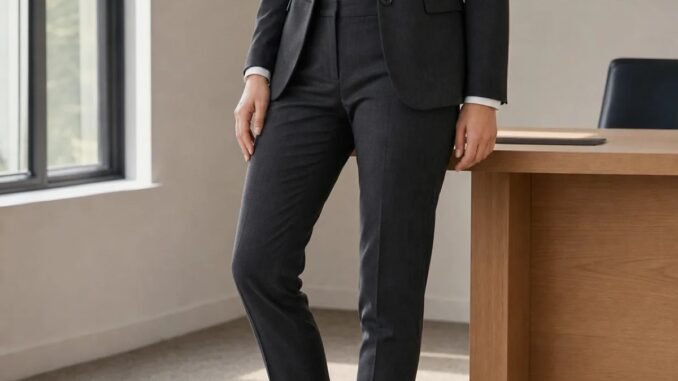
The invitation says “smart casual.” Your colleague says “it’s basically business casual.” Your other colleague shows up in jeans. What is the difference between business casual and smart casual? These two dress codes cause more morning anxiety than any others, because they sound similar, overlap heavily, and the penalty for getting them wrong is real — underdressed reads as disrespectful, overdressed reads as clueless. I’ve navigated both across corporate offices, startups, weddings-adjacent events, and client dinners. Here’s the definitive breakdown.
What Is the Difference Between Business Casual and Smart Casual? The Core Distinction
Business casual = professional clothing minus the suit. It’s office dress: polished, conservative, work-appropriate. Think: what you’d wear to a normal day at a professional (but not formal) workplace.
Smart casual = casual clothing elevated to look intentional. It’s social dress: stylish, relaxed, personality-forward. Think: what you’d wear to a nice dinner, a gallery opening, or a trendy restaurant — put-together but not corporate.
The mental model: business casual leans toward business; smart casual leans toward casual — made smart. One starts at the suit and dresses down; the other starts at jeans and dresses up. They meet in the middle (dark jeans + blazer lives in both worlds), which is exactly why they’re confusing.
Side-by-Side Comparison
- Tops: Business casual — button-down shirts, blouses, knit polo shirts, shell tops. Smart casual — all of those PLUS quality t-shirts (plain, well-fitting), stylish knitwear, Henleys, fashionable tops with personality.
- Bottoms: Business casual — dress pants, chinos, skirts (knee-length+), dark non-distressed jeans only in relaxed offices. Smart casual — dark jeans freely, chinos, skirts of various lengths, tailored shorts in summer settings.
- Layers: Business casual — blazers, cardigans, sweater sets. Smart casual — blazers too, but also leather jackets, denim jackets, stylish bombers, overshirts.
- Shoes: Business casual — loafers, oxfords, ballet flats, low heels, dress boots. Smart casual — all of those PLUS clean minimal sneakers, Chelsea boots, stylish sandals, fashion sneakers.
- Overall vibe: Business casual — “I’m a competent professional.” Smart casual — “I have great taste and I tried.”
What Each One Is NOT
- Business casual is NOT: jeans with holes, t-shirts, shorts, flip-flops, athleisure, clubwear, anything wrinkled. The “casual” modifies “business” — the business part is doing the heavy lifting.
- Smart casual is NOT: gym clothes, pajamas-as-fashion, flip-flops, cargo shorts, graphic tees with jokes on them. The “smart” is doing the heavy lifting here — every piece should look deliberate and in good condition.
Reading the Room: Context Clues
When the dress code is ambiguous (it usually is), decode it:
- Who’s hosting? Corporate HR event → business casual. Friend’s birthday dinner → smart casual. Startup office → ask, then lean smart casual.
- Venue matters: country club, nice restaurant, theater → the smarter end. Bar, casual venue, daytime → the casual end.
- Time of day: daytime skews casual; evening skews smart.
- When truly unsure: dark jeans + blazer + good shoes is the universal safe zone — acceptable at 90% of “business casual” and “smart casual” events. For women: dark jeans or tailored pants + blouse + blazer + polished flats works everywhere.
- Ask. Seriously — “What’s the vibe, dress-wise?” is a completely normal question. Better than guessing wrong.
Building for Both on a Budget
The good news: a small wardrobe covers both codes. The crossover pieces worth owning: a navy blazer, dark non-distressed jeans, chinos, white button-down, quality plain tees, loafers or Chelsea boots, clean minimal white sneakers. With these, you’re 10 minutes from either dress code. This is the capsule approach doing its quiet work — and if you’re starting a job with an ambiguous dress code, dressing professionally on a budget covers the business-casual side completely.
Common mistakes: treating business casual as “whatever” (it’s not — it’s a professional standard), treating smart casual as “dressy” (a cocktail dress at a smart-casual dinner overdresses as badly as shorts underdress), and ignoring grooming (both codes require it — the clothes are only half the message).
For visual references across occasions, The Muse’s dress code guides show real outfit examples, and GQ’s style coverage regularly decodes men’s dress codes with useful specificity.
Real-World Scenarios, Decoded
Let’s make this concrete with situations people actually face. Job interview at a tech company: smart casual leaning polished — dark jeans or chinos, button-down or quality knit, blazer optional, clean sneakers acceptable at casual shops, loafers safer. Client dinner at a nice restaurant: business casual minimum — no jeans unless you know the client dresses down; blazer, dress shirt, chinos or dress pants. Networking happy hour: smart casual — you want to look interesting and approachable, not corporate. Conference (attendee): business casual day one (you don’t know the room yet), then calibrate to what you observed. Conference (speaker): one notch above the audience — authority matters when you’re on stage. Holiday party: festive smart casual — this is the one work event where personality gets full permission. When the invite says nothing: ask the organizer, check photos from last year’s event, or default to the dark-jeans-plus-blazer safe zone. The meta-skill isn’t memorizing rules — it’s reading rooms quickly and calibrating.
The Shoes Question, Settled
If dress codes confuse you, shoes are the cheat code — they signal formality instantly. Sneakers (even clean minimal ones) cap you at smart casual; they can never be business casual. Loafers, ballet flats, and Chelsea boots live in both worlds — the ultimate crossover shoes. Oxfords, pumps, and heeled ankle boots push any outfit toward business casual. Flip-flops and athletic slides are never either (they’re “not invited”). When you’re unsure about an event’s code, choose crossover shoes — they let the rest of your outfit lean either direction. And whatever you wear, they must be clean and in good repair: scuffed shoes drag down a $500 outfit faster than anything else you can wear.
The practical takeaway: business casual = office polish without the suit; smart casual = elevated everyday style with personality. Business casual dresses down from formal; smart casual dresses up from casual. When in doubt: dark jeans or tailored pants + blazer + good shoes works for both — and asking the host beats guessing every time.
Leave a Reply