
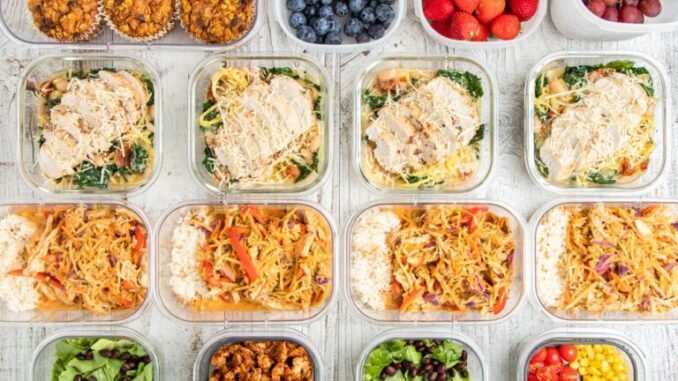
You’re eating lunch at your desk for the third day in a row, dinner is whatever’s fastest, and the idea of “meal prepping like an influencer” with 47 glass containers makes you want to laugh. What is the best diet for someone with a busy schedule? Not a named diet with rules and branded shakes — the best diet for a busy person is a system that makes healthy eating the default even when you have zero time and zero motivation. I’ve built mine over years of 50-hour work weeks, and it runs on three principles: batch the boring stuff, keep smart shortcuts stocked, and make the healthy choice the easy choice.
Forget perfection. The goal is “good enough, consistently” — because a decent diet you follow for years beats a perfect diet you abandon by February.
What Is the Best Diet for Someone With a Busy Schedule? The System, Not a Diet Plan
Principle 1: Batch the Boring Stuff (90 Minutes, Once a Week)
You don’t need a full meal-prep Sunday with matching containers. You need 90 minutes of cooking components — versatile building blocks you can mix and match all week:
- A big protein: sheet-pan chicken thighs, a pork tenderloin, a pot of lentils, or a tray of baked tofu. Season simply (salt, pepper, garlic, olive oil) so it works in any cuisine.
- A big grain: brown rice, quinoa, or farro in the rice cooker — set it and forget it.
- Roasted vegetables: two sheet pans of whatever’s cheap — broccoli, sweet potatoes, bell peppers, zucchini. Roast at 425°F for 25 minutes.
- A sauce or two: salsa, tzatziki, peanut sauce, or just good olive oil and lemon. Sauce is what makes batch food feel like different meals.
That’s it. All week, you’re assembling bowls, wraps, and salads in 5 minutes instead of cooking from scratch. Monday: chicken + rice + broccoli + peanut sauce. Tuesday: same chicken in tortillas with salsa. Wednesday: lentils + farro + roasted veg + tzatziki. Different enough to not feel like leftovers, fast enough for real life. If you want the full playbook, creating a balanced meal plan on a tight budget pairs perfectly with this approach.
Principle 2: Stock Smart Shortcuts
Busy people don’t fail at healthy eating because they’re lazy — they fail because the healthy option requires 40 minutes and the unhealthy one requires a phone call. Fix the equation with a freezer and pantry that do the work for you:
- Freezer heroes: frozen berries, frozen mixed vegetables (nutritionally equal to fresh), frozen brown rice or quinoa pouches, frozen salmon fillets, edamame, turkey meatballs.
- Pantry staples: canned beans, canned tuna/salmon, whole-grain pasta, oats, nuts, olive oil, and a well-stocked spice rack.
- Fridge grab-and-go: Greek yogurt, hummus, pre-washed greens, eggs, rotisserie chicken (the $5 Costco lifesaver), baby carrots, apples.
- Emergency meals: 3–4 genuinely decent frozen meals for the nights when even assembly feels like too much. Look for 15g+ protein and under 700mg sodium — brands like Amy’s, Evol, and Healthy Choice have solid options at $3–$5 each.
Principle 3: Build Go-To Meals, Not Recipes
Recipes are for weekends. Weekdays run on templates — formulas you can execute half-asleep:
- Breakfast: Greek yogurt + frozen berries (microwaved 60 seconds) + granola; or overnight oats (oats + milk + peanut butter + banana, assembled in 2 minutes the night before); or a 3-egg scramble with spinach.
- Lunch: the batch bowl (protein + grain + veg + sauce); or a big salad with rotisserie chicken; or whole-grain wrap with hummus, turkey, and vegetables.
- Dinner: sheet-pan anything (protein + chopped veg + olive oil + seasoning, 425°F, 25 min, one pan to wash); or stir-fry with frozen veg and pre-cooked protein; or breakfast-for-dinner (always faster than you think).
- Snacks: apple + peanut butter, handful of almonds, cottage cheese, hard-boiled eggs (batch a half-dozen on Sunday).
What About Eating Out and Takeout?
Busy schedules mean restaurant food happens. The goal isn’t elimination — it’s damage control that doesn’t feel like punishment:
- Look for the protein + vegetable anchor. Grilled chicken salads, burrito bowls (easy on rice and cheese, heavy on fajita veg), sushi, rotisserie chicken plates, pho with extra vegetables.
- Modify without drama. Dressing on the side, grilled instead of fried, double vegetables instead of fries, water instead of soda. Small swaps, big weekly calorie difference.
- Watch the “healthy” traps. A 900-calorie salad with fried chicken, candied nuts, and ranch is not healthier than a burger. Check nutrition info — most chains post it online now.
- Keep a takeout shortlist. Identify 3–4 genuinely decent options near home and work now, so the 7 p.m. “I’m starving” decision is pre-made.
The Mindset That Makes It Stick
Two ideas changed everything for me. First: good enough beats perfect. A rotisserie chicken with bagged salad is infinitely better than the drive-thru you get when “perfect” meal prep falls apart. Second: decide once, not daily. Every food decision you pre-make (the grocery list, the batch session, the takeout shortlist) is willpower you don’t spend at 6 p.m. when you’re depleted. Decision fatigue is the real enemy of busy-person nutrition — and it’s also why systems beat willpower in every area of life.
If weight is part of your goal, the same principles apply — the research consistently shows that adherence beats any particular diet’s rules, a point the Harvard Health review of diets for busy schedules makes well. And the USDA’s MyPlate guidelines remain the simplest free framework for what “balanced” actually looks like on a plate: half vegetables and fruit, a quarter protein, a quarter whole grains.
The Two-Hour Sunday Power Session
Want the full system in minimum time? Here’s my actual Sunday routine: start rice in the cooker (0 min hands-on), put two sheet pans of vegetables and a tray of chicken thighs in the oven (10 min prep), hard-boil 6 eggs (5 min), make overnight oats for the week in mason jars (10 min), wash and chop snack vegetables (10 min). While everything cooks, write the week’s dinner template on a sticky note. Total hands-on time: about 35 minutes. Total healthy meals unlocked: 15+. The secret isn’t cooking more — it’s cooking once and assembling all week. Your future self, staring into the fridge at 6:45 p.m. on Wednesday, will be deeply grateful.
The practical takeaway: batch proteins, grains, veg, and sauces for 90 minutes on the weekend; stock your freezer and pantry with smart shortcuts; run weekdays on 5-minute meal templates; and pre-decide your takeout options. Healthy eating on a busy schedule isn’t about finding more time — it’s about spending 90 minutes once so you don’t spend 40 minutes daily.
Leave a Reply