
Your doctor says take vitamin D. Your friend says it’s a scam. The bottle says 1,000 IU, the internet says 5,000, and someone on a podcast said 10,000. Meanwhile, an estimated 40% of Americans are deficient — and you have no idea if you’re one of them. If you’re asking how do I know if I have a vitamin D deficiency, here’s the evidence-based answer: the official recommendations, why they’re controversial, who actually needs more, and how to find your personal number without guessing.
Why vitamin D is confusing: it’s technically a hormone your skin manufactures from sunlight, not just a nutrient — which means your needs depend on sun exposure, skin tone, latitude, season, age, and body weight. A one-size-fits-all number was never going to work perfectly. But we can get close.
How Do I Know If I Have A Vitamin D Deficiency? The Official Numbers
- Ages 1–70: 600 IU (15 mcg) daily — the Institute of Medicine RDA
- Over 70: 800 IU (20 mcg) daily
- Upper safe limit: 4,000 IU daily for adults (don’t exceed without medical supervision)
Here’s the controversy: many researchers argue the RDA is too low — set only for bone health, ignoring vitamin D’s roles in immune function and other systems. Some experts suggest 1,000–2,000 IU daily is a more reasonable target for adults with limited sun exposure. The truth: optimal intake is individual, and the best way to know yours is testing (more below).
Why So Many People Are Deficient
- Indoor life: Office workers get a fraction of the sun exposure humans evolved with.
- Latitude and season: Above ~37° latitude (roughly San Francisco to Richmond), winter sunlight is too weak for vitamin D production — November through February, you’re making essentially none.
- Skin tone: Melanin is natural sunscreen — darker skin needs 3–5x more sun exposure to make the same vitamin D. Deficiency rates are highest in Black Americans (~70%+).
- Sunscreen: SPF 30 blocks ~97% of vitamin D-producing UVB. (Keep using sunscreen — skin cancer is worse than deficiency; supplement instead.)
- Age: Skin becomes less efficient at synthesis with age — a double hit for seniors who also go outside less.
- Body weight: Vitamin D is fat-soluble and sequestered in fat tissue — people with obesity often need 2–3x more to achieve the same blood levels.
- Geography + lifestyle: Night shift workers, the homebound, and anyone in northern states through winter are high-risk.
Sources: Sun, Food, Supplements
Sunlight
10–30 minutes of midday sun on face, arms, and legs, a few times weekly, produces substantial vitamin D in summer — less time for fair skin, more for darker skin. But: balance against skin cancer risk, and accept that winter at northern latitudes makes supplementation necessary regardless.
Food (modest contributions)
- Fatty fish: Salmon (~570 IU per 3 oz), sardines, mackerel — the best food sources by far.
- Fortified foods: Milk, orange juice, cereals (~100–150 IU per serving).
- Egg yolks, mushrooms (UV-exposed): smaller amounts.
Reality check: it’s very hard to reach optimal levels from food alone without fatty fish several times weekly. Most deficient people need supplements.
Supplements
- D3 (cholecalciferol) beats D2 for raising blood levels — choose D3.
- Take with fat: Vitamin D is fat-soluble — take with a meal containing fat for 30–50% better absorption.
- Typical maintenance: 1,000–2,000 IU daily covers most adults with limited sun. Those deficient often need short-term higher doses prescribed by a doctor.
- Magnesium matters: Vitamin D metabolism requires magnesium — deficiency in one impairs the other. Nuts, whole grains, and leafy greens cover it.
Testing: Know Your Number
The 25-hydroxyvitamin D blood test (~$50, often covered if your doctor orders it) is the only way to know your status. Target range: 30–50 ng/mL is the common sufficiency target (some experts prefer 40–60). Below 20 ng/mL is deficient; below 12 is severely deficient. Test in late winter (your lowest point) for the most useful baseline, then adjust supplementation and retest in 3–6 months. Guessing with megadoses is how people end up with vitamin D toxicity (rare but real — hypercalcemia from excessive supplementation).
The NIH Office of Dietary Supplements maintains the authoritative vitamin D fact sheet with intake recommendations and safety data.
Who Should Pay Extra Attention
- People with darker skin living in northern latitudes
- Adults over 60 (reduced synthesis + less outdoor time)
- Office/indoor workers, night shift workers
- People with obesity
- Those with limited fish/dairy intake
- Anyone with bone loss, frequent illness, or persistent fatigue (discuss testing with your doctor — our energy foods guide covers other fatigue causes)
Quick Answers: Spotting Vitamin D Deficiency
What are the actual symptoms of vitamin D deficiency?
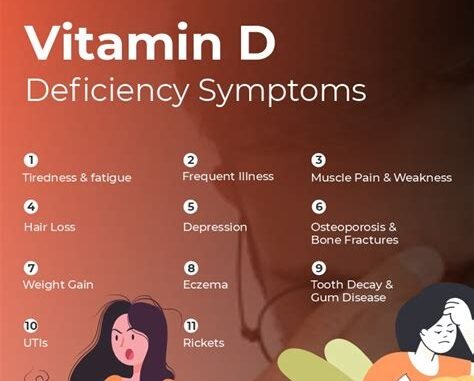
The honest answer: they’re vague, which is why deficiency goes undetected. Commonly reported signs include persistent fatigue, bone or back pain, muscle weakness, frequent illness (impaired immune function), slow wound healing, and low mood. But every one of these has many causes — symptoms alone can’t diagnose deficiency. That’s what the blood test is for — ask your doctor about a 25-hydroxyvitamin D test at your next visit (our checkup cost guide helps uninsured readers plan affordable testing).
Can I tell from symptoms alone, or do I need the test?
You need the test. The symptoms overlap with dozens of conditions (thyroid issues, depression, anemia, poor sleep), and plenty of deficient people feel fine. The 25-hydroxyvitamin D blood test is inexpensive and definitive — guessing from symptoms leads to both missed deficiencies and unnecessary megadosing.
Who is most likely to be deficient without knowing it?
Office workers who rarely see midday sun, people with darker skin in northern states, adults over 60, night-shift workers, and anyone who covers up thoroughly outdoors. If several of those describe you and you’ve never been tested, you’re the textbook candidate for a check.
How long does it take to correct a deficiency?
With proper supplementation (dose set by your doctor based on your level), most people reach sufficiency within 2–3 months. Retest after 3 months to confirm, then drop to a maintenance dose. It’s one of the most straightforward deficiencies to fix — once you know you have it.
The bottom line: most adults with limited sun need 1,000–2,000 IU of D3 daily taken with a fatty meal — more than the 600 IU RDA but well within safety limits. Get tested to know your actual level (target 30–50 ng/mL), supplement through northern winters regardless, and don’t megadose without medical guidance. It’s the cheapest, simplest nutritional insurance most Americans aren’t carrying.
Leave a Reply