
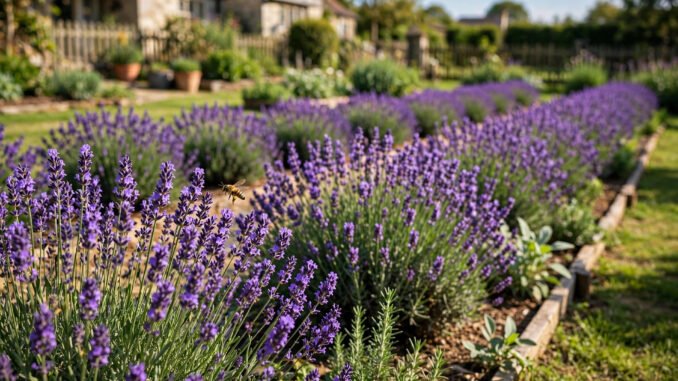
Lavender has a split reputation. One neighbor grows a neat purple mound that asks for almost nothing and blooms every summer. Another watches a gray, woody plant fade in a wet corner and decides lavender is fussy. Both stories can be true. The plant is easy in the right spot and miserable in the wrong one, and the spot decides the result long before you buy anything.
So the honest question is not whether lavender is hard. It is whether your yard can give it three things it will not bargain over. If it can, lavender is one of the best low-care shrubs a beginner can plant. If it cannot, forcing it wastes money and patience. Work through the conditions first, then weigh the costs against the rewards, then decide.
What Success Actually Looks Like
Calibrate your hopes first, because catalog photos set traps. A successful plant is a woody, compact shrub about 2 to 3 feet across. It blooms heavily once a year, with some varieties reblooming lightly later in the season. It lives roughly 8 to 15 years in a good spot and needs almost no care once established. Those are typical expectations, not promises for every plant in every yard.
That picture is less lush than the adverts suggest, and better. Lavender is not a soft green filler that grows fast and forgives shade. It is a dry-land shrub with silver leaves, tight growth, and a short, rich burst of flower. In year one it looks modest. By year two or three, in sun and sharp drainage, it fills out and starts to look like the plant you imagined. A beginner who expects that pace will be pleased. A beginner who expects instant size will think something is wrong when nothing is.
The First Non-Negotiable: Full Sun, Truly Full
Lavender needs at least 6 to 8 hours of direct sun daily, and more is better. Count honest hours, not hopeful ones. Watch the spot on a clear day. Note when sun reaches it and when a fence, roof, or tree cuts it off. A bed that looks bright at noon may spend its morning and late afternoon in shade.
With only 4 to 5 hours, lavender survives but disappoints. Growth turns loose and leggy as stems reach for light. Flowering drops. The plant lives, which fools beginners into waiting another year, but it never thickens into the compact shrub they wanted. If your sunniest ground falls short, do not talk yourself into it. Save the spot for a plant that likes less sun, and give lavender a pot on the brightest patio instead.
The Second Non-Negotiable: Sharp Drainage, the Real Dealbreaker
If you remember one line, make it this one. Drainage is the dealbreaker. Lavender rots in wet winter soil long before cold kills it. Roots that sit in cold, soggy ground through winter fail quietly, and the plant collapses in spring just as you expect growth. Many beginners blame the freeze when the true cause was water that never moved away.
Use the classic test before you plant. Dig a hole about 12 inches deep, fill it with water, and time how long it takes to drain. If the hole empties at a steady pace, your ground may suit lavender. If standing water lingers, stop. Standing water means you need a fix first: raised beds that lift roots above wet ground, a gravel-amended spot on a slope, or pots with free drainage. Without one of those fixes, planting in that hole is a slow loss.
Soil type tells part of the story. Sandy and gravelly soils drain freely and suit lavender well. Heavy clay holds water and needs real work, not a handful of grit tossed in the planting hole. A small pocket of loose mix inside clay can act like a bowl that fills with water. Improve a whole raised bed, or choose a pot. Honest limits here save plants.
The Third Non-Negotiable: The Right Variety for Your Climate
Variety choice turns a borderline yard into a success or a failure. Lavender is not one plant. To place the groups clearly, start with the lavender genus and its main cultivated types, then match the group to your winters, your summers, and your rainfall. Cold alone does not decide it. Humidity and wet winters matter just as much.
English lavenders come first for cold gardens. Read up on English lavender and its hardiness if you garden where winters bite, because this group sets the standard for surviving low temperatures. Plants in the Lavandula angustifolia group, including ‘Hidcote’ and ‘Munstead’, are the hardiest, to about USDA zone 5. They are compact, sweetly scented, and a fine choice where summers stay moderate. Their weakness is clear too. They dislike humidity and wet winters, which can shorten their lives even where cold alone would not.
Spanish and French types, in the L. stoechas group, take heat well and flower with showy heads that stand out in warm gardens. Their limit is cold. They die below about zone 7 to 8, so a beginner in a colder zone should treat them as patio plants to shelter, not as hardy shrubs to leave out all winter.
Lavandins, the L. x intermedia crosses including ‘Grosso’ and ‘Provence’, are the big, vigorous oil producers. They grow larger, flower heavily, and are hardy to about zone 5 to 6. For most beginners in the eastern United States, a lavandin is the best default. It offers size, scent, and strong bloom with more forgiveness than the smaller English types, as long as drainage is sharp.
The humid Southeast used to be near hopeless for lavender. That picture has shifted. Humidity-bred varieties like ‘Phenomenal’ have genuinely widened what is possible across zones 5 to 8. If your summers are wet and heavy, look for varieties bred for humidity tolerance rather than buying the prettiest plant on the bench and hoping. Local garden centers and extension advice can point you to forms that have lasted in your county, which is worth more than a generic label.
The Costs and the Cons, Stated Plainly
Money is not the main cost, but it helps to see it. A one-gallon plant runs roughly $8 to $15 at a garden center. A small planting totals about $40 to $80 including soil improvement. That covers a few plants, grit or compost where needed, and mulch that keeps weeds down without feeding the soil too richly. It is a modest start as shrubs go, though a failed spot still wastes every dollar of it, which is why the tests above come first.
Time is a real cost. A plant takes a couple of seasons to reach full size. You will water and watch a small gray mound through its first summer and wonder if you chose well. For gardeners who need fast results, that wait is a genuine drawback, not a small detail.
The yearly prune is the one skill to learn, and it matters. Cut back by about a third after flowering to keep the plant compact and full of young growth. Never cut into bare old wood, which may not regrow. That single mistake hollows out many lavender plants. Leave a cushion of leafy growth on every stem, and prune on a dry day so cuts heal cleanly. Done yearly, the job takes minutes. Skipped for years, it cannot be fixed in one hard cut.
Feeding is the other place beginners go wrong, by kindness. Lavender wants lean soil. Overfeeding produces floppy, short-lived growth with fewer flowers and a plant that ages fast. Skip rich fertilizer. A thin top dressing and good drainage do more for lavender than any feed bag. If your bed soil is rich garden loam built for vegetables, plant lavender at its lean edge or in a raised mix made for drainage, not richness.
The Pros Once the Plant Is Established
When the three conditions pass, the rewards stack up year after year. An established plant is drought-tolerant and shrugs off dry weeks that stress thirstier shrubs. It is largely pest-free, since few insects trouble it and deer tend to leave the scented leaves alone. It asks for no spray program and no fussy feeding schedule.
It is pollinator-friendly in a way you can watch. On bloom days the flowers hum with bees from morning to evening. For a beginner who wants a garden that feels alive, few shrubs earn their space so clearly in so short a season.
The harvest makes it useful as well as pretty. Cut stems when flowers show color and some buds still hold tight. Bundle stems in bunches of about 20 to 30, hang them upside down in a dark, dry, airy place, and they dry in roughly 1 to 2 weeks. Dried lavender keeps for gifts, for drawers and closets, and for cooking where the variety suits food use. English types are the usual kitchen choice, so check the variety before you bake with it. Fresh stems also scent a room for days, and learning keeping fresh herbs from going bad so fast helps you handle cut stems of all kinds with less waste.
When It Is Not Worth It, and the Pot Answer
Be kind to yourself and skip lavender in the ground when the facts say no. If your only sunny spot is a boggy low area you cannot fix, do not plant there. If you garden in zone 4 or colder without reliable snow cover to insulate plants, winter will test lavender past its limit. If your summers marry extreme humidity to heavy soil, in-ground plants face rot from above and below at once.
There is still a good answer for most of those yards. Grow lavender in a terracotta pot on the sunniest patio. A pot gives you drainage you control, soil you can keep lean and gritty, and a plant you can move under cover in the worst wet weeks. You will get most of the joy with none of the heartbreak: the scent by the chair, the bees on the flowers, stems to cut and dry, without betting a bed on soil that fights the plant all year.
The Verdict
Worth it, if sun, drainage, and variety all pass. In that case lavender is a fine beginner shrub: modest cost, one yearly skill, years of bloom and scent, and very little weekly care once roots settle.
It is a hard no, dressed kindly, if drainage fails and cannot be fixed. No variety choice or pruning skill can save roots that sit wet all winter. Test the hole, count the sun, pick the group that fits your climate, and let those three answers make the decision. Get them right, and lavender will repay you for a long time.
Leave a Reply