
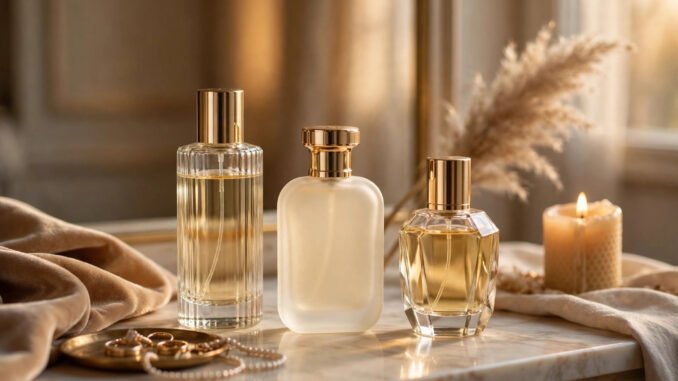
There’s a moment — catching a familiar scent on a stranger, instantly transported — when you understand what a signature scent is for. It’s not about smelling “good” in the abstract. It’s about olfactory identity: the fragrance people associate with you, that announces you before you speak and lingers after you leave. What is choosing a signature scent, and how does it actually work? It’s part chemistry (how fragrance interacts with your skin), part psychology (what you want to project), and part practical testing (because paper strips lie). Here’s the complete guide.
What “Signature Scent” Actually Means
A signature scent is a fragrance you wear consistently enough that it becomes associated with you — your olfactory fingerprint. It doesn’t mean wearing one perfume forever (most “signature” wearers rotate 2–3 across seasons); it means having a recognizable scent identity rather than a chaotic fragrance wardrobe where nothing is yours.
The psychology is real and documented: smell is the sense most strongly linked to memory and emotion (the olfactory bulb connects directly to the limbic system), which is why scent creates the strongest associative memories. People remember how you smelled longer than what you wore. A signature scent leverages this — deliberately building the association instead of leaving it to chance.
How Fragrance Actually Works (The Chemistry You Need)
Notes and the dry-down: fragrances unfold in three stages. Top notes (citrus, herbs — 15–30 minutes) are the first impression. Heart notes (florals, spices — 2–4 hours) are the character. Base notes (woods, musk, amber, vanilla — 4–12+ hours) are the lasting memory. Beginners judge by top notes and buy wrong — the fragrance you’ll actually live with is the dry-down (hours 2–6). Always evaluate a scent after hours of wear, not minutes.
Concentration matters: parfum (20–30% oils, 8–12+ hours), eau de parfum (15–20%, 4–8 hours), eau de toilette (5–15%, 2–4 hours), eau de cologne (2–5%, 1–2 hours). Higher concentration = longer-lasting and usually richer, not necessarily “stronger” in projection. For a signature scent, EDP is the sweet spot for most people.
Skin chemistry changes everything. The same perfume smells different on different people — skin pH, oiliness, diet, and even medications alter how notes develop. This is why you must test on your skin, never just on paper strips, and why copying someone else’s signature rarely works. Your signature must be chosen by your nose on your skin.
Fragrance families: the map of the territory — fresh (citrus, aquatic, green), floral (the largest family), woody (cedar, sandalwood, vetiver), oriental/amber (spices, resins, vanilla), plus gourmand, chypre, fougère. Most people gravitate toward 1–2 families; identifying yours narrows the search enormously. Sample within your family first.
The Selection Process (How It Actually Works)
1. Sample, don’t blind-buy. Order discovery sets and decants ($4–$8 per 2ml from decant retailers) instead of full bottles. A $30 discovery set that prevents three $120 blind-buy mistakes is the best fragrance investment possible.
2. Test on skin, one at a time. Maximum two fragrances per outing (one per wrist), worn for a full day each. Evaluate at hour 1, hour 4, hour 8. The dry-down decides. Take notes — after twenty samples, they blur together without them.
3. Consider the message. What do you want to project? Fresh/citrus reads energetic and approachable; woody reads grounded and confident; oriental/amber reads warm and sensual; floral reads classic and polished. There’s no wrong answer — but intentionality beats accident. Your signature should feel like you on your best day, not a costume.
4. Consider the contexts. A signature for the office (lighter projection, inoffensive) differs from evenings (richer, bolder). Many people land on a day signature and a night signature — still a curated identity, not chaos. The rule for shared spaces: fragrance should be discovered, not announced (if people smell you before seeing you, it’s too much).
5. Live with finalists. Wear each finalist for a full week — different weather, different moods, different clothes. The right one keeps delighting you on day seven. The wrong one starts annoying you by day three. Time is the most honest tester.
The Budget Reality
Signature scents don’t require niche-perfumery budgets. Excellent designer and drugstore-adjacent fragrances ($30–$80) serve perfectly well — the fragrance community’s open secret is that several affordable scents outperform $300 niche bottles. Decants let you wear expensive fragrances for dollars per month. And once chosen, a 100ml EDP worn daily lasts 6–12 months ($0.25–$0.50/day) — cheaper than the daily coffee.
The expensive mistake isn’t the price of the bottle — it’s the drawer of abandoned full bottles bought without testing. Discovery sets and decants first, full bottle only of the proven winner. This is the same “curate, don’t accumulate” philosophy behind building a capsule wardrobe on a budget — a few perfect pieces beat a closet of compromises. And like affordable handbags that look expensive, the right affordable fragrance outperforms the wrong expensive one every time.
Application: The Technique
Pulse points: wrists, neck, behind ears — warmth diffuses the scent. Don’t rub wrists together (it crushes top notes and alters development — just dab or spray and let dry). 2–4 sprays for EDP is the standard; more is rarely better. Hair and clothes hold scent longer than skin (one spray on hair or scarf extends the day dramatically) — but test for staining on fabrics. Moisturized skin holds fragrance longer than dry skin (apply after unscented lotion). And reapply EDTs midday if needed; EDPs usually carry the day.
Conclusion
Choosing a signature scent works when you respect the process: learn the fragrance families, sample via decants (never blind-buy), test on your skin for full days (judging the dry-down, not the opening), consider the message and context, live with finalists for a week, and buy the full bottle only of the proven winner. Your signature isn’t the most expensive or most complimented fragrance — it’s the one that feels like you, that people associate with you, that still delights you on day seven. Find it once, wear it for years, and let your scent do what it does best: make you unforgettable. The FDA’s cosmetics resources cover fragrance ingredient safety, and the AAD’s skin care guidance addresses fragrance sensitivity for reactive skin.
Frequently Asked Questions
How do I choose a signature scent?
Identify your preferred fragrance families, sample via discovery sets and decants (never blind-buy full bottles), test each candidate on your skin for full days (evaluating the hours-long dry-down, not the opening), live with finalists for a week, and choose the one that still delights you on day seven.
How long should a signature scent last on skin?
Eau de parfum (the recommended concentration for signatures): 4–8 hours. Parfum: 8–12+ hours. Eau de toilette: 2–4 hours (needs reapplication). Longevity varies with skin chemistry — moisturized skin and pulse-point application extend wear.
Can I have more than one signature scent?
Yes — most signature wearers rotate 2–3: typically a lighter day/office scent and a richer evening scent, sometimes seasonal variations. The point is a curated, recognizable identity, not a single bottle worn identically forever.
Do expensive perfumes smell better than cheap ones?
Not necessarily. Price reflects ingredient costs, marketing, and packaging as much as quality — several $30–$80 designer fragrances are beloved as signatures, and decants make expensive scents affordable to wear. The right affordable fragrance beats the wrong expensive one every time.
Why does perfume smell different on me than on someone else?
Skin chemistry — pH, oiliness, diet, hormones, even medications alter how fragrance notes develop and how long they last. This is why testing on your own skin (not paper strips, not someone else’s wrist) is essential, and why copying another person’s signature rarely reproduces the effect.
Leave a Reply