
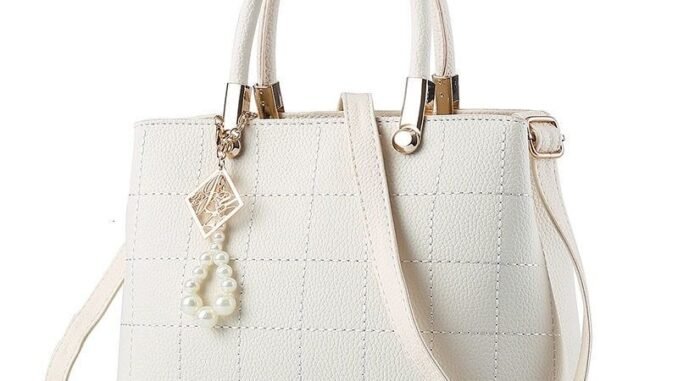
You want the bag that makes your whole outfit look more expensive — without the four-figure price tag or the screaming logo. What are the best affordable handbags that look expensive? Here’s what luxury houses don’t want you to focus on: expensive-looking has almost nothing to do with brand names and everything to do with design signals — structure, hardware, material quality, and restraint. A $80 bag with clean lines and good hardware looks richer than a $400 bag covered in logos and flimsy zippers. I’ve become mildly obsessed with this, and the affordable bags that fool everyone share a specific formula.
Here’s the formula, the specific bags worth buying, and how to keep them looking luxe.
What Are the Best Affordable Handbags That Look Expensive? The Formula
Expensive-looking bags share these traits. Memorize them and you’ll never buy a cheap-looking bag again:
- Structured silhouette. Bags that hold their shape (top-handle satchels, structured totes, boxy crossbodies) read as luxury; slouchy shapeless bags read as casual regardless of price. Structure = money.
- Minimal branding. Loud logos actually signal less wealth in current fashion — quiet luxury (think The Row, not monogram canvas) is the expensive look. No visible logos, or tiny discreet hardware logos only.
- Quality hardware. Weighty zippers that glide, clasps with a satisfying click, hardware in consistent gold or silver tone. Cheap bags betray themselves at the zipper first — test it in person or read reviews about it.
- Clean stitching. Even, tight stitching with no loose threads or glue visible. Flip the bag over and inspect — luxury is in the details nobody sees.
- Rich, saturated colors. Cognac, black, deep burgundy, forest green, warm taupe. Avoid plasticky brights and pale colors that show every scuff.
- Good “leather” — real or faux. Full-grain leather is ideal, but high-quality vegan leather (look for “pebbled” textures, matte finishes) convincingly passes at $50–$100. What fails: shiny plasticky faux leather that creases white at the folds.
Specific Bags Worth Buying (Under $150)
- JW Pei Gabbi / Mini Flap (~$80–$130): the internet’s favorite “looks designer” bag — structured, minimal, excellent vegan leather. The ruching detail reads far above its price.
- Charles & Keith (~$70–$100): Singaporean brand with genuinely elevated design — structured shapes, great hardware, seasonal colors. The best-kept secret in affordable bags.
- Mango / Zara structured bags (~$40–$80): hit-or-miss by season, but their structured top-handles and minimalist totes regularly pass for 3x the price. Inspect hardware in person.
- Coach outlet / pre-loved Coach (~$100–$150): real leather, excellent hardware, timeless designs — Coach’s refined (non-logo) lines at outlet or secondhand prices are the smart-money luxury look. Check thrift strategies — vintage Coach is prime thrift gold.
- Ted Baker / Dune London (~$80–$130): British high-street brands with polished, structured designs that read expensive.
- Target’s A New Day structured totes (~$35): the budget champion — clean lines, decent hardware, genuinely hard to clock as $35.
- Senreve / Cuyana pre-loved (~$100–$150): minimalist luxury brands whose secondhand pieces (Poshmark, Vestiaire) deliver the quiet-luxury look at 70% off.
Styles That Always Look Expensive
- Structured top-handle bag: the #1 “expensive” silhouette — ladylike, architectural, timeless.
- Minimalist tote: clean lines, no exterior pockets or zippers breaking the surface, fits a laptop.
- Boxy crossbody: hands-free polish; the structured rectangle reads far richer than a slouchy hobo at the same price.
- Clutch/mini for evenings: small, structured, metallic or black — evening bags are the easiest to fake luxe because there’s so little material to judge.
Keeping Them Looking Luxe
- Stuff them when stored. Tissue paper or a small pillow maintains structure — a collapsed bag looks cheap instantly. Store in dust bags, never piled under other things.
- Condition leather bags every few months — the same leather care routine as boots, miniaturized.
- Clean hardware with a soft cloth; replace if plating wears (a cobbler can often re-plate or replace clasps cheaply).
- Rotate bags. Daily use wears any bag fast; a 2–3 bag rotation triples each one’s lifespan.
- Fix, don’t toss. Loose stitching, worn corners, tired straps — a shoe repair shop fixes handbags too, usually for $15–$30.
Pair your bag strategy with the rest of the expensive-look system: affordable watches that look high-end and professional dressing on a budget complete the picture — nobody will ever guess the total.
For trend-aware picks each season, Who What Wear’s affordable bag roundups and Good Housekeeping’s tested picks are reliably good.
The Pre-Loved Luxury Shortcut
Want actual designer quality at affordable prices? The secondhand luxury market is the answer — and it’s more accessible than ever. A pre-loved Coach, Kate Spade, or Tory Burch bag ($80–$150 on Poshmark, Vestiaire Collective, or The RealReal) delivers genuine full-grain leather, excellent hardware, and timeless design for the price of a new fast-fashion bag. For higher-tier (Gucci, Prada, Louis Vuitton), stick to authenticated platforms (Vestiaire, Fashionphile, The RealReal) — counterfeits flood peer-to-peer sites. What to look for: clean corners (the first wear point), functioning zippers, intact stitching, and minimal interior staining. What to avoid: cracked leather (unfixable), strong odors (smoke rarely leaves), and “vintage” pieces priced like new ones. A $120 authenticated pre-loved designer bag that’s 5 years old will outlast and outclass a $120 new bag every time — the quality gap between luxury construction and high-street construction is real, and secondhand is how normal budgets access it.
Hardware: The Detail That Fools Everyone
Want to know the fastest way experts spot a cheap bag? The hardware. Quality zippers glide smoothly and have weight; cheap ones catch, feel tinny, and have visible seams. Clasps should click with authority, not rattle. And the metal tone should be consistent across every piece on the bag — mixed gold and silver hardware on one bag screams cost-cutting. When shopping affordable bags, test every zipper, open every clasp, and hold the bag by its handles — does it feel substantial or flimsy? The $80 bag with excellent hardware will outlast and out-impress the $150 bag with terrible zippers every time. Hardware is also the most repairable part — a cobbler can replace a broken zipper pull or clasp for $10–$20, extending a good bag’s life by years.
The practical takeaway: structured silhouette + minimal branding + weighty hardware + clean stitching + rich color = expensive-looking at any price. JW Pei, Charles & Keith, Mango’s structured lines, and pre-loved Coach deliver it under $150. Stuff, condition, and rotate your bags, and no one will ever know what you paid.
Leave a Reply