
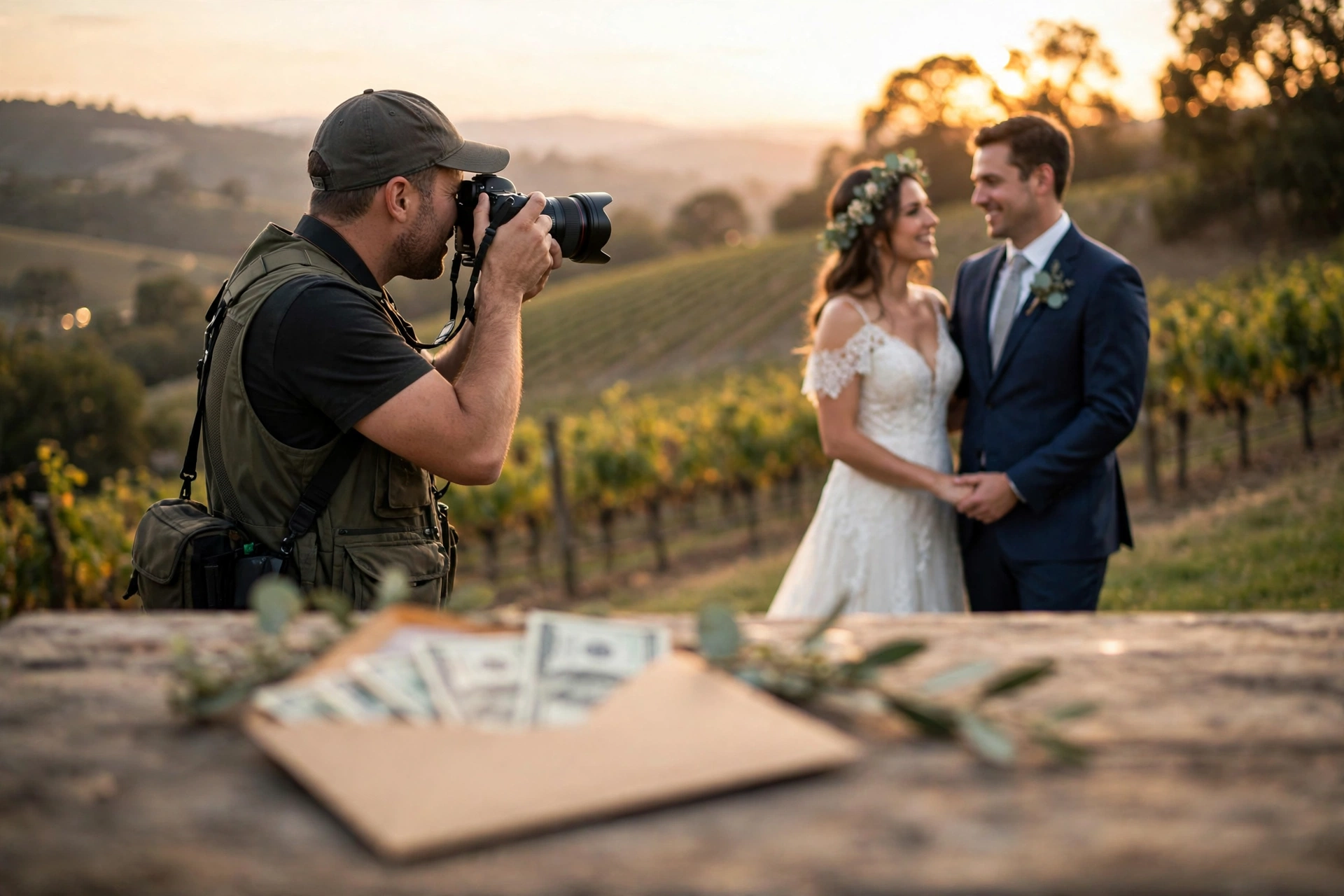
Your wedding photographer will be with you for eight, ten, sometimes twelve hours on the biggest day of your life — capturing moments you’ll look back on for decades. So when the final invoice is paid and the day went beautifully, a natural question comes up: how much do you tip a wedding photographer?
The short answer: tipping is appreciated but not mandatory, and the standard range is 5–10% of the photography fee, or a flat $100–$200 for the lead photographer. But the real answer depends on who owns the business, how the day went, and what your contract says. Let’s get into the details.
Is Tipping Your Wedding Photographer Expected?
Unlike restaurant servers or bartenders, wedding photographers don’t depend on tips as part of their wages. Photography pricing already reflects the full cost of their time, skill, equipment, and editing work. That means a tip is a genuine bonus — a thank-you for exceptional service — not an obligation.
In practice, roughly half of couples tip their photographer. It’s more common when the photographer went above and beyond: staying late without being asked, calming your nerves, wrangling a chaotic family for group shots, or delivering sneak peeks within days. If the service was simply “as contracted,” skipping the tip is completely fine and won’t offend a professional.
How Much to Tip: The Standard Ranges
- Lead photographer: 5–10% of the total fee, or $100–$300 flat. On a $3,000 package, that’s $150–$300.
- Second shooter / assistant: $50–$100 each, handed directly to them (not through the lead).
- Photo booth attendant: $50–$100 if one was included.
- Videographer (if separate): Same range as the photographer — 5–10% or $100–$200.
These are guidelines, not rules. Tip what the service was worth to you. A photographer who saved your timeline when everything ran late deserves more than one who just showed up and shot.
Does It Matter If the Photographer Owns the Business?
This is the one nuance worth knowing. Traditional etiquette says you don’t need to tip the owner of a business, since they set their own prices and keep the full profit. By that logic, an independent photographer who owns their studio doesn’t expect a tip, while a photographer employed by a larger studio might appreciate one more.
In reality, this distinction has blurred. Most photographers — owners included — genuinely appreciate tips, and none will be offended by receiving one. The practical takeaway: if your photographer is an independent owner and the service was good but standard, a heartfelt thank-you note and a glowing review can matter more than cash. If they were extraordinary, tip anyway.
When to Tip (and When Not To)
Tip when:
- They stayed beyond contracted hours without charging extra
- They handled difficult situations gracefully (bad weather, delays, family drama)
- They delivered sneak peeks or the full gallery faster than promised
- You genuinely feel the photos exceeded what you paid for
Don’t feel pressured when:
- The service was fine but unremarkable
- You’re already at the top of your budget — a sincere review is a great alternative
- The contract included a service charge or gratuity (check first so you don’t double-tip)
How to Give the Tip
Cash in a sealed envelope is still the standard. Prepare envelopes before the wedding day — one for the lead photographer, one for each assistant — and give them to your wedding planner, maid of honor, or best man to distribute at the end of the night. Don’t hand it over mid-event; the end of their coverage is the right moment.
Include a short handwritten note. “Thank you for capturing our day so beautifully” takes thirty seconds and means a lot. Photographers run on referrals, so also consider:
- A five-star Google review mentioning them by name
- Tagging them when you post wedding photos on social media
- Permission to feature your wedding in their portfolio (if you’re comfortable)
- Referring engaged friends directly
Many photographers will tell you that a detailed positive review brings them more business than any tip. If cash is tight after paying for the wedding itself, this is a meaningful alternative.
What About the Rest of Your Vendors?
Photographer tipping sits in the middle of the wedding-vendor tipping spectrum. For context on what the rest of your team typically receives:
- Wedding planner/coordinator: 10–20% or $200–$500
- Caterer: Often a service charge is built in; if not, 15–20% of the food bill
- Bartenders: $1–$2 per drink or 10% of the bar bill
- DJ or band: $100–$300
- Florist: Not typically tipped (delivery/setup crew: $20–$50 each)
- Officiant: $100–$300 donation or fee
- Hair and makeup: 15–25%, like a salon visit
Total vendor tips often run $1,000–$2,500 on a mid-size wedding. Build this into your budget early — it’s one of the most commonly forgotten line items. Our guide to planning a wedding in six months includes a full budgeting checklist so nothing slips through.
Common Questions
Should I tip if I already paid a lot for photography?
The fee and the tip are separate things. An expensive package doesn’t obligate a tip, but exceptional service on an expensive package still deserves recognition. Judge the service, not the price tag.
Can I tip after I see the photos?
You can, and some couples prefer to wait until the gallery arrives. But most etiquette guides suggest tipping at the event, based on the day-of experience. A post-delivery bonus for a stunning gallery is a lovely surprise either way.
What if there were problems with the service?
Don’t tip to compensate for poor service. If the photographer was late, missed key shots, or was unprofessional, address it directly — and check your contract about remedies — rather than smoothing it over with a tip.
Do I tip the engagement session photographer separately?
If it’s the same photographer, one tip at the wedding covers everything. If you used someone different for engagements, a small tip or a great review is a nice gesture but not expected.
The Bottom Line
Plan on $100–$300 for your lead photographer and $50–$100 per assistant if the service warrants it. Put the cash in labeled envelopes before the wedding day, add a sincere note, and follow up with a glowing review. That’s the complete playbook — generous without being extravagant, and appreciated every time.
Still working out the order of the day? Check how long a wedding ceremony lasts so you can schedule your photographer’s coverage hours accurately — and if you’re still assembling the wedding party, see our guide on how many bridesmaids to have.
Understanding What You’re Paying For
To tip fairly, it helps to understand what wedding photography as a profession actually involves. You’re not just paying for someone to show up with a camera for eight hours. A typical wedding package includes 30–60 hours of total work: consultations, timeline planning, the wedding day itself, culling thousands of images, professional editing, album design, and delivery. When you see it that way, a $150 tip on a $3,000 package — representing dozens of hours of skilled labor — is a modest gesture of appreciation, not an extravagance.
Tipping Across Cultures and Regions
Expectations vary by location. In major US metro areas, tipping vendors is standard and expected; in some smaller markets, it’s less common. Destination weddings add another layer — in many countries, the standard tipping etiquette guidelines differ from American norms, and some resorts include service charges automatically. If you’re marrying abroad, ask your planner what’s customary locally so you neither undertip nor double-tip on top of a built-in service charge.
What if the contract includes a gratuity?
Some studios — especially larger ones — add a service charge or gratuity line to the contract. If yours does, you’ve already tipped; adding more is optional and only warranted for truly exceptional service. Always read the contract’s fine print before preparing envelopes so you don’t pay twice.
Leave a Reply