
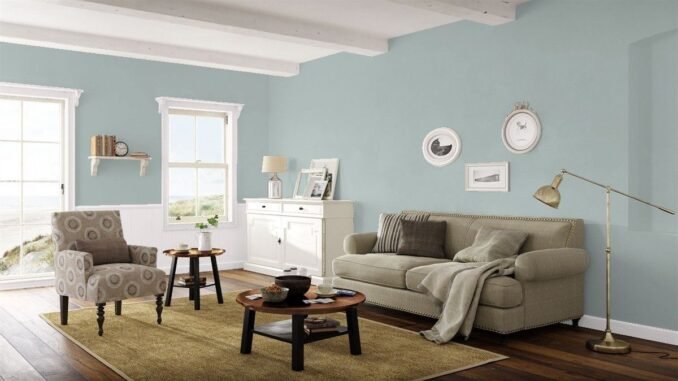
Choosing the best paint color for a small living room feels high-stakes because it is — the wrong color can make a cozy 12×14 room feel like a closet, while the right one makes it feel open and intentional. I’ve painted three small living rooms in three different houses, and the lesson each time was the same: it’s not just the color, it’s the color plus light plus finish. Here’s what actually works.
The Science: What Makes a Room Feel Bigger
Light colors reflect more light, and reflected light blurs the boundaries between walls — that’s the whole trick. Colors with a Light Reflectance Value (LRV) above 60 will open up a room; below 40 starts to close it in. But “just paint it white” is lazy advice — the right white matters enormously, and several non-white colors work beautifully.
12 Best Paint Colors for a Small Living Room
Warm whites (the safe winners)
- Benjamin Moore White Dove (OC-17): the designer’s default for a reason — warm without going yellow, works with everything.
- Sherwin-Williams Alabaster (SW 7008): soft, creamy, never stark. Gorgeous with wood tones.
- Behr Swiss Coffee: the budget-friendly warm white (~$35/gallon) that looks far more expensive than it is.
Light neutrals with personality
- Benjamin Moore Edgecomb Gray (HC-173): the famous “greige” — reads warm gray in most light, pairs with anything.
- Sherwin-Williams Accessible Beige (SW 7036): beige is back, and this is the one that doesn’t look dated.
- Benjamin Moore Pale Oak (OC-20): a whisper of warm gray-pink that glows in afternoon sun.
Soft colors that add life
- Sherwin-Williams Sea Salt (SW 6204): pale green-gray, spa-like, stunning in rooms with natural light.
- Benjamin Moore Beach Glass (1564): airy blue-green that makes walls recede.
- Behr Misty Coast: soft blue-gray; cool colors visually push walls outward.
The bold exception
- Sherwin-Williams Naval (SW 6244) or Benjamin Moore Hale Navy (HC-154): hear me out — painting a small room dark can work if you commit fully (all walls, same color) and the room gets decent light. It blurs corners and feels cocoon-like rather than cramped. Not for north-facing caves, but magical in the right room.
What Is the Best Paint Color for a Small Living Room? Rules Beyond the Swatch
Test in YOUR light
Paint looks different in every room. Buy sample pints ($5–$8) or peel-and-stick samples (Samplize, ~$6 each) and live with them for 48 hours. Check morning, afternoon, and under your actual lamps — a color that’s perfect at noon can go muddy under warm LEDs at night.
Finish matters as much as color
For living room walls, eggshell or satin is the sweet spot — a hint of sheen bounces light around (making the room feel larger) while hiding wall imperfections. Flat paint absorbs light and shows every touch; semi-gloss belongs on trim, not walls.
Paint the ceiling
A bright white ceiling (or the wall color cut 50% with white) lifts the whole room visually. And paint the trim the same color as the walls in a higher sheen — eliminating the contrast line between wall and trim removes a visual “stop” that chops up small spaces.
Tricks That Multiply the Effect
- Hang curtains high and wide — rod 4–6 inches above the frame, extending past the sides. Makes windows (and the room) look bigger.
- One large mirror opposite a window doubles your light for $40–$80.
- Keep the palette tight: walls, rug, and sofa in the same tonal family; add contrast only in small doses (pillows, art).
- Lighting: three light sources at different heights (floor lamp, table lamp, overhead) eliminate the dark corners that shrink rooms.
The This Old House painting guides are a solid reference for technique once you’ve picked your color. And remember: paint is the cheapest transformation in home improvement — a $60 gallon and a weekend can change how your whole house feels. Choose boldly, sample wisely, and don’t fear the navy.
Small Living Room Paint Mistakes to Avoid
- Choosing from the swatch alone: a color that looks perfect on a 2-inch chip can go green, pink, or muddy across four walls in your specific light. Sample pints or Samplize stickers, 48 hours, all lighting conditions — non-negotiable.
- Painting the walls but leaving dingy trim: fresh wall color makes yellowed trim scream. Paint trim in a crisp white semi-gloss (or the wall color in higher sheen) at the same time — it’s 20% more work for 100% more polish.
- Ignoring undertones: “white” isn’t white — White Dove is warm, Chantilly Lace is cool, and putting a cool white next to warm wood floors creates subtle discord. Match undertones to your fixed elements (flooring, fireplace stone).
- Forgetting the ceiling: a bright white ceiling lifts the whole room visually. It’s the cheapest square footage you’ll ever paint and the most overlooked.
Small Living Room Paint FAQs
Should a small living room be light or dark?
Light colors (LRV 60+) are the safe choice — they reflect light and blur wall boundaries, making the room feel larger. But a committed dark color (all walls, e.g., Hale Navy) can work beautifully by blurring corners into a cocoon feel — it requires decent natural light and full commitment (one dark accent wall in a small room just looks unfinished).
What sheen is best for living room walls?
Eggshell — the sweet spot of slight washability and imperfection-hiding. Satin if you want a touch more light reflection (helps small rooms); flat/matte for the most forgiving finish on rough walls.
How much paint do I need?
A 12×14 living room with 8-foot ceilings needs roughly 2 gallons for two coats (about 400 sq. ft. of wall). Buy the second gallon — running out mid-wall creates visible lap lines where the batches meet.
Can I paint over dark colors without primer?
Not well. Dark-to-light needs a tinted primer (gray primer under light colors covers better than white) plus two finish coats. Skipping primer means 3–4 finish coats — the primer is cheaper than the extra paint.
Leave a Reply