
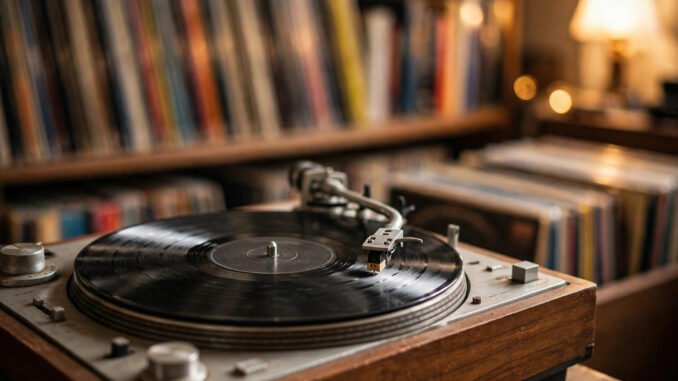
In 2010, the obituary for vinyl seemed settled. Record stores were closing, pressing plants were scrapping their machines, and the CD still ruled what was left of physical music. Fifteen years later, the format that was left for dead outsells CDs and has passed a billion dollars a year in the United States alone. The revival is real. The better question is what is driving it, and what joining it actually looks like.
The Revival by the Numbers
Start with the scale, because scale is what separates a fad from a shift. Per the RIAA’s 2025 year-end report, US vinyl revenue reached about $1.04 billion in 2025, up about 9 percent on the year, on sales of 46.8 million records. That made 2025 the format’s 19th consecutive year of growth. It was also vinyl’s first billion-dollar year since 1983, a gap of more than four decades.
The comparison with the CD tells the same story from another angle. According to the RIAA, vinyl first outsold CDs in units in 2022, for the first time since 1987, and it has kept that units lead since. Revenue passed the CD earlier still, helped by vinyl’s higher prices. For context on who tracks all this, the Recording Industry Association of America is the trade body whose reports the whole industry quotes.
Numbers like these change how the business behaves. Pressing plants that once ran short shifts now run backlogs. Major artists plan a vinyl edition as a standard part of a release, not a novelty extra. Record stores, widely written off in 2010, have been opening again in city after city. None of that happens for a format selling on nostalgia alone.
Why Streaming Pushed People Back to Objects
The deepest driver is streaming itself. Streaming made music infinite, instant, and strangely weightless. A hundred million songs sit one tap away, and none of them feel like yours. Skipping costs nothing, so skipping becomes the habit. Against that backdrop, a record offers the opposite experience in every detail, and that contrast is the product.
A record is an object you can point to. It has twelve inches of artwork you can hold, liner notes you can read while the music plays, and a shelf presence that says something about the person who owns it. For many buyers, especially younger ones, that physical weight is not a flaw to tolerate. It is the whole reason for buying. Industry surveys consistently find younger buyers at the core of the market, many of them choosing vinyl as their first physical music format.
The listening ritual matters just as much. You take the record out, place it, drop the needle, and sit with one album in order. There is no shuffle and no easy skip button. Songs you would have skipped at second ten get a full hearing, and some of them turn into favorites. Listeners describe the format as slower on purpose, and in a feed-driven day, that slowness feels like relief.
Artists benefit in a way fans can grasp without any charts. A physical sale puts far more money in an artist’s hands than the same songs streamed. That gap is a real reason fans buy records at shows and from small labels. Buying the object feels like support, not just consumption, and for independent artists that feeling moves real numbers of records.
The Sound Question, Answered Honestly
Every vinyl conversation eventually hits the same claim: records just sound better. The honest answer is narrower. Mastering usually matters more than format. A well-mastered record played on a decent deck can sound superb, warm, and full. A careless pressing of a poor master will sound poor on any system, however much the sleeve cost.
To hear why, it helps to know what the groove is doing. the phonograph record and how it works comes down to a stylus tracing tiny wiggles in a spiral groove and turning them back into sound. That simple path can carry remarkable detail. It also carries surface noise, clicks, and wear if the record or the player is mistreated. Digital has no such flaws. Vinyl has a different set of trade-offs, not a magic upgrade.
So the sensible rule is this. Buy vinyl for ownership, ritual, artwork, and support for artists. Enjoy the sound when the pressing is good, which it often is. Do not buy it expecting every record to beat a clean digital file. People who join for the honest reasons tend to stay. People who join chasing a sound myth tend to drift away disappointed.
What Joining Looks Like: The Results Timeline
Understanding the revival takes an evening. Becoming part of it takes longer, and it helps to know the stages. On evening one, the goal is simple: grasp the drivers above and hold the sound question loosely. Read the sales story, listen to a favorite album start to finish without skipping, and notice how different that feels from a playlist.
In weeks one and two, get a first proper listen before you spend anything. Borrow time on a friend’s setup. Visit a record shop that has turntables set up for listening. Play a record you know well in another format. If the ritual leaves you cold, you have saved yourself money. If it clicks, you will know exactly what you are buying into.
Months one to three are the starter phase. Most new buyers put together a modest setup and pick up their first 10 to 20 records. This is where taste forms. You learn which genres reward the format for you, how much crackle you can happily live with, and whether you enjoy hunting or prefer buying new and clean.
By month six and beyond, the collector’s eye starts to develop. You notice pressings and learn that two copies of the same album can sound different. You learn condition grading, the gap between a seller’s near mint and the real thing, and where bargains hide: estate sales, shop bargain bins, and common records priced as if they were rare. That eye is the hobby. The turntable was only the door.
Starting Smart: The Sensible Entry
The deck is where beginners most often go wrong, in both directions. A legitimate entry turntable in the Audio-Technica AT-LP60X class, around $150 to $200 at recent prices, will play records safely and sound good doing it. That is the right starting line for most people. Going far above it before you own records is money pointed the wrong way.
The cheap suitcase player at the other end is the one purchase to avoid. Cheap all-in-one players track heavily, with too much force from a crude stylus, and they can wear records with repeated plays. The saving is small and the damage is permanent. A record collection deserves a player that treats it gently, and the entry class above does that without drama.
For the records themselves, modern reissues are the low-risk start. They are clean, widely available, and priced in a sane range, and labels now reissue deep catalogs to a good standard. Original pressings are the hobby within the hobby: thrilling when you find a great one, risky when grading is optimistic and prices climb. New collectors do well to learn on reissues first. Practical habits for collecting vinyl records without overspending matter more at this stage than any single purchase.
Care habits protect the money you do spend. Store records upright, never stacked flat, and keep them away from heat and damp. A quick brush before each play lifts dust out of the groove, and clean hands matter more than costly gadgets. Old paper sleeves shed grit with age, so swapping a worn one for a fresh inner sleeve is cheap insurance. None of this is glamorous. All of it keeps a good pressing sounding good for decades, which is rather the point of owning music in a form built to last.
Keep the buying order straight. Decide which records you actually want before you upgrade the deck. A modest player and twenty loved albums beat a costly player and three records every time. The collection is the point. The hardware only serves it, and it can grow later, one sensible step at a time, if the habit proves it has stuck.
Traps That Catch New Collectors
Three traps catch almost everyone once. The first is paying collector prices for common records. Millions of copies of famous albums exist. Scarcity claims on ordinary titles deserve a quick search before any money moves. The second trap is grading optimism. Sellers grade their own stock kindly. Learn to check a record under strong light yourself, and treat every unseen purchase as a grade lower than described.
The third trap is subtler: buying the deck before the records. Shops are happy to sell an impressive player to someone with nothing to play on it. Resist the order swap. Records first, player second, upgrades last. Follow that order, and the revival stops being a headline about other people. It becomes a shelf of music you chose on purpose, played the slow way, one side at a time.
Leave a Reply