
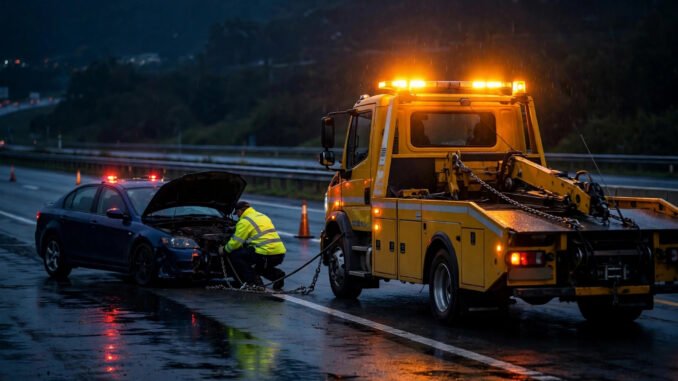
Roadside assistance plans are one of those things you don’t think about until you’re standing on a highway shoulder at 11 PM — and then they’re the only thing you think about. But what is a roadside assistance plan, really, and how does it actually work when you need it? The concept is simple: you pay a small annual fee (or get it bundled with something you already have), and in exchange, a network of tow trucks and service providers comes to rescue you when your car breaks down, gets a flat, runs out of gas, or locks you out. Here’s the complete beginner’s explanation.
What a Roadside Assistance Plan Actually Covers
Despite the name, these plans cover much more than towing. A typical plan includes:
Towing. The headline benefit. If your car can’t be fixed on the spot, it’s towed to a repair shop — usually within a set mileage limit (5–100+ miles depending on the plan tier). This alone justifies the cost: a single tow without coverage runs $75–$200+ for a short distance, more for long hauls.
Tire changes. They’ll swap your flat for your spare (they generally won’t provide the tire itself — that’s why your spare needs to hold air).
Jump-starts and battery service. Dead battery? They’ll jump it, and many services now test the battery and sell you a replacement on the spot if it’s truly dead.
Fuel delivery. Run out of gas and they’ll bring you enough to reach the next station (usually 2–3 gallons; you pay for the fuel itself, delivery is covered).
Lockout service. Locked your keys in the car? They’ll send someone to get you back in. Some plans cover locksmith costs up to a limit if the door can’t be opened simply.
Winching/extrication. Slid into a ditch or got stuck in mud or snow? Basic winching (usually within ~100 feet of a paved road) is typically included.
What’s usually not covered: actual repairs beyond the roadside fix, the cost of parts, towing beyond your mileage limit (you pay per extra mile), and service for vehicles not listed on the plan. Read the fine print on mileage limits — it’s the most common source of surprise bills.
How It Actually Works When You Call
Here’s the step-by-step of a real roadside assistance call, so the process holds no surprises:
1. You call the dispatch number (or use the provider’s app — most now have GPS-based requesting, which is faster and more accurate than describing your location). Have your membership or policy number ready, though most can look you up by phone number.
2. You describe the problem and location. “Flat tire, I-70 westbound near mile marker 210.” The dispatcher logs the service type and finds the nearest contracted provider.
3. A local tow/service company is dispatched. Here’s the key thing beginners don’t realize: AAA, insurers, and auto clubs don’t own fleets of tow trucks. They contract with local towing companies. Your “AAA tow” is performed by Joe’s Towing down the road, dispatched through AAA’s network. This is why wait times vary — you’re dependent on local availability.
4. You wait. Typical waits run 30–90 minutes in metro areas, longer in rural areas or during storms when every provider is slammed. The dispatcher should give you an ETA and the provider’s name.
5. Service is performed, you sign, you go. For covered services within limits, you pay nothing at the scene (the provider bills the plan). If you exceed limits — extra tow miles, for example — you pay the difference on the spot.
If you’ve never been through it, reading a guide to planning a road trip across the US with stops beforehand helps you internalize the location-awareness habit (mile markers, exit numbers) that makes step 2 fast and painless.
Where Roadside Assistance Comes From (Your Options)
Most beginners don’t realize they may already have coverage. Check these before buying anything:
Your auto insurer. Most insurers offer roadside assistance as an add-on for $10–$30 per year — often the cheapest option available. The catch: some insurers count roadside claims against you similarly to other claims, which can theoretically affect premiums. Ask your agent directly whether roadside usage affects rates before relying on this.
Auto clubs (AAA and competitors). AAA is the giant: Classic membership runs roughly $60–$100/year depending on region, covering 5–7 miles of towing; Plus ($90–$140) extends to 100 miles. Competitors like Better World Club or AARP’s program offer similar structures. The advantage: coverage follows you, not the car — you’re covered as a driver or passenger in any vehicle.
Your car’s manufacturer. Most new cars include roadside assistance for the warranty period (typically 3–5 years / 36,000–60,000 miles). Many owners forget this exists. Check your warranty booklet — you may be covered right now for free.
Credit cards. Many cards offer roadside dispatch as a benefit — but read carefully, because most credit card versions are dispatch services, not prepaid coverage: they find you a tow truck, but you pay the full bill. Useful in an emergency, not a substitute for real coverage.
Your cell phone carrier or other memberships. Some carriers and warehouse clubs bundle basic roadside assistance. Worth checking, usually limited.
What It Costs vs. What It’s Worth
Standalone plans: $50–$150/year. Insurer add-ons: $10–$30/year. Manufacturer: free during warranty. Against that, price a single incident without coverage: tow ($75–$200+), lockout service ($50–$100), after-hours tire change ($75–$150). One bad night pays for years of coverage.
The value calculation beginners should actually do: how far do you drive, where, and in what? A new car under warranty driven mostly in the city needs less coverage than a 12-year-old car driven on rural highways. But even the city driver benefits — lockouts and dead batteries happen in parking garages too. At insurer add-on prices ($10–$30/year), the expected value is positive for almost everyone. At AAA prices, it’s worth it if you drive an older car, take road trips, or want the “covers me in any car” flexibility.
Families who find pet-friendly hotels when road tripping should note that most roadside plans cover the vehicle and its occupants — but confirm pet policies with your provider, since a tow truck cab isn’t always set up for animals and you may need a plan for them during a long wait.
Beginner Mistakes to Avoid
Assuming you’re covered without checking. The most common mistake. Verify now — call your insurer, check your warranty, look at your credit card benefits. Finding out at midnight on a highway is the worst possible time.
Not saving the dispatch number. Save it in your phone and write it on a card in the glove box. In a real emergency, you don’t want to be Googling.
Ignoring the mileage limit. A plan with 5-mile towing is nearly useless if your trusted mechanic is 20 miles away. Match the towing radius to reality — this is the main reason to consider upgrading from basic to plus tiers.
Forgetting it covers you, not just your car. Auto club coverage typically follows the member. Riding with a friend whose car breaks down? Your AAA membership can cover that tow. This is a genuinely underused benefit.
Letting it lapse. Set a calendar reminder for renewal. A lapsed plan discovered during a breakdown is just an expensive lesson.
The AAA roadside assistance overview details current plan tiers, and the NHTSA site covers what to do while waiting for help to arrive safely.
Conclusion
A roadside assistance plan is simple: a small annual payment that converts a potential $200 roadside crisis into a phone call. It works through a dispatch network of local tow and service providers, covers towing, tire changes, jump-starts, fuel delivery, lockouts, and basic winching, and you probably already have some version of it through your insurer, manufacturer warranty, or credit card — check before you buy. For beginners, the insurer add-on at $10–$30 a year is the no-brainer starting point; upgrade to an auto club if you want longer towing and coverage that follows you between cars. Set it up this week, save the number in your phone, and never think about it again until the night you’re very glad you have it.
Frequently Asked Questions
How much does roadside assistance cost?
Insurer add-ons run $10–$30 per year; auto clubs like AAA run $60–$150/year depending on tier and region. Manufacturer coverage is free during the warranty period. A single tow without coverage typically costs $75–$200+.
Does roadside assistance cover me in someone else’s car?
Auto club memberships (like AAA) typically follow the member, not the vehicle — you’re covered whether driving or riding as a passenger. Insurer add-ons usually follow the insured vehicles. Check your specific plan’s terms.
How long does it take for roadside assistance to arrive?
Typically 30–90 minutes in metro areas; longer in rural areas or during severe weather when providers are overwhelmed. GPS-based app requests are usually faster than phone calls because your location is transmitted automatically.
Leave a Reply