
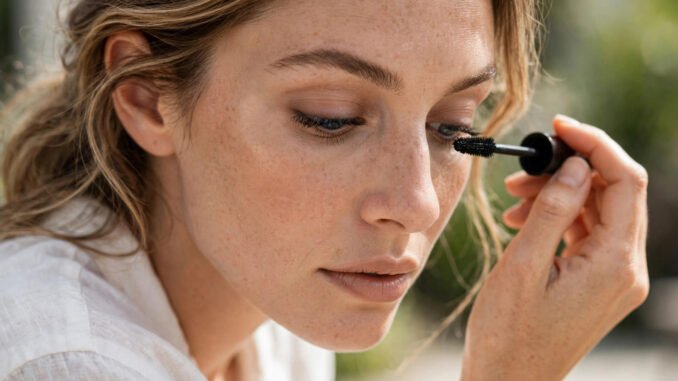
By 3 PM, your eyes are watering, itching, and red — and the mascara you applied at 8 AM is the prime suspect. If you have sensitive eyes, choosing mascara isn’t a beauty decision, it’s a comfort and health decision. How long does choosing the best mascara for sensitive eyes take before you see real results? The choosing takes one careful shopping trip (armed with the right criteria); the results — comfortable, non-irritated eyes — are apparent within the first full day of wear. Here’s the complete guide.
Why Regular Mascara Bothers Sensitive Eyes
Mascara sits millimeters from the most sensitive mucous membranes on your body, and its ingredients migrate — every blink transfers micro-amounts into the tear film. Common irritants in conventional mascaras: fragrance (the #1 cosmetic irritant, unnecessary in eye products), certain preservatives (formaldehyde-releasers like quaternium-15 and DMDM hydantoin in older formulas), waterproofing polymers (harder to remove, requiring harsh rubbing that irritates), and fibers (lengthening fibers that flake into eyes).
Sensitive eyes — whether from dry eye syndrome, contact lens wear, allergies, blepharitis, or post-LASIK sensitivity — react to these with watering, itching, redness, and that gritty “something in my eye” feeling. The cruel irony: watering eyes make mascara run, which puts more product in the eyes, which causes more watering. Breaking the cycle starts with the formula.
What to Look For (The Sensitive-Eye Checklist)
Fragrance-free. Non-negotiable for sensitive eyes. “Unscented” can still contain masking fragrance — look for “fragrance-free” specifically.
Ophthalmologist-tested. This label means the formula was tested under eye-doctor supervision — not a guarantee of zero irritation, but a meaningful filter. “Safe for contact lens wearers” is the related claim worth seeking if you wear lenses.
Hypoallergenic. An unregulated term (no legal definition), so treat it as a hint, not a promise — but combined with fragrance-free and ophthalmologist-tested, it signals the right formulation intent.
Tubing mascara (the sensitive-eye secret weapon). Tubing formulas wrap each lash in water-resistant polymer “tubes” rather than painting them with pigment. Benefits for sensitive eyes: no smudging or flaking into eyes (the tubes stay put), removal with warm water alone (no rubbing, no remover chemicals — the tubes slide off with gentle pressure), and generally simpler ingredient lists. The trade-off: less dramatic volume than conventional formulas. For sensitive eyes, it’s the best format available — recommended by many ophthalmologists specifically.
Skip waterproof (usually). Waterproof mascaras require oil-based removers and rubbing, both irritating. Unless you genuinely need waterproofing (swimming, weddings, monsoon season), tubing mascara gives water-resistance with water-only removal — the best of both worlds.
Simple ingredient lists. Fewer ingredients = fewer potential irritants. Be wary of “natural” marketing — natural doesn’t mean gentle (essential oils near eyes are a terrible idea), and some of the gentlest formulas are thoroughly synthetic.
The Testing Timeline: How to Evaluate
Day 1 (the wear test): apply in the morning, wear a full normal day. By evening, assess: any itching, watering, redness beyond your baseline? A good sensitive-eye mascara should feel like nothing — you forget you’re wearing it. Any end-of-day irritation is a fail, not an “adjustment period” (there’s no adjustment period for irritants).
Day 2–3 (the removal test): how does removal go? If you’re scrubbing, if residue remains, if eyes are red after cleansing — the formula fails regardless of comfortable wear. Tubing mascaras should slide off with warm water and gentle pressure. This is where many “comfortable” mascaras reveal their true cost.
Week 1–2 (the accumulation test): some irritants cause cumulative low-grade inflammation — fine on day one, gritty by day five. A full week of daily wear without escalating symptoms is the real pass. Also watch lash health: excessive lash fallout during removal suggests the formula (or your removal technique) is too harsh.
The verdict at two weeks: comfortable all-day wear + easy removal + no cumulative irritation = your mascara. This is a faster timeline than most beauty decisions because the feedback (eye comfort) is immediate and unambiguous — your eyes vote clearly.
Application and Removal: Technique Matters as Much as Formula
Application: don’t pump the wand (it pushes air in, drying the formula and introducing bacteria — swirl instead). Apply to upper lashes primarily; lower-lash mascara migrates into eyes far more (skip it or use minimal tubing formula if sensitive). Replace mascara every 3 months — old mascara is a bacterial culture, and eye infections from expired mascara are a documented emergency-room phenomenon.
Removal: the press-and-hold method — warm damp pad or just warm water for tubing formulas, pressed over closed eyes for 20–30 seconds, then gentle downward wipe. Never scrub, never pull lashes. If you need remover for conventional formulas, use a dedicated gentle eye makeup remover, not face wash (which requires the rubbing you’re trying to avoid).
Hygiene rules: never share mascara, don’t use store testers on your eyes, don’t add water or saliva to “revive” dried mascara (introduces bacteria), and discard immediately after any eye infection — reinfection from the same tube is common.
When It’s Not the Mascara
If every mascara irritates you — including fragrance-free, ophthalmologist-tested tubing formulas — the issue may be medical, not cosmetic: dry eye syndrome, blepharitis (eyelid inflammation), ocular allergies, or meibomian gland dysfunction. An eye doctor can diagnose and treat these; no mascara shopping solves blepharitis. Similarly, sunscreen for sensitive skin matters here — sunscreen migrating into eyes is a notorious cause of stinging blamed on mascara, and switching to a mineral sunscreen worn carefully around the orbital bone often resolves “mascara irritation” that was never the mascara’s fault.
For the broader eye-makeup picture, colors for warm skin tones helps choose flattering eyeshadow shades — because once the mascara situation is solved, the rest of the eye look gets more fun. The FDA’s cosmetics safety information covers eye product safety, and the AAD’s skin care basics cover the delicate eye-area skin.
Conclusion
Choosing the best mascara for sensitive eyes takes one informed shopping trip and about two weeks of wear-testing to confirm: prioritize fragrance-free, ophthalmologist-tested formulas, seriously consider tubing mascara (the sensitive-eye gold standard — no flaking, warm-water removal), skip waterproof unless truly needed, and evaluate on day-one comfort, removal ease, and week-long cumulative tolerance. Your eyes give clear, immediate feedback — trust it, and don’t persevere with a formula that irritates. The right mascara feels like nothing at all, and that nothing is exactly what sensitive eyes need.
Frequently Asked Questions
What is tubing mascara and why is it better for sensitive eyes?
Tubing mascara wraps each lash in polymer “tubes” instead of painting with pigment. It doesn’t smudge or flake into eyes, and removes with warm water alone — no rubbing, no remover chemicals. Many ophthalmologists recommend it specifically for sensitive eyes, contact lens wearers, and allergy sufferers.
How long does it take to know if a mascara works for sensitive eyes?
Day-one comfort tells you a lot, but give it two full weeks: evaluate all-day comfort, removal ease, and cumulative irritation over a week of daily wear. Some irritants cause low-grade inflammation that builds over days. Two comfortable weeks is a confident verdict.
Should people with sensitive eyes avoid waterproof mascara?
Usually yes. Waterproof formulas require oil-based removers and rubbing — both irritating to sensitive eyes. Tubing mascara offers water-resistance with warm-water-only removal, giving you smudge protection without the harsh removal. Reserve true waterproof for swimming or events.
How often should I replace mascara?
Every 3 months, without exception. Mascara’s dark, moist tube is an ideal bacterial environment, and expired mascara is a documented cause of eye infections. Never “revive” dried mascara with water or saliva, and discard the tube immediately after any eye infection.
What if every mascara irritates my eyes?
See an eye doctor — the issue may be medical (dry eye, blepharitis, ocular allergies, meibomian gland dysfunction) rather than cosmetic. Also check whether sunscreen migrating into your eyes is the real culprit; it’s a common misattribution. No mascara shopping solves an underlying eye condition.
Leave a Reply