
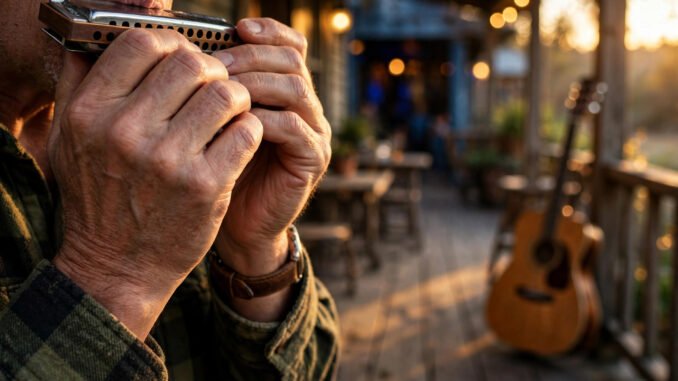
The harmonica is music’s greatest bargain: a real, expressive, gig-capable instrument that fits in your pocket and costs less than two movie tickets. For around $15–$40 you can own a harmonica good enough to play actual blues on an actual stage. It’s the instrument of campfires, front porches, subway platforms, and about a thousand classic rock intros. And Columbus, Ohio — with its blues jams, open mics, and deep record-store culture — is a fine city to learn it in. Here’s how to learn harmonica basics on a tight budget: what to buy, the free learning path, and the practice routine that gets you playing real music in weeks.
What to Buy: The $20 Decision That Matters
Buy a diatonic harmonica in the key of C — this is non-negotiable for beginners, because essentially all beginner lessons and tabs assume a C harp. The model that has taught generations: the Hohner Special 20 (around $35–$45) or its slightly cheaper sibling the Hohner Blues Harp. On a truly tight budget, the Easttop T008K (around $20–$25) is the community-approved dark horse — remarkably playable for the price. What to avoid: the $5–$10 harmonicas at toy stores and souvenir shops. They look like instruments and function as noisemakers; leaky combs and uneven reeds will convince you that you “can’t play” when the problem is the tool. One decent C harmonica is the entire equipment list. No amp, no case, no accessories — maybe a $5 neck rack later if you play guitar too. Check Hohner’s beginner guides for model comparisons from the company that invented the modern harmonica, and browse ArtistWorks’ harmonica school (Howard Levy — the player who reinvented what’s possible on diatonic — teaches there) when you’re ready to see where the instrument goes.
The Free Learning Path
Harmonica might be the best-supported free-learning instrument on the internet, thanks largely to one man: Adam Gussow’s free YouTube lesson series (Modern Blues Harmonica) comprises hundreds of structured videos from “how to hold it” through advanced bending — a full curriculum that would cost thousands privately, free. Week 1: holding, breathing (from the diaphragm, not the cheeks), and playing single notes — the “pucker” vs. “tongue blocking” embouchure debate can wait; just get clean single notes. Week 2–3: the major scale on your C harp (blow and draw patterns), simple melodies like “Oh Susannah” and “Twinkle Twinkle.” Week 4+: the 12-bar blues pattern and your first draw bends — bending notes (lowering pitch by reshaping your mouth cavity) is the harmonica’s signature sound and the first real milestone. Free tab sites (Harptabs and similar) notate thousands of songs in harmonica tab, which is simpler than it looks: numbers for holes, arrows for blow/draw. Thirty focused minutes a day, and most people play recognizable blues within a month. The instrument rewards consistency absurdly well because the “technique” is mostly breath control you already own.
Columbus: Your Unfair Advantages
Columbus gives harmonica beginners three gifts. First, the blues infrastructure. Central Ohio has a living blues scene — regular jam nights at clubs around the city where harmonica players are traditionally welcome to sit in once they know a 12-bar. Nothing accelerates learning like playing with a band; the jam is the exam you actually want to take. Second, the libraries. The Columbus Metropolitan Library system’s music collections include harmonica method books and blues history that contextualize what you’re learning — knowing that the amplified Chicago blues harp sound came from players cupping bullet microphones in the 1950s changes how you hear your own practice. Third, the record stores. Columbus’s vinyl shops are harmonica-player candy stores: Little Walter, Sonny Boy Williamson, Big Walter Horton — the holy trinity of blues harp — on original pressings. Listening is practice for this instrument; the greats’ phrasing is the curriculum. Harmonica also belongs on any list of hobbies to start as an adult — it’s portable enough to practice on lunch breaks, which conveniently helps with making your daily commute more enjoyable (passengers’ tolerance permitting).
Technique Basics: What “Good” Sounds Like
Four fundamentals, in order. Single notes: clean, isolated notes with no neighbors bleeding in — practice the “train rhythm” (chugga-chugga patterns) to build breath control. Bending: draw bends on holes 1–6 let you hit the flattened notes that make blues sound like blues; the 4-draw bend is the classic first target. It feels impossible for a week, then clicks permanently. Tongue blocking: covering multiple holes with your tongue and uncovering one for melody, while the covered holes add rhythmic chord texture — the advanced technique behind that big Chicago sound. Vibrato and tone: hand-cupping (the “wah-wah” effect) and throat vibrato turn correct notes into expressive ones. The honest timeline: single notes in days, basic songs in two weeks, first bends in a month, competent 12-bar blues in three months, genuinely good in a year. Every stage is fun — this is not an instrument with a miserable beginner phase. The harmonica sounds like music almost immediately, which is why so many people stick with it.
Care, Maintenance, and When to Upgrade
Maintenance is nearly zero: tap out moisture after playing, let it air-dry before casing it, never run it under water (wooden combs swell; plastic combs tolerate more). Don’t lend it — harmonicas are mouth instruments, and sharing is unhygienic. When to buy a second harp: once you can play, get an A harmonica — guitarists love the keys of E and A, and jamming in E requires an A harp (that’s “cross harp”/second position, the standard blues approach). A two-harp kit (C and A) covers most jam situations. Beyond that, harmonicas multiply like rabbits — players accumulate keys the way guitarists accumulate pedals — but each one is $20–$45, so the collection stays sane. The tight-budget rule holds for the whole journey: the instrument is cheap, the lessons are free, and the only real investment is breath and time.
Can you learn harmonica basics on a tight budget in Columbus, Ohio? For the price of a pizza, yes — one decent C harmonica, Adam Gussow’s free video curriculum, thirty minutes a day, and a city with blues jams waiting for you. It’s the rare instrument where the beginner experience is genuinely joyful from week one, the gear fits in your jeans, and the ceiling — Howard Levy plays Bach partitas on the thing — is essentially infinite. Pick up the harp; the blues is patient.
Frequently Asked Questions
What key harmonica should a beginner buy?
C — always C. Nearly all beginner lessons, books, and tabs are written for a C diatonic harmonica. Once you can play, an A harmonica is the standard second purchase for jamming with guitarists in E.
How much does a decent beginner harmonica cost?
$20–$45. The Hohner Special 20 (~$40) is the classic recommendation; the Easttop T008K (~$25) is the budget community favorite. Avoid sub-$10 harmonicas — poor construction will frustrate you and slow learning.
How long until I can play a real song?
Days for simple melodies like “Oh Susannah”; a few weeks for confident single-note songs; about a month for your first bent notes; three months for a credible 12-bar blues. Daily 30-minute practice is the multiplier.
Is the harmonica hard on the mouth or lungs?
No — it’s gentle. Harmonica playing is controlled breathing, closer to meditation than exertion. If your throat hurts, you’re forcing it; back off and focus on relaxed airflow. People with respiratory conditions should check with a doctor, but most find it comfortable.
Can I really learn from free YouTube lessons?
Yes. Adam Gussow’s hundreds of free structured lessons cover the complete beginner-to-intermediate path and are widely considered the best harmonica instruction available at any price. Paid courses exist but aren’t necessary to reach jam-ready level.
Leave a Reply