
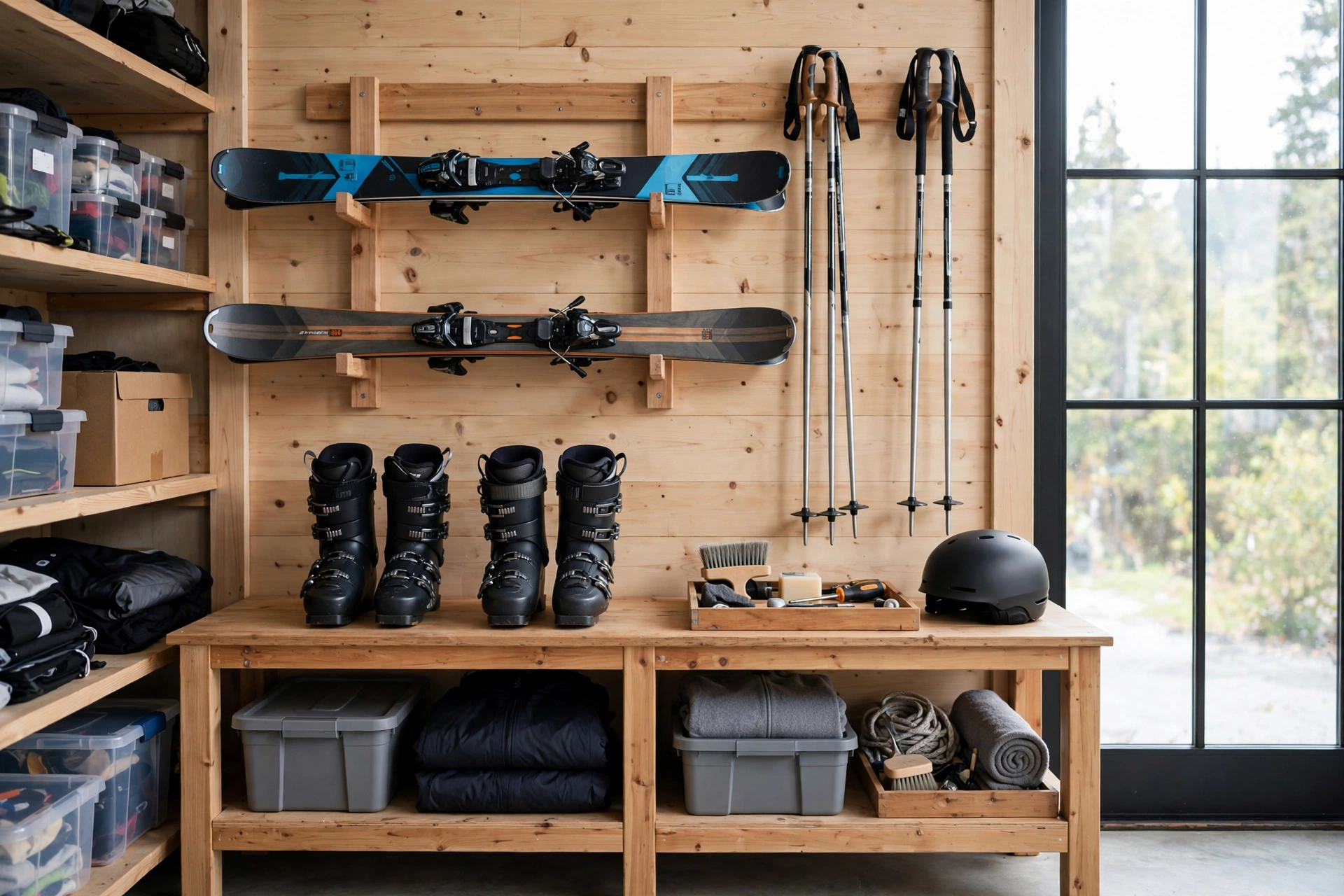
When the lifts stop spinning and the snow melts, your skis need proper care before their long summer nap. Learning how to store skis during off-season isn’t complicated, but doing it wrong — tossing them in a hot garage still dirty from your last run — can ruin bases, rust edges, and cost you an expensive tune-up (or new skis) come winter.
Step 1: Clean Your Skis Thoroughly
Start by wiping down the entire ski: topsheets, bases, and edges. Use a damp cloth to remove dirt, salt, and grime. Pay special attention to the bindings — grit trapped in binding mechanisms causes wear and can affect release function.
If your bases have stubborn grime, a base cleaner works, but use it sparingly — harsh solvents can dry out the base material. For most skis, warm water and a soft cloth are enough.
Let everything dry completely before moving on. Trapped moisture is the enemy of metal edges.
Step 2: Check Edges for Rust and Damage
Run your finger (carefully) along the edges. If you feel rough spots or see orange discoloration, that’s rust starting. Light surface rust can be removed with a gummy stone or fine diamond stone. Deeper rust or nicks might need a professional tune — and it’s better to handle that now than discover it on your first day back.
This is also the time to inspect for core shots (deep gouges in the base), delamination (layers separating), and binding issues. Note anything that needs a shop’s attention.
Step 3: Apply a Thick Coat of Storage Wax
This is the single most important step. Apply a generous coat of wax to the bases and don’t scrape it off. This thick “storage wax” layer protects the porous base material from drying out and shields the edges from moisture.
Use an all-temperature or warm-weather wax — no need for anything fancy. Melt it on with an iron (a dedicated ski wax iron, not a clothes iron), let it cool, and leave it. You’ll scrape it off and do a fresh hot wax when winter returns.
If you don’t wax your own skis, most shops offer an inexpensive summer storage wax service. It’s worth every penny.
Step 4: Back Off the Bindings
Here’s a step many skiers skip: reduce your bindings’ DIN setting to the lowest value for storage. This takes tension off the binding springs during months of disuse, which helps them maintain accurate release values.
Important: Write down your normal DIN setting (take a photo of the indicator window) before backing it off. When winter comes, reset to your proper setting — or better yet, have a shop verify it. Never guess at DIN settings.
Step 5: Choose the Right Storage Spot
Where you store skis matters as much as how you prep them:
- Cool and dry wins. A climate-controlled basement or interior closet is ideal.
- Avoid heat. Hot attics and garages can reach 140°F+ in summer. Extreme heat can weaken adhesives and warp skis.
- Avoid dampness. Damp basements promote rust and can damage bindings.
- Keep them out of direct sunlight. UV degrades topsheet graphics and plastics over time.
- Don’t lean them on concrete. Concrete wicks moisture. If the garage is your only option, keep skis off the floor.
Step 6: Store Them Properly Positioned
How you position skis for months matters:
- Don’t strap them tightly together. Brake arms and bindings pressing against bases for months can cause pressure damage. If you use ski straps, keep them loose.
- Store them upright or flat. Either works, as long as they’re not under heavy weight.
- Keep them off the ground on a rack or shelf.
- Don’t hang them by the tips — this can stress the ski over time.
- Separate the pair slightly so bases aren’t grinding against each other.
A simple wall-mounted ski rack is a cheap investment that keeps skis safe and out of the way. For more on keeping your gear in top shape year-round, check out REI’s ski maintenance guides.
Don’t Forget Your Boots and Poles
Skis get the attention, but boots need care too:
- Buckle boots loosely — don’t leave them cranked tight or fully open. A middle setting maintains the shell shape.
- Remove liners if possible, and let everything air dry completely.
- Stuff boots with newspaper to absorb moisture and hold shape.
- Store upright in a cool, dry place — same rules as skis.
Poles just need a wipe-down and a dry spot. Check baskets and grips for cracks.
What Happens If You Store Skis Wrong?
Real consequences of bad storage:
- Rusted edges that need grinding (removing metal you can’t get back).
- Dried-out bases that won’t hold wax and run slow.
- Weakened binding springs from months under tension.
- Delamination from heat exposure.
- Moldy boots that smell like a swamp and may never fully recover.
Every one of these is preventable with an hour of end-of-season care. Think of it as an investment: the skiers who maintain their gear are the ones building confidence on the slopes instead of fighting their equipment.
And if you’re the adventurous type who likes gravity in all seasons, proper gear care is a habit that transfers — just as skydivers obsess over their rigs, skiers who respect their equipment stay safer. If you’ve ever wondered how old you have to be to skydive, you’ll find the same culture of meticulous gear maintenance there.
Pre-Season Checklist
When fall arrives, reverse the process:
- Scrape off the storage wax and do a fresh hot wax.
- Reset bindings to your DIN setting (or have a shop do it).
- Check edges — a quick tune if needed.
- Inspect boots: buckles, liners, soles.
- Try everything on. Feet change; boots pack out.
Do this in October, not the night before your first trip. Your future self will thank you.
Summer Care for Ski Clothing and Accessories
While you’re at it, don’t neglect the soft goods. Wash ski jackets and pants with a technical-wash detergent (regular detergent strips waterproofing), then reapply DWR (durable water repellent) spray if water no longer beads on the fabric. Hang everything to dry completely — never store damp gear.
Gloves and mittens should be cleaned, dried thoroughly (stuff with newspaper to hold shape), and stored uncompressed. Goggles need their lenses cleaned with a proper microfiber cloth and stored in their protective case — tossed loose in a bin, lenses scratch. Helmets just need a wipe-down and a cool, dry shelf; check the expiration date, since helmet foams degrade over about five years regardless of use.
Treat your ski bag the same way: empty it, shake out the debris, air it out, and store it open so moisture doesn’t get trapped inside. Come October, you’ll have a complete kit that’s ready to go — no surprises, no last-minute shopping panic.
A final thought: photograph your gear before storing it — a quick snapshot of ski condition, binding settings, and boot buckles gives you a reference point in fall. If anything looks different after summer, you’ll catch it before it becomes a problem on the mountain.
Set a calendar reminder for early October: “ski prep.” Future-you, staring at the first snowfall forecast, will be deeply grateful to past-you for an hour of summer maintenance.
Leave a Reply