
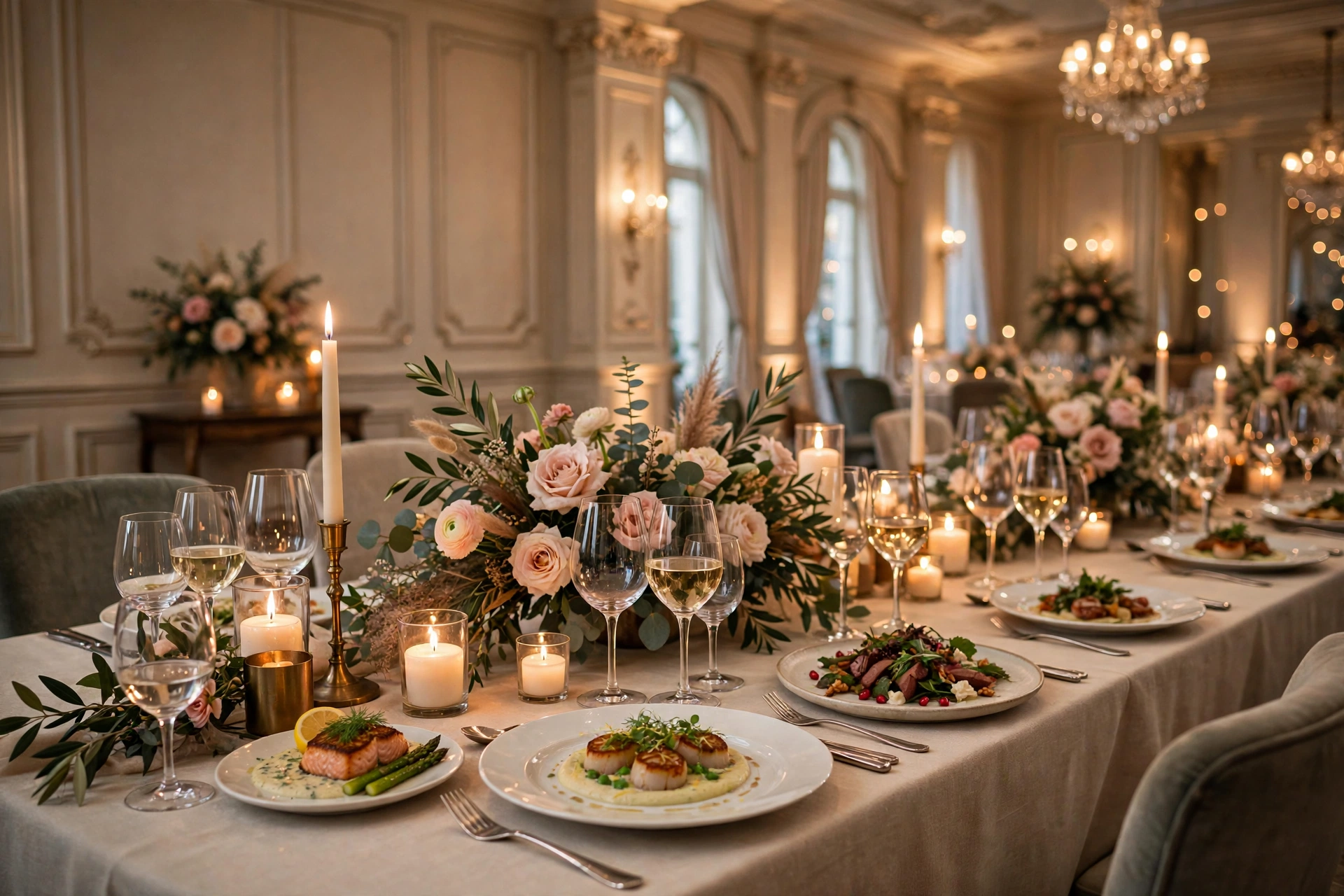
Ask any recently married couple what stressed them out most during wedding planning, and the caterer will come up near the top of the list. The food is what guests remember — more than the flowers, the music, or the centerpieces. So knowing how to select a wedding caterer isn’t just a planning detail; it’s one of the biggest decisions you’ll make.
Start With Your Budget and Guest Count
Before you taste a single canapé, nail down two numbers: your catering budget and your guest count. Caterers typically charge per person, with prices ranging from $30–$50 per head for casual buffet service to $150–$300+ for upscale plated dinners in major cities.
A realistic rule of thumb: catering (food, service staff, rentals) often consumes 30–40% of the total wedding budget. Knowing this early prevents the heartbreak of falling in love with a caterer you can’t afford.
Be honest about your guest count, too. Caterers plan staffing, food quantities, and rentals around that number, and most contracts include a minimum guest count. Underestimating to get a lower quote backfires when the final bill arrives.
Decide on Your Service Style
Not all catering looks the same. Your options include:
- Plated dinner: Formal, each guest served individually. Most expensive, most elegant.
- Buffet: Guests serve themselves. More variety, lower cost, but lines can form.
- Family-style: Platters on each table, guests pass and share. Warm, communal feel.
- Food stations: Themed stations (taco bar, pasta station, carving station). Fun and interactive.
- Cocktail-style: Heavy hors d’oeuvres, no seated dinner. Great for shorter receptions.
- Food trucks: Trendy and memorable, though logistics (power, space, weather) need planning.
Your venue may restrict your options — some venues have exclusive caterer lists or limited kitchen facilities. Always check venue rules before booking a caterer.
Where to Find Good Caterers
Start with:
- Your venue’s preferred list. These caterers know the kitchen and the logistics.
- Recently married friends. Personal recommendations beat online reviews.
- Wedding planners. If you’ve hired one, their caterer shortlist is gold.
- Reputable directories like The Knot and WeddingWire, which let you filter by style, budget, and location.
- Restaurants you love. Many great restaurants cater weddings — if there’s a place whose food you adore, ask.
Aim to interview 3–4 caterers. Fewer and you’re not comparing; more and you’ll be overwhelmed.
The Tasting: What to Look For
The tasting is the fun part, but treat it like a job interview. Beyond “does it taste good,” evaluate:
- Consistency. Is everything good, or just one standout dish?
- Presentation. How will this look on a plate at scale, not just in a tasting portion?
- Temperature. Will hot food actually arrive hot for 150 guests?
- Dietary flexibility. Can they handle vegetarian, vegan, gluten-free, and allergy requests gracefully?
- Seasonality. Are they cooking with what’s fresh, or forcing out-of-season ingredients?
Bring your partner and maybe one decisive friend. Too many opinions at a tasting leads to chaos.
Questions to Ask Every Caterer
Don’t be shy — professional caterers expect these questions:
- What’s included in the per-person price? (Food only? Staff? Rentals? Cake cutting?)
- How do you handle dietary restrictions and allergies?
- What’s your staff-to-guest ratio?
- Do you provide tables, chairs, linens, glassware — or do I rent separately?
- What happens with leftovers?
- What’s your backup plan if key staff get sick?
- Can I see a sample timeline for the reception?
- What are your payment terms and cancellation policy?
- Are you licensed and insured?
- Can you provide recent references?
Question 9 matters more than people think. An unlicensed caterer is a liability nightmare — if a guest gets food poisoning, you want a professional operation with insurance, not a friend of a friend with a van.
Read the Contract Carefully
Catering contracts are dense. Key clauses to scrutinize:
- Final guest count deadline — usually 1–2 weeks before. After this, you’re paying for the number you gave.
- Overtime charges — what happens if the party runs long.
- Gratuity/service charge — often 18–22% on top of the quoted price. Make sure it’s in your budget math.
- Cancellation terms — how much of your deposit you lose and when.
- Vendor meals — photographers, planners, and DJs need to eat too. Clarify whether they’re included or extra.
Coordinate With Your Other Vendors
Your caterer doesn’t work in isolation. They need to coordinate with your wedding rehearsal plans (especially if there’s a rehearsal dinner), your venue coordinator, your florist (table settings affect service), and your photographer (you don’t want dinner served during golden-hour portraits).
The best caterers are proactive communicators who reach out to your other vendors. If a caterer seems annoyed by coordination questions, that’s a red flag.
Don’t Forget the Details Guests Notice
Small touches separate good catering from great:
- Late-night snacks. After hours of dancing, guests go wild for sliders, pizza, or donuts.
- A signature cocktail that reflects you as a couple.
- Kid-friendly options if children are invited.
- Coffee and dessert timing. Don’t let the energy die waiting for cake.
And remember — the meal is part of a bigger celebration. The flowers you carry down the aisle deserve attention too, which is why many couples also look into how to preserve a bouquet after the big day.
Trust Your Gut
After the tastings, the quotes, and the reference checks, one caterer will usually feel right. They were responsive, their food was excellent, their contract was clear, and you could picture them running your reception smoothly. Go with that feeling — backed by the homework you’ve done.
Great catering lets you actually enjoy your own wedding instead of worrying about the food. And that’s worth every penny.
Red Flags That Should Make You Walk Away
Not every caterer deserves your business. Watch for these warning signs:
- Vague pricing. If they can’t give you a clear per-person breakdown in writing, walk away. Surprise charges are the #1 catering complaint.
- No tasting offered. Any caterer confident in their food offers tastings. Refusal is a major red flag.
- Poor communication. If they take a week to return your calls during the sales process, imagine how responsive they’ll be when problems arise.
- No license or insurance. Non-negotiable. Ask directly and verify.
- Unwilling to provide references. Happy clients are a caterer’s best asset. Reluctance to share them speaks volumes.
- Pressure tactics. “This price is only good today” has no place in wedding planning. Good caterers let their food sell itself.
Timing Your Booking Right
Popular caterers book 9–12 months out for peak wedding season (May–October). If your date is flexible, consider an off-season or Friday wedding — you’ll have more choice and often better pricing. Whatever your timeline, never put down a deposit before the tasting. The tasting is your interview; the deposit is your commitment. Keep them in that order.
Once booked, stay in touch. A quick check-in 3 months out, a final menu confirmation 1 month out, and a detailed timeline review 2 weeks out keeps everyone aligned. The best wedding days are boring from a logistics standpoint — and that’s exactly what good planning buys you.
One last tip: after the wedding, send your caterer a thank-you note if they did great work — and leave an honest review online. The wedding industry runs on reviews, and your feedback helps the next couple find the right fit, just as reviews helped you.
Leave a Reply