
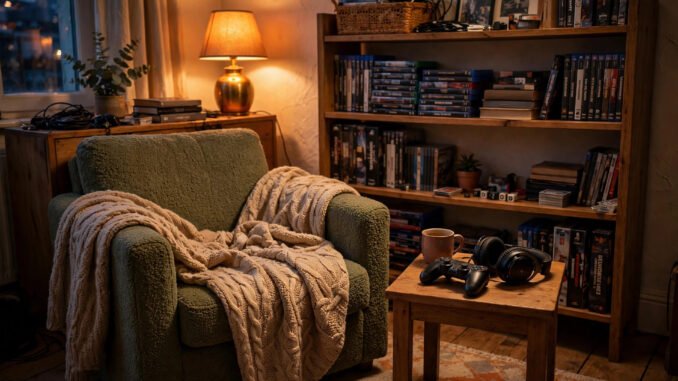
Cozy is a feeling, not a price tag. Online, a gaming setup often means thousands of dollars of coloured lights and a racing chair, yet the corner that actually feels like a sanctuary is usually built from a handful of cheap decisions. The first one costs about twenty dollars. What you are chasing is closer to hygge, the Danish idea of cosiness: warmth, softness, low light, and a small space that feels held rather than exposed.
Start with the checklist. Everything else is detail that supports these six choices.
The Checklist: Six Things That Make a Setup Cozy
One, warm side lighting instead of a bright overhead light. Two, a seat you can sink into for an hour without shifting around. Three, something soft within reach, such as a blanket, cushion, or rug under your feet. Four, tidy cables and clear surfaces, so your eyes can rest. Five, sound that stays in the corner instead of filling the whole home. Six, one personal object that makes the spot yours, whether that is a photo, a plant, a figure, or a mug you love.
If you fix only those six things, the corner will feel different tonight, even before you buy anything fancy. Work through them in order, because light changes how every other choice looks and feels.
Warm Side Lighting
This is the change that does the most work for the least money. A simple table or floor lamp typically costs about $15 to $25. Fit it with a warm-white bulb around 2600 to 2700K and place the lamp to the side of your screen, slightly behind or beside where you sit, never as a harsh overhead white light shining straight down.
Side light softens shadows and takes the glare out of the room. Your screen stops competing with a bright ceiling light, and the corner starts to feel separate from the rest of the space. If the lamp has a shade, even better. A shade spreads the light and keeps the bulb itself out of your eyes. Keep the main room light off while you play and let the lamp carry the corner on its own.
A Seat You Can Sink Into
Use the seat you already own before you shop for a new one. An ordinary chair, a couch corner, or even a bed with good support behind your back can work well. What turns a plain seat cozy is what you add to it.
A throw blanket typically costs about $15 to $25. Drape it over the chair or couch so it is there when you sit down, not folded away in a cupboard. Add a cushion behind your lower back or under your knees. Together, the blanket and cushion beat a new chair for comfort in most small setups, and they cost a fraction of the price. If your feet get cold, thick socks or a small rug underfoot help more than any gadget.
Something Soft Within Reach
Cozy rooms mix textures. A hard desk, a hard floor, and a plastic chair will feel stark no matter how good the lighting is. Soften at least two surfaces near you. A small rug under the desk or chair warms the floor and quiets the room a little. The blanket from the step above covers the seat. A plant on the desk or shelf adds a living texture if your corner gets enough light to keep one healthy.
None of this needs to match. In fact, a corner where every item is the same colour and brand tends to feel like a shop display. A worn blanket you already love will do more for the mood than a new matching set.
Tidy Cables and Surfaces
A calm corner cannot have a nest of cables spilling onto the floor and a desk buried under boxes, cups, and loose discs. Tidying costs almost nothing and changes the feeling at once. Bundle cables together and run them behind the desk or along the wall. Move chargers you are not using out of sight. Put a small tray on the desk for the few things you reach for often, such as your controller, remote, and drink.
Clear surfaces also make a small corner feel bigger. Leave some empty desk space on purpose. Your eyes need somewhere to rest, and a half-empty desk reads as calm while a full one reads as work waiting to happen. Five minutes of tidying before a session becomes part of the ritual, like making tea before a film.
Sound That Stays in the Corner
Room-filling volume works against coziness and against anyone else in the home. Headphones are the simplest fix. They keep game sound, music, and chat inside your own space, and they let you play at a lower volume because outside noise is shut out. If you dislike wearing headphones for long sessions, use a small near-field speaker placed close to you on the desk and keep the volume low. Sound aimed at one seat does not need to be loud to feel full.
Think about soft sound too. A rug, blanket, and cushions absorb echoes, so voices and effects sound warmer and less sharp. That is a quiet bonus of the soft textures you added earlier.
Your screen belongs in this part of the plan as well. Set its height so the top of the display sits near eye level and place it far enough away that you are not leaning in. A screen that is too low or too close will undo the comfort of a good seat within half an hour. If you are choosing or replacing a display, how to choose a gaming monitor covers size, position, and comfort in plain terms for beginners.
One Personal Object
Reserve a small spot for one object that has nothing to do with performance. A framed photo, a plant, a favourite book, a small figure from a game you love, or artwork you picked yourself all work. One object is enough. It tells your brain this corner belongs to you, not to a product catalogue.
A scent or a drink station can sit alongside it if you enjoy that ritual. A candle kept safely away from screens and cables, or a small tray with a mug and a water bottle, costs very little. Keep it optional and keep it simple. The goal is a habit that signals rest, not another shelf of things to maintain.
The Budget Ladder
The $50 Starter
The starter version assumes you already have a seat and a screen. Spend the money on a warm lamp at about $15 to $25 and a throw blanket at about $15 to $25. Then tidy the cables, clear the desk, and rearrange what you own so the lamp sits to the side and the blanket lives on the seat. That is the whole tier, and for many people it is enough to change how the corner feels every evening.
The $300 Comfortable Corner
With a larger budget, build on the starter rather than replacing it. Add a better lamp setup, perhaps a second small warm light at a different height. Add a rug for warmth underfoot. Add a small side table so your drink and controller leave the desk. Add a headphone stand so your headphones have a home instead of landing on the keyboard. Spend the rest on the seat: a better cushion, or a decent ordinary chair if yours is truly worn out. Each item comes straight from the checklist, which keeps the corner coherent instead of random.
Small-Space Strategies
Bedrooms and small apartments reward a single-corner approach. Claim one corner fully instead of spreading gaming gear across the room. The bed or couch can serve as the seat. Vertical storage helps a great deal: a tall narrow shelf or wall hooks hold games, headphones, and blankets without eating floor space.
When space is tight, choose a lamp instead of a light strip. A lamp gives you warm light, a shade, and a piece of furniture in one object, while strips need surfaces to stick to and can look stark. Pick folding or dual-use pieces where you can: a side table that stores blankets inside, a cushion that also serves guests, a tray that moves when the desk needs to become a workspace again.
Lighting in More Depth
Light deserves a closer look because it shapes everything else. Several low, warm sources at different heights beat one bright source every time. One lamp beside the seat and one smaller light behind the screen, for example, create layers. Your eyes move between soft pools of light instead of facing a single glare.
Understanding colour temperature and warm light makes shopping simple. Lower numbers mean warmer, more amber light. Higher numbers mean cooler, bluer light that suits offices and task work. For a cozy corner, stay at the warm end and keep the tone static. Steady warm light reads as calm and settled. Fast-cycling rainbow colour reads as an arcade, which is fun in its own way but works against rest. If you love coloured light, pick one warm shade and leave it there for the evening.
What Not to Buy
Skip the racing-style gaming chair if coziness is the goal. For most people, a decent ordinary chair or the couch is more comfortable for relaxed play, and the money saved covers the lamp, blanket, rug, and table with room to spare. This is general guidance, not a rule about your body. If you have back trouble, comfort and support come first, whatever the chair looks like.
Do not buy a bigger screen before you fix the light. A larger display in a harshly lit room still feels harsh, only bigger. Light first, screen later. And resist matching coloured lights for every device. Keyboard, headset, fans, and strips all glowing in sync can look sharp in photos, yet in a lived-in corner the effect is busy rather than restful.
Build the corner slowly. Start with the lamp and the blanket, live with them for a week, then add one thing at a time. A cozy setup is finished when you sit down and your shoulders drop. No receipt can tell you that. Your evenings will.
Leave a Reply