
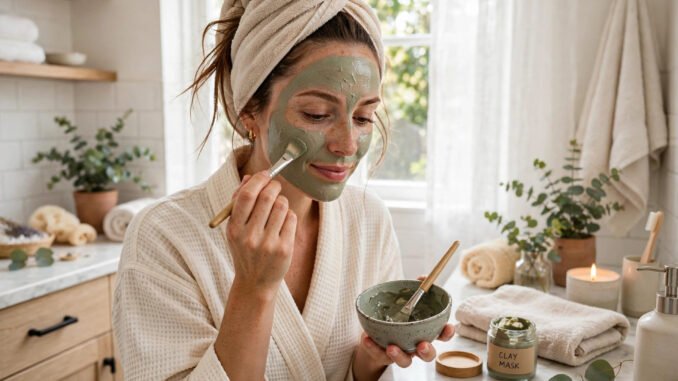
A professional facial costs $75–$200, and the glow is real — but so is the realization that most of what the esthetician does, you can do at home for the price of a few drugstore products. An at-home facial is not a lesser version of the spa experience; done right, it is the same core sequence (cleanse, exfoliate, mask, moisturize) with the same active ingredients, minus the ambient music and the markup. The key is understanding the order, the timing, and what not to do — because the mistakes (over-exfoliation, mixing actives, picking at skin) are what separate glowing from irritated.
The At-Home Facial Sequence (60–75 Minutes)
Step 1: Double cleanse (10 minutes)
Start with an oil-based cleanser or micellar water to dissolve makeup, sunscreen, and sebum, then follow with a gentle water-based cleanser. The double cleanse — borrowed from Korean skincare — ensures the treatment steps absorb into clean skin rather than sitting on residue. Use lukewarm water; hot water strips the skin barrier you are trying to pamper.
Step 2: Exfoliate (5–10 minutes)
Chemical exfoliants beat physical scrubs for at-home use: a 5–10% AHA (glycolic or lactic acid) or 2% BHA (salicylic acid, better for oily/acne-prone skin) applied for the product’s directed time, then rinsed or neutralized. Drugstore options ($10–$18) match spa-grade actives at the same concentrations — the molecule does not know what you paid. Exfoliate at most twice weekly; over-exfoliation (redness, stinging, shiny-tight skin) is the number one at-home facial mistake.
Step 3: Steam (optional, 5–10 minutes)
A bowl of hot water with a towel over your head, or a warm damp towel pressed to the face — opens pores and softens blackheads for extraction. Keep it under 10 minutes; prolonged steam dehydrates. Skip entirely if you have rosacea or very sensitive skin.
Step 4: Mask (15–20 minutes)
Match the mask to your skin’s current need, not its type label: clay masks ($8–$15) for congestion and oiliness, hydrating sheet or cream masks ($3–$12 each) for dryness and dullness, enzyme masks for gentle brightening. Multi-masking (clay on the T-zone, hydrating on cheeks) is the spa trick worth stealing. Never let clay masks dry fully crack-hard — rinse when tacky to avoid over-drying.
Step 5: Treat and moisturize (10 minutes)
Apply serums to damp skin (hyaluronic acid for hydration, niacinamide for pores and tone, vitamin C for brightness — pick one or two, not all three at once), then seal with moisturizer. Finish with facial massage: 3–5 minutes of upward strokes with clean hands or a $10 jade roller/gua sha — the lymphatic drainage effect is real and it is the closest you get to the spa’s relaxation dividend. The FDA’s cosmetics resources explain how to read skincare labels and spot unsupported claims — useful armor against the industry’s wildest promises.
Building Your Kit for Under $40
You do not need a 10-step routine. The complete at-home facial kit: gentle cleanser ($8–$12), chemical exfoliant ($10–$18), clay mask + hydrating mask ($8–$15 each — buy one of each), moisturizer you already own, and washcloths. Total: $35–$50, lasting 3–6 months of monthly facials — versus $75–$200 per spa visit. The Ordinary, CeraVe, and Neutrogena offer the key actives at drugstore prices with transparent ingredient lists. What not to buy: single-use “facial kits” with inflated per-use costs, devices promising spa results ($100+ LED masks with thin evidence at consumer power levels), and anything with “detox” in the name (skin does not detox; livers do).
For the full-body glow to match, our guide to choosing sunscreen for sensitive skin covers the daily step that matters more than any facial: consistent sun protection. And picking sunglasses that suit your face shape completes the polished, protected look.
What NOT to Do (The Damage List)
Do not extract aggressively. At-home extractions cause more scarring and broken capillaries than any other DIY step — if a blackhead does not release with gentle pressure after steaming, leave it for a professional. Do not mix strong actives. Retinoids + AHAs + vitamin C in one session is a chemical burn waiting to happen; use one active per facial. Do not use DIY kitchen acids — lemon juice, undiluted apple cider vinegar, and baking soda scrubs damage the skin barrier (pH matters, and kitchens are not labs). Do not facial on irritated skin. Sunburn, active breakouts, or post-procedure skin needs rest, not treatment. Do not skip the patch test for any new product — inner forearm, 24 hours, before it touches your face.
Dermatologists at the American Academy of Dermatology publish free guidance on safe at-home skincare practices — worth reviewing if you have a diagnosed skin condition, since facials complement but never replace medical treatment.
Customizing by Skin Concern
Dullness: Add a vitamin C serum in the treatment step and choose enzyme or AHA exfoliation — brightness is largely a dead-cell-removal problem. Congestion/blackheads: BHA exfoliant plus clay mask on the T-zone; steam before masking to soften plugs. Dryness: Skip the clay mask entirely — use a hydrating cream mask and layer hyaluronic acid serum on damp skin, sealed with a richer moisturizer. Sensitivity: Halve all active times, skip steam, choose fragrance-free everything, and consider making the “facial” simply an extended gentle cleanse + hydrating mask — less is genuinely more for reactive skin. Aging concerns: Consistent monthly facials plus daily sunscreen outperform any single anti-aging product; add a peptide or retinoid serum (on non-facial nights) for the long game. The principle: diagnose the current need each month rather than repeating a fixed ritual — skin changes with seasons, stress, and hormones, and the facial should change with it.
How Often and When to Go Pro Instead
A full at-home facial monthly matches the skin’s ~28-day renewal cycle; weekly mini-versions (cleanse + mask) maintain the glow between. Go to a professional instead when: you want extractions done safely, you have persistent acne, rosacea, melasma, or unexplained changes (see a dermatologist, not an esthetician, for medical concerns), or before a major event where you want zero risk of a reaction — never try a new facial routine within two weeks of a wedding or photoshoot.
Conclusion
Doing an at-home facial without wasting money means following the professional sequence (double cleanse, chemical exfoliate, optional steam, targeted mask, serum + moisturize + massage) with drugstore actives totaling under $50 for months of facials, monthly rather than weekly for the full treatment, and respecting the damage list (no aggressive extractions, no active-mixing, no kitchen chemistry). The spa’s real product was never the products — it was the unhurried hour. Give yourself that hour at home, and keep the $150.
Frequently Asked Questions
How do I do a facial at home step by step?
Double cleanse, chemical exfoliate (5–10 min), optional steam (under 10 min), apply a mask matched to your skin’s needs (15–20 min), then serum, moisturizer, and 3–5 minutes of facial massage. Total: about an hour.
What do I need for an at-home facial?
A gentle cleanser, a chemical exfoliant (AHA or BHA), one clay and one hydrating mask, and your regular moisturizer — $35–$50 total for months of monthly facials.
How often should I do an at-home facial?
Monthly for the full treatment (matching skin’s renewal cycle), with optional weekly mini-facials (cleanse + mask) in between. Over-exfoliating more often causes irritation.
Can at-home facials replace professional ones?
For maintenance and glow, yes. For safe extractions, persistent acne, or medical skin conditions, see a professional — dermatologists for medical concerns, estheticians for advanced treatments.
What should I never do in an at-home facial?
Aggressive extractions, mixing multiple strong actives in one session, DIY kitchen acids (lemon juice, baking soda), facials on irritated or sunburned skin, and skipping patch tests on new products.
Leave a Reply