
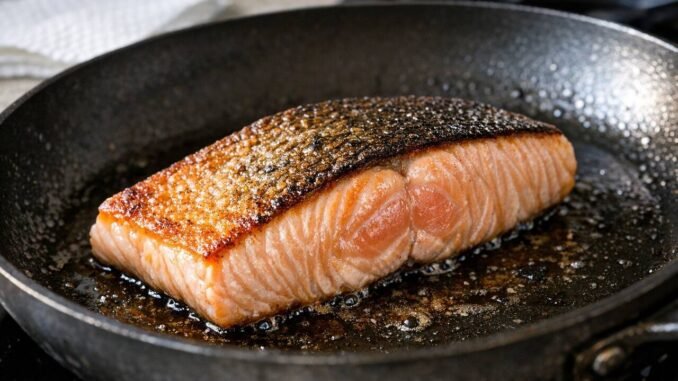
Dry salmon is a tragedy, because salmon wants to be juicy — it’s one of the fattiest, most forgiving fish you can cook. If you’re asking what is the best way to cook salmon so it stays juicy, the answer is less about the method and more about two things: not overcooking it, and starting with good fish.
I cook salmon at least twice a week, and my method hasn’t changed in years: screaming-hot pan, skin side down, most of the cooking done on the skin side, finished gently. It takes under 10 minutes and produces crackling skin with a silky, barely-opaque center. Let me walk you through it.
What is the best way to cook salmon so it stays juicy: The Short Answer
The best way to cook juicy salmon is pan-searing: pat fillets dry, season with salt and pepper, place skin-side down in a hot oiled skillet over medium-high heat, cook 5–6 minutes undisturbed on the skin side, flip, and cook 1–2 minutes more. Pull at 125–130°F internal for medium (carryover heat finishes the job). The key rules: dry surface, hot pan, mostly skin-side cooking, and a thermometer instead of guesswork.
Why This Matters More Than You Think
Salmon dries out when its proteins squeeze out moisture — which happens fast above 140°F. The USDA says 145°F for safety, but most chefs pull salmon at 125–130°F, where it’s silky and translucent in the center. USDA’s safe cooking temperature chart Carryover cooking adds 5+ degrees as it rests, so pulling early isn’t undercooking — it’s planning. The other secret is the skin: cooking mostly skin-side down insulates the flesh from direct heat, like a built-in buffer, while rendering the skin shatteringly crisp.
5 Tips That Actually Work
Buy good salmon and treat it right
Look for firm, vibrant flesh with no fishy smell — it should smell like the ocean, not ‘fishy.’ King and sockeye are richest; Atlantic (farmed) is milder and more forgiving. Bring fillets to room temperature for 15–20 minutes before cooking so they cook evenly instead of seizing on contact with heat.
Dry the surface completely
Moisture is the enemy of both crisp skin and good searing. Pat fillets — especially the skin — bone-dry with paper towels, then season generously with kosher salt and pepper. A dry surface browns; a wet surface steams.
Start skin-side down in a hot, oiled pan
Heat a stainless or cast-iron skillet over medium-high until the oil shimmers, then lay fillets skin-down, pressing gently for 10 seconds so the skin makes full contact and doesn’t curl. Then don’t touch them. Let the skin render and crisp for 5–6 minutes — you’ll see the color change creeping up the sides.
Flip once, briefly
When the flesh has turned opaque about three-quarters of the way up, flip and cook just 60–90 seconds on the flesh side. That’s it. The residual heat finishes the center while the fish rests. If you like, add a knob of butter, crushed garlic, and thyme to the pan for the last minute and baste.
Use a thermometer and trust carryover
Pull salmon at 120°F for rare-ish, 125–130°F for medium — my sweet spot. It’ll climb about 5 degrees resting. A $17 ThermoPro instant-read ends the era of cutting into fillets to check (which lets all the juice escape).
My Favorite Tools and Brands
I only recommend gear I’ve actually used or that’s widely vetted by testing labs — Healthline’s nutrition guides is worth checking before you buy.
- Lodge 12-inch cast iron skillet — ~$35 — Unbeatable heat retention for crisp skin.
- ThermoPro instant-read thermometer — ~$17 — The difference between juicy and chalky, every time.
- Fish spatula — ~$12 — Thin, flexible, slides under delicate skin without tearing.
- Wild-caught sockeye from Costco — ~$12/lb — Great quality-to-price ratio for weeknight salmon.
Common Mistakes to Avoid
- Cooking to 145°F+ in the pan. By the time carryover finishes, it’s 150°F and chalky. Pull at 125–130°F and let rest do the work.
- Flipping multiple times. Every flip risks breaking the fillet and the skin never crisps properly. One flip, that’s the rule.
- Starting with a cold or crowded pan. Cold pan = stuck skin. Crowded pan = steamed fish. Hot pan, space between fillets, always.
- Skipping the rest. Cut immediately and juices flood the plate instead of staying in the fish. Rest 3–5 minutes — the hardest step.
Frequently Asked Questions
Should I eat the salmon skin?
Yes! Crisp salmon skin is delicious — like a fishy potato chip — and it’s packed with omega-3s. Just make sure it’s properly crisped; flabby skin is nobody’s friend.
Can I cook salmon from frozen?
You can, but juicy results are harder. If you must, rinse off ice crystals, pat dry, and add a few minutes per side at slightly lower heat. Better: thaw overnight in the fridge or in cold water for 30 minutes.
What’s the white stuff oozing out of my salmon?
That’s albumin, a harmless protein that surfaces as the fish cooks. It’s a sign of slightly high heat — cooking gentler and pulling earlier reduces it. Brining the fillets in salted water for 10 minutes beforehand helps too.
The Weeknight Salmon Formula
My default Tuesday salmon: dry the fillets, season with salt, pepper, and smoked paprika, sear skin-down in a hot cast-iron skillet for 6 minutes, flip for 90 seconds, then kill the heat and add a knob of butter with a crushed garlic clove and a squeeze of lemon, tilting the pan to baste. Fifteen minutes start to finish. Serve over the quinoa from our guide or with roasted vegetables, and it’s a dinner that tastes like you tried much harder than you did.
Juicy salmon is a formula: dry fillets, hot pan, skin-side down for the long haul, one quick flip, pull at 125–130°F. Master this and salmon becomes your fastest impressive dinner. Build out the meal with what is the easiest way to make homemade pizza dough, bake moist chocolate cake without it drying out, and cook quinoa so it isn’t mushy.
Leave a Reply