
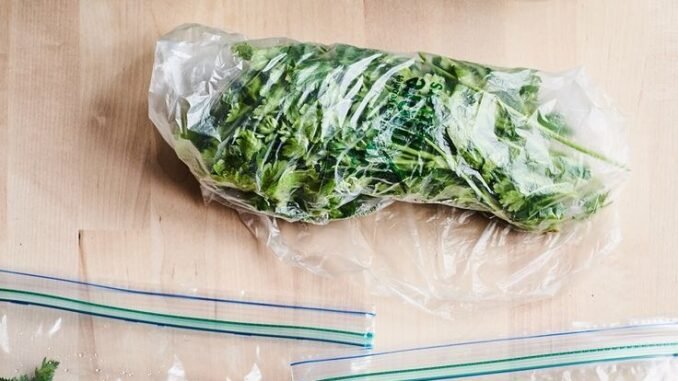
Fresh herbs are the fastest-spoiling item in most kitchens — that $3 bunch of cilantro turns to black slime in 4 days, and parsley wilts if you look at it wrong. Learning how to keep fresh herbs from going bad so fast can easily double or triple their life, turning a 4-day ingredient into a 2–3 week one. I’ve tested every method (bouquet, towel, freezing, the whole arsenal), and the right technique depends on the herb type. Here’s the complete guide.
Rule #1: Know Your Herb Type
- Soft herbs (cilantro, parsley, dill, mint, basil*): high water content, spoil fast — treat like fresh flowers.
- Hardy herbs (rosemary, thyme, oregano, sage, chives): woody stems, lower moisture — treat like produce.
- *Basil is the exception: it’s cold-sensitive — never refrigerate basil (it blackens below 50°F). Room temperature only.
The Bouquet Method (Soft Herbs — 2–3 Weeks)
This is the method that makes the biggest difference for cilantro and parsley:
- Trim 1/2 inch off the stem ends at an angle (like flowers).
- Place upright in a jar with 1–2 inches of water.
- Cover loosely with a plastic bag (a produce bag works) — creates a humid microclimate.
- Refrigerate (except basil — countertop for basil, no bag).
- Change the water every 2–3 days and re-trim ends if slimy.
Result: cilantro and parsley last 2–3 weeks instead of 4 days. Mint and dill: 2+ weeks. This method alone will change your herb economics — a $3 bunch stretched over 3 weeks of cooking instead of one.
The Damp Towel Method (Hardy Herbs — 2–3 Weeks)
- Don’t wash yet (wash before using — moisture accelerates decay).
- Wrap loosely in a slightly damp paper towel.
- Place in a zip-top bag, pressed mostly flat with a little air left in.
- Refrigerate in the crisper drawer.
Rosemary, thyme, oregano, and chives last 2–3 weeks this way. Sage: 1–2 weeks. Check weekly and remove any darkened sprigs before they spread.
How Can I Keep Fresh Herbs From Going Bad So Fast? Freezing (Months)
When herbs are at peak and you can’t use them in time, freeze — properly done, they’re excellent for cooking (not garnish):
- Oil-cube method (best): chop herbs, pack into ice cube trays, cover with olive oil, freeze, then bag the cubes. Drop a cube directly into hot pans — instant flavor base. Lasts 6+ months. Superb for basil (pesto cubes!), rosemary, thyme, oregano, sage.
- Dry-freeze method: spread clean, dry leaves on a sheet pan, freeze, then bag. Good for mint, dill, cilantro destined for cooked dishes.
- Herb butter: mix chopped herbs into softened butter, roll in plastic wrap, freeze — slice off coins for steak, vegetables, bread. Lasts 3–6 months and feels luxurious.
- Don’t freeze: herbs you’ll use raw as garnish — thawed herbs are limp (fine for cooking, sad on a plate).
Drying (The Pantry Method)
Hardy herbs dry beautifully: tie in small bundles, hang upside down in a dark, airy spot for 1–2 weeks, then strip leaves into jars. Or microwave-dry: single layer between paper towels, 30-second bursts — done in 2–3 minutes. Dried herbs last 6–12 months (though at ~1/3 the potency — use 1 teaspoon dried per tablespoon fresh). Don’t bother drying soft herbs — they lose everything.
The $4 Herb Garden (The Real Answer)
Honestly? A $4 basil plant and $4 mint plant from the grocery store, repotted and kept on a sunny windowsill, outproduce every storage method — snip what you need, it regrows. Parsley and cilantro are harder indoors (they want real sun), but basil, mint, chives, and thyme thrive on windowsills. The Old Farmer’s Almanac herb-growing guides cover the basics in 10 minutes of reading. Between the bouquet method for store-bought bunches and a windowsill plant for daily use, you’ll never throw away black cilantro slime again.
Fresh Herb Mistakes to Avoid
- Refrigerating basil: basil blackens below 50°F — it’s the one herb that wants room temperature, bouquet-style on the counter. Fridge basil is dead basil.
- Washing before storing: moisture accelerates decay — wash just before using, not when you get home. The damp-towel method uses controlled moisture; a wet bunch in a bag is rot.
- Storing soft and hardy herbs the same way: soft herbs (cilantro, parsley) want the bouquet method (stems in water, bag over top, fridge); hardy herbs (rosemary, thyme) want the damp-towel method. Wrong method = days of lost life.
- Throwing away “too much”: herbs at peak with no plan get frozen (oil-cube method — 6+ months) or made into herb butter (3–6 months). Freezing beats composting every time.
Fresh Herb FAQs
How long do fresh herbs last?
Bouquet method (soft herbs): 2–3 weeks. Damp towel (hardy herbs): 2–3 weeks. Basil (countertop, no fridge): 1–2 weeks. Frozen (oil cubes): 6+ months. Dried (hardy only): 6–12 months. The storage method matters more than the herb.
Can you freeze fresh herbs?
Yes — for cooking, not garnish. Oil-cube method (chopped herbs + olive oil in ice trays): drop frozen cubes directly into hot pans. Dry-freeze on sheet pans for mint/dill/cilantro. Thawed herbs are limp — perfect for cooked dishes, sad on a plate.
What’s the easiest herb to grow indoors?
Mint (nearly indestructible), chives, basil (sunny window), thyme. A $4 grocery-store plant, repotted to a sunny sill, outproduces every storage method — snip what you need, it regrows. Parsley and cilantro want real sun (harder indoors).
When should I use dried vs. fresh herbs?
Fresh: garnishes, salads, finishing (basil, cilantro, parsley, dill). Dried: long-cooked dishes (soups, braises — add early). Rule: 1 tsp dried = 1 tbsp fresh. Hardy herbs (oregano, thyme, rosemary) dry well; soft herbs (basil, cilantro, parsley) lose everything dried — freeze those instead.
Leave a Reply