
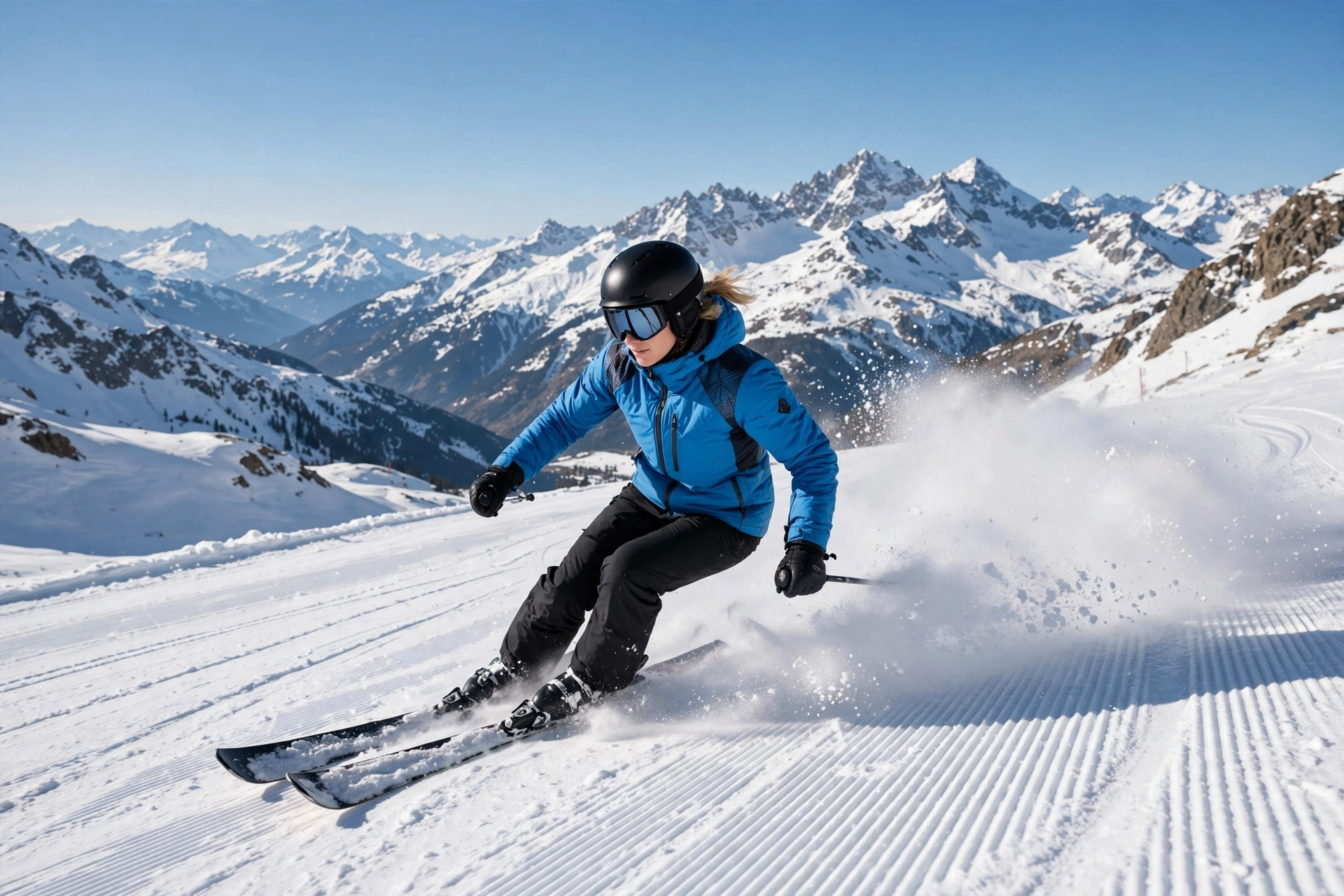
Watch confident skiers float down a steep pitch and it’s easy to assume they were born fearless. They weren’t. Every strong skier started exactly where you are — nervous at the top, legs shaky, wondering if this was a terrible idea. Learning how to build confidence while skiing is a skill in itself, separate from technique, and it’s the thing that unlocks everything else.
Confidence Comes From Competence (in the Right Order)
Here’s the truth most ski schools won’t tell you directly: confidence doesn’t come first. It comes from small, repeated successes. The skiers who progress fastest aren’t the bravest — they’re the ones who stack up tiny wins until their brain stops treating the mountain as a threat.
This means the path to confidence is deliberately unglamorous: master the easy stuff completely before moving on. If you can stop, turn, and control your speed on a green run without thinking, the first blue run feels like an adventure instead of a crisis.
Take a Lesson (Yes, Really)
The single fastest confidence builder is professional instruction. Not your buddy who “skis really well” — an actual certified instructor. Here’s why:
- They spot what you can’t feel. You’re leaning back and don’t know it. They see it instantly.
- They progress you correctly. Good instructors have a ladder of drills that build skill without terror.
- They manage terrain. An instructor won’t take you somewhere that overwhelms you — your buddy might.
- One lesson fixes months of bad habits. Skiing with poor technique is exhausting and scary. Good technique feels easy and safe.
Group lessons are affordable and effective. A half-day group lesson at most resorts runs $100–$200 — less than the cost of a bad day of fearful skiing.
Master the Fundamentals Until They’re Boring
Confidence lives in muscle memory. Drill these until they’re automatic:
- Stopping on demand. If you know you can stop anywhere, anytime, fear drops dramatically. Practice hockey stops on easy terrain until they’re reflexive.
- Speed control. Learn to ski slowly on steeper terrain by finishing your turns across the hill. Speed is a choice, not something that happens to you.
- One-footed balance. On flat ground, practice lifting one ski. Balance is the foundation of everything.
- Falling safely. Yes, practice falling. Knowing how to fall without injury removes the fear of falling.
Use Terrain Progression Intelligently
The classic mistake: jumping from a green run you barely survived to a blue run that terrifies you. Instead, use this progression:
- Ski the easy run until it’s genuinely fun, not just survivable.
- Find the easiest section of the next level up — often the top of a blue near the lift is mellow.
- Ski just that section, then cut back to familiar terrain.
- Expand your comfort zone one section at a time.
There’s no prize for skiing the hardest run. The prize is skiing well and having fun — and that happens inside your comfort zone’s expanding edge, not three levels beyond it.
Fix Your Equipment (It’s Probably Holding You Back)
Bad gear destroys confidence silently:
- Boots too big are the #1 confidence killer. Your foot should be snug with toes just brushing the front. Rental boots are often too large — consider getting fitted.
- Skis too long feel uncontrollable. Shorter skis turn easier and build confidence faster.
- Dull edges slip on hard snow. A tune makes an enormous difference.
- Wrong DIN setting — if your skis pop off unexpectedly (or don’t release when they should), get them checked.
Taking care of your gear matters year-round, not just on the mountain. Learning how to store skis during the off-season protects the edges and bases that your confidence depends on.
Manage the Mental Game
Skiing is as mental as it is physical. Techniques that actually work:
- Breathe. Fear makes you hold your breath, which tenses every muscle. Consciously exhale through turns.
- Look where you want to go — not at the trees, the drop, or your ski tips. Your body follows your eyes.
- Ski with better skiers (patient ones). Watching good technique in front of you gives your brain a template.
- Take breaks. Fatigue kills confidence. A 15-minute hot chocolate break resets both body and mind.
- Visualize. Before a tricky section, picture yourself skiing it smoothly. Sports psychology backs this up.
- Talk to yourself kindly. “I’ve got this” works measurably better than “don’t fall.”
Know When to Push and When to Back Off
This is the advanced skill: reading your own state. Some days you’re sharp and progression feels right. Other days — bad sleep, icy conditions, crowds — the smart move is cruising groomers and enjoying the mountain.
Backing off isn’t quitting. The skiers who last decades are the ones who respect their limits on off days and push gently on good ones. Forcing it when you’re rattled builds trauma, not confidence.
The same principle applies across adventure sports. Whether you’re thinking about skydiving or just trying a steeper run, the confidence formula is identical: preparation, progression, and respecting your own pace.
Track Your Progress
Keep a simple ski log: date, resort, runs skied, one thing you improved. On days when confidence dips, reading back through weeks of progress is powerful evidence that you’re improving — because you are, even when it doesn’t feel like it.
Film yourself occasionally, too. What feels like flailing often looks surprisingly competent on video. And comparing early-season footage to late-season footage is one of the most motivating things in skiing.
The Bottom Line
Confidence while skiing isn’t a personality trait — it’s a byproduct of skill, good equipment, smart progression, and self-compassion. Take the lesson. Master the basics. Fix your boots. Breathe. The mountain isn’t going anywhere, and neither is your potential.
For more on the technical side of the sport, alpine skiing’s fundamentals are worth studying — understanding the “why” behind the technique accelerates everything.
Helping Kids Build Ski Confidence
Everything above applies doubly to children — with a few kid-specific additions. First, make sure lessons are with children’s instructors, not just whoever’s available; teaching kids requires different skills. Second, keep sessions short: a tired, cold kid isn’t learning, they’re enduring. Two happy hours beat four miserable ones.
Third, manage your own expectations visibly. Kids read parental frustration instantly. Celebrate small wins out loud (“you stopped all by yourself!”) and never compare siblings. Fourth, hot chocolate breaks are strategic, not indulgent — warmth and sugar reset a child’s mood completely.
Finally, let them quit while they’re ahead. Ending the day on a success — even an easy run skied well — builds the positive association that brings them back tomorrow. The goal isn’t raising an Olympian; it’s raising someone who loves the mountain.
When Fear Becomes a Real Problem
Normal nervousness is part of learning. But if fear is so intense it ruins every ski day — panic on easy runs, dreading the lift, wanting to quit the sport entirely — consider working with a sports psychologist or a therapist who understands performance anxiety. There’s no shame in it; professional athletes do it routinely. Sometimes the barrier isn’t technique at all, and addressing the mental side directly is the fastest path back to joy on snow.
Leave a Reply