
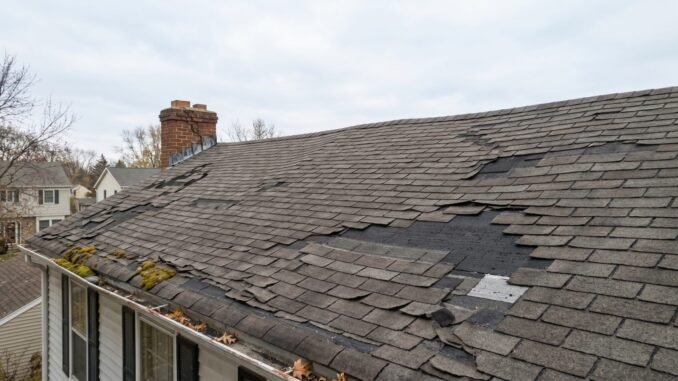
A roof doesn’t fail overnight — it sends warnings for years, and homeowners who read them save thousands. Knowing the signs your roof needs to be replaced (versus repaired) is a $10,000 decision, so it’s worth getting right. Asphalt shingle roofs last 20–30 years; if yours is pushing 25 and showing multiple symptoms below, start budgeting. I learned this watching a neighbor ignore curling shingles until a leak destroyed their attic insulation — a $12,000 roof became a $20,000 roof-plus-interior job. Here’s what to look for.
Exterior Warning Signs (Check From the Ground With Binoculars)
- Curling or cupping shingles: edges turning up (cupping) or corners lifting (curling) = the shingles are past their life. Widespread curling means replacement, not repair.
- Cracked or missing shingles: a few missing after a storm = repair. Missing shingles in multiple areas or shingles that crack when touched = the material is brittle and done.
- Bald spots / granule loss: check your gutters — piles of sandy granules mean the shingles’ protective coating is washing away. Bare fiberglass mat showing through = replacement time.
- Moss and algae: some algae staining is cosmetic, but thick moss holds moisture against shingles and rots them. If moss is widespread, the roof’s been compromised.
- Sagging: any visible dip or sag in the roofline = structural issue. Call a roofer immediately — this isn’t a “monitor it” situation.
- Damaged flashing: cracked or lifted flashing around chimneys, vents, and valleys is the #1 leak source. Flashing alone can be repaired — but widespread flashing failure on an old roof argues for replacement.
- Daylight in the attic: go up on a sunny day and look for pinpricks of light. Water follows the same paths.
Interior Warning Signs
- Water stains on ceilings/walls: brown rings = active or past leaks. Trace them upward — the leak’s entry point is often uphill from the stain.
- Attic moisture: damp insulation, mold on rafters, or a musty smell = water getting in, ventilation failing, or both.
- Peeling paint near rooflines: moisture intrusion behind the scenes.
- Sudden energy bill spikes: failing roofs often mean failing ventilation/insulation — your HVAC works overtime.
What Are the Signs My Roof Needs to Be Replaced? The Age Rule
- Under 15 years: almost always repairable — isolated damage, storm hits, flashing fixes ($300–$1,500).
- 15–20 years: the judgment zone — depends on symptoms and shingle quality. Get a professional inspection ($150–$300, often free with a replacement quote).
- 20–25 years: start budgeting seriously. Most 3-tab shingles are done by 20; architectural shingles stretch to 25–30.
- 25+ years: replacement is a matter of when, not if. Proactive replacement beats emergency replacement (which costs 20–40% more and happens during a leak).
- Two layers already: if the roof has been re-shingled over once, most codes prohibit a third layer — replacement means full tear-off.
Repair vs. Replace: The Decision
Repair when: damage is isolated (one slope, one valley), roof is under 15 years, and the rest looks healthy. Typical repairs: $300–$1,500.
Replace when: multiple symptoms across large areas, age 20+, granule loss widespread, or repair quotes exceed 30% of replacement cost. Full replacement: $8,000–$20,000 for architectural shingles on an average home (2026 pricing), $15,000–$40,000+ for metal or tile.
Get 3 quotes from licensed, insured roofers — check the BBB and demand proof of workers’ comp (uninsured roofers are your liability if someone falls). Never pay more than 30% upfront, and be wary of storm-chasers knocking after hail — legitimate local roofers don’t need to canvass. A roof is the most expensive single component of your house; reading its warnings early is the cheapest home maintenance there is.
Roof Warning-Sign Mistakes to Avoid
- Ignoring granule loss: sandy piles in gutters mean the shingles’ protective coating is washing away — the roof is aging in fast-forward. Granule loss is the quietest warning sign and the most ignored.
- Repairing a 25-year-old roof repeatedly: when repair quotes exceed 30% of replacement cost on an old roof, you’re renting time expensively. Proactive replacement beats emergency replacement (which costs 20–40% more during a leak).
- Hiring storm-chasers: door-knockers after hailstorms are often transient outfits — gone when warranty issues arise. Local, licensed, 5+ years at the same business name, every time.
- Paying too much upfront: never more than 30% before work starts (many states cap at 10% or $1,000). Full upfront payment removes your only leverage for completion quality.
Roof Replacement FAQs
How long does a roof replacement take?
1–3 days for most single-family homes (tear-off + architectural shingles). Metal or tile: 1–2 weeks. Weather delays are the main variable — reputable roofers don’t tear off more than they can dry-in daily.
Can I stay in the house during roof replacement?
Yes — it’s loud (7 a.m. to evening) and the house vibrates, but it’s safe. Move cars from the driveway (debris), cover attic valuables (dust falls through), and warn the neighbors. Pets may prefer a day elsewhere.
What’s the best roofing material?
Architectural asphalt shingles: best value (25–30 years, $8,000–$20,000). Metal: premium longevity (40–70 years, $15,000–$40,000), excellent in snow/hail regions. Tile/slate: century materials for the right architecture and budget. Match material to climate and how long you’ll own the home.
Will insurance cover my roof replacement?
Storm damage (hail, wind): yes — file promptly, get a roofer’s assessment first (they document damage in insurance language). Age/wear: no — that’s maintenance. Actual cash value policies depreciate old roofs heavily; replacement cost policies pay full — know which you have before the storm.
Extending Your Roof’s Life
A roof’s lifespan isn’t fixed — maintenance stretches it meaningfully. The program: annual gutter cleaning (clogged gutters cause ice dams and fascia rot), zinc or copper strips near the ridge ($30–$50 — rainwater carries moss-killing ions down the roof), trim overhanging branches (abrasion + debris + moss habitat), attic ventilation check (heat buildup cooks shingles from below — ridge + soffit vents should flow freely), and prompt repair of lifted flashing or missing shingles (small fixes prevent the water-intrusion cascade). A 25-year shingle with this maintenance routinely reaches 28–32 years; a neglected one dies at 20. That’s up to a decade of deferred $12,000 — the highest-value maintenance in homeownership, and most of it is a ladder and a Saturday.
Leave a Reply