
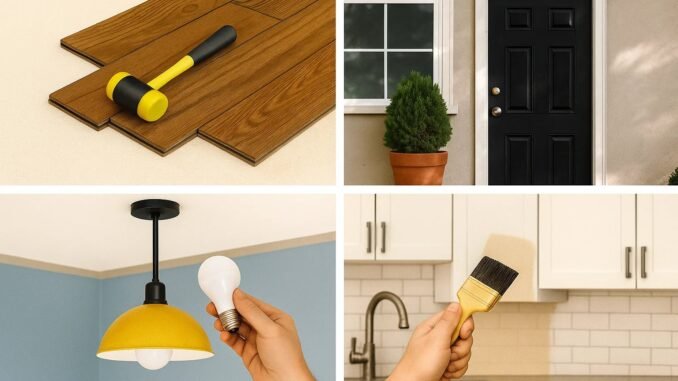
Not all DIY projects are created equal. The easiest DIY projects to increase home value share three traits: they cost under $500, they take a weekend or less, and buyers actually notice them. I’ve tracked remodeling ROI data for years, and the pattern is clear — buyers pay for perceived condition and modern touches, not for your labor. A $200 project that makes the house feel updated beats a $2,000 project nobody sees. Here are the ten I’d do first.
1. Interior Paint — Entire Main Living Areas ($200–$400)
The undisputed champion. Fresh paint in a modern neutral (warm white, greige) makes every room feel newer, cleaner, and bigger. ROI estimates run 60–100%+ of cost — and since your labor is free, your actual return is enormous. One weekend, two gallons per room, transformative results.
2. Update Cabinet Hardware ($40–$100)
Swapping dated brass knobs for matte black or brushed nickel bar pulls ($2–$4 each) modernizes a kitchen in two hours. It’s the cheapest kitchen “renovation” that photographs like a real one. Do the bathroom vanities while you’re at it.
3. Install a Smart Thermostat ($130–$250)
A Google Nest or Ecobee takes 30–45 minutes to install (turn off the breaker first) and signals “updated home” to buyers while cutting energy bills 10–15% per the Department of Energy. It’s also the rare project that’s both a value-add and a daily-life upgrade.
4. Refresh the Front Door ($30–$80)
Paint it a rich color, add a new handle and house numbers. First impressions form in 10 seconds from the curb — this project owns those seconds.
5. Upgrade Light Fixtures ($150–$400 total)
Replace the boob lights (you know the ones) in hallways, the dated dining chandelier, and bathroom vanity bars with modern fixtures from Home Depot or Wayfair ($40–$120 each). Lighting is jewelry for the house — it changes how every room feels. Turn off breakers, match wire colors, 20 minutes per fixture.
What Are the Easiest DIY Projects to Increase Home Value? (Continued)
6. Re-caulk Everything ($20–$40)
Fresh white caulk around tubs, sinks, windows, and baseboards screams “well-maintained.” Old cracked caulk whispers the opposite. A $8 tube and an afternoon.
7. Add a Kitchen Backsplash ($100–$250)
Peel-and-stick subway tile or a simple ceramic install transforms the kitchen’s focal wall. Even renters can do the peel-and-stick version.
8. Landscaping Cleanup + Mulch ($80–$150)
Edge beds, trim bushes, fresh mulch, a flat of flowers. The National Association of Realtors finds landscaping upgrades recover 100%+ of costs — the rare project that pays for itself.
9. Replace Toilet Seats and Switch Plates ($50–$80)
New slow-close toilet seats ($25 each) and modern switch plates throughout — tiny details buyers touch and notice subconsciously.
10. Deep Clean Like You’re Selling Tomorrow ($50–$100)
Rent a carpet cleaner ($30/day), wash windows inside and out, scrub grout, power-wash the driveway. Cleanliness reads as “new” to the human brain. This isn’t glamorous, but appraisers and buyers both respond to it.
Projects to Skip (Low ROI or High Risk)
- Swimming pools: cost $50,000+, often decrease buyer pool and add insurance costs.
- High-end kitchen gut jobs: you recover 50–60% at best; buyers may hate your taste.
- DIY electrical/plumbing beyond basics: permit and safety issues can torpedo a sale during inspection.
- Converting garages to living space: you lose the garage (which buyers want) for space appraisers discount.
- Wallpaper everywhere: deeply personal; buyers see removal work.
Total for all ten projects: roughly $800–$1,500 and four weekends. The combined effect — fresh, modern, well-maintained — is what buyers describe as “move-in ready,” and move-in ready commands a premium of 5–10% over comparable fixer-uppers. Start with paint this weekend; it’s the project everything else builds on.
Value-Boosting DIY Mistakes to Avoid
- Over-improving for the neighborhood: a $30,000 kitchen in a $200,000 neighborhood doesn’t return proportionally — appraisals are anchored by comparable sales. Improve to the neighborhood standard, not beyond it.
- DIYing electrical and plumbing beyond basics: unpermitted work fails buyer inspections and can kill sales. Fixtures and thermostats: fine. New circuits and moved plumbing: licensed pro + permits.
- Taste-specific “upgrades”: bold wallpaper, exotic tile, and ultra-trendy finishes shrink your buyer pool. Value-boosting means broadly appealing — neutrals, classics, clean.
- Ignoring the $10 details: buyers touch switch plates, door handles, and faucets — worn, yellowed, or broken ones whisper “deferred maintenance” louder than any paint color shouts “updated.”
Home Value DIY FAQs
What’s the single best ROI project?
Interior paint — $200–$400 in materials returns 60–100%+ in perceived value, and your labor is free. Second: landscaping cleanup + mulch ($80–$150, often 100%+ recovery). Third: front door refresh ($30–$80).
Should I renovate the kitchen before selling?
Usually not a full gut — you recover 50–60% at best, and buyers may hate your choices. Instead: paint cabinets ($150–$400), new hardware ($50–$100), updated lighting ($150–$300). The cosmetic refresh captures most of the value signal at a fraction of the cost.
Do smart home upgrades add value?
Modestly — a smart thermostat ($130–$250) and video doorbell ($100–$200) signal “updated home” to buyers and appraisers notice them. But they don’t appraise like square footage — think marketing edge, not major value add.
How do I know if I’m over-improving?
Check comparable sales (Zillow/Redfin sold listings within half a mile, last 6 months). If your planned improvements push your home’s value 15–20% above the neighborhood ceiling, scale back. Real estate agents give free pre-listing assessments — use them.
The Pre-Listing Weekend Blitz
Selling soon? This single-weekend sequence captures most of the value: Saturday morning: declutter every room (rent a storage unit for a month if needed — $75–$150 — less stuff = bigger rooms in photos). Saturday afternoon: paint the worst room(s), touch up trim, replace the most dated light fixture. Sunday morning: curb appeal blitz (door paint, mulch, power wash, mow + edge). Sunday afternoon: deep clean everything, caulk the bathrooms, replace switch plates and toilet seats. Total: ~$400–$700 and one weekend for a house that photographs as “move-in ready” — the phrase that commands a 5–10% premium over comparable fixer-uppers. Decluttering alone is half the battle; buyers can’t see past your stuff to the house underneath.
Leave a Reply