
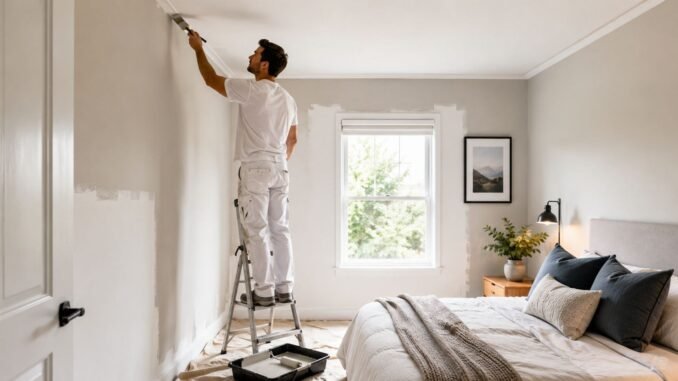
So how much does it cost to paint a bedroom professionally? For a standard 12×12 bedroom with 8-foot ceilings, expect $300 to $800 in most US markets in 2026 — walls only, two coats, quality paint included. That’s the honest national range. But I’ve gotten quotes as low as $250 in smaller Midwest towns and over $1,200 in high-cost coastal cities for the same room, so let’s break down exactly what you’re paying for and where the money goes.
The National Price Breakdown
Professional painters typically charge by one of three methods:
- Per square foot of wall: $2–$6 per sq. ft. A 12×12 room has roughly 400–450 sq. ft. of wall space (minus doors/windows) → $800–$2,700 at the high end, though most bedrooms land $400–$900.
- Per room (flat rate): $300–$800 for a standard bedroom — the most common quoting method.
- Per hour: $25–$75 per painter per hour. A bedroom takes one painter 6–10 hours including prep.
Roughly 70–80% of what you pay is labor. Paint itself for one bedroom runs $60–$120 (two gallons of quality paint at $30–$60/gallon — think Sherwin-Williams Duration or Benjamin Moore Regal Select). The rest is prep, skill, insurance, and the fact that a pro finishes in a day what takes you a weekend.
What Pushes the Price Up
- Ceilings: adding the ceiling typically adds $100–$250. Worth it if the ceiling is stained or a different color.
- Trim and doors: painting baseboards, window trim, and the door adds $150–$300 but transforms the room.
- Repairs: patching holes, fixing cracks, or skim-coating damaged drywall — $50–$200 extra depending on condition.
- Dark-to-light color changes: going from navy to white may need a primer coat plus three finish coats — add 25–40% to labor.
- High ceilings or accent walls: vaulted ceilings, intricate trim, or multiple colors slow the job down.
- Your zip code: labor in San Francisco or Boston runs roughly double that of Tulsa or Des Moines.
How Much Does It Cost to Paint a Bedroom Professionally vs. DIY?
DIY runs $100–$250 in materials (paint, primer, rollers, tape, drop cloths, brushes). So you’re saving $200–$550 doing it yourself. The trade: a full weekend of work, and — be honest with yourself — the cut-in lines around the ceiling won’t look pro. My take: DIY if the walls are in good shape, you’re doing one color, and you own basic supplies. Hire out if there are repairs needed, ceilings are high, you’re changing colors dramatically, or your time is worth more than the savings.
If you DIY, don’t cheap out on paint. A $55 gallon of Benjamin Moore covers in two coats what a $25 builder-grade gallon needs three coats for — the “cheap” paint often costs more in the end. The Consumer Reports paint ratings are worth checking before you buy; their top picks consistently beat bargain brands on coverage.
Getting Quotes That Don’t Rip You Off
- Get 3 quotes minimum. Throw out the lowest (corner-cutting) and the highest (unless the reviews justify it).
- Insist on itemized quotes: labor, paint brand and line, number of coats, prep work, and what’s not included.
- Ask about the paint: “contractor-grade” paint is code for cheap. Specify the brand and product line in the contract.
- Check insurance: legitimate painters carry liability insurance. Ask; it takes 30 seconds.
- Timing matters: painters are slowest in late fall and winter (interior season) — you may negotiate 10–15% off.
A realistic all-in number for most Americans: $450–$650 for a standard bedroom, walls only, two coats of good paint, minor prep included. Get it in writing, check reviews on Google and the BBB, and never pay more than 30–50% upfront. A fresh professional paint job returns about 60–100% of its cost in perceived home value — it’s one of the cheapest transformations in home improvement.
Bedroom Painting Mistakes to Avoid
- Skipping the prep: painting over dirty, glossy, or damaged walls guarantees peeling and flashing. Wash, fill holes, sand glossy spots, prime repairs — prep is 70% of a good paint job.
- Buying cheap paint to “save money”: a $25/gallon bargain paint often needs three coats where a $55/gallon premium needs two — the “cheap” paint costs more in paint and labor. Benjamin Moore Regal or Sherwin-Williams Duration cover properly.
- Choosing color from a tiny swatch: colors look drastically different on four walls than on a 2-inch chip. Buy sample pints ($5–$8) or Samplize peel-and-stick samples and live with them 48 hours in your actual light.
- Paying the full deposit upfront: legitimate painters ask for 30–50% max upfront (many states cap it lower). Full payment before work starts is a red flag for disappearing contractors.
Bedroom Painting FAQs
How long does it take to paint a bedroom professionally?
One day for a standard 12×12 bedroom (walls only, two coats) — 6–10 hours including prep, with drying time between coats. Add a day for ceilings, trim, or significant repairs.
Should I paint the ceiling too?
If it’s discolored, yes — add $100–$250. A fresh wall color next to a dingy ceiling makes the ceiling look worse by contrast. If the ceiling is clean white, skip it.
What’s the best paint finish for bedrooms?
Eggshell or matte — bedrooms don’t need scrubbability, and flatter finishes hide wall imperfections best. Eggshell if you want a hint of washability (kids’ rooms); matte for the most forgiving, sophisticated look.
Can I negotiate with painters?
FAQs
What’s typically included in a professional paint quote?
A proper quote covers labor, paint, primer, and prep work — patching small holes, caulking gaps, taping trim, and protecting floors and furniture. It should also specify the number of coats and the paint brand and line being used. Watch out for quotes that seem cheap because they skip the prep; painting over a poorly prepped wall is like building on a shaky foundation. Always ask exactly what’s included before comparing prices.
Does the paint brand really make a difference?
Yes, but not as much as marketing suggests. Premium lines cover better in fewer coats, resist scuffs, and touch up more invisibly — which matters in a bedroom you live in every day. That said, the painter’s skill and prep work matter more than whether the can says premium or mid-tier. A great painter with decent paint beats a mediocre painter with the most expensive paint on the shelf, every single time.
How long does it take to paint a bedroom professionally?
A standard bedroom usually takes a pro crew one to two days: a day for prep, priming, and the first coat, and part of a second day for the final coat and cleanup. Dark-to-light color changes can add time because they need extra coats for full coverage. DIY takes most people a full weekend or longer for the same room — and that’s before you count the trips back to the store for supplies you forgot.
Should I supply the paint myself to save money?
Usually not. Painters get contractor discounts of 20–40% off retail, so the paint they supply often costs you less than buying it yourself at full price. More importantly, the painter stands behind their work when they choose the materials — if the paint fails, it’s on them. If you supply it and something goes wrong, expect a finger-pointing contest. The one exception: if you want a very specific color or specialty finish, buy that yourself and let them handle the rest.
Can I negotiate the price with a painter?
You can ask, but negotiate scope, not just the number. Asking “can you do it for less?” usually gets you less — thinner prep, cheaper paint, fewer coats. Better questions: “What if I move the furniture myself?” or “What if we skip the closet interior?” Reducing the work honestly is fair game and most painters will happily adjust the quote. And always get at least three quotes; the range will tell you more than any single negotiation.
Yes — especially in the off-season. Late fall and winter are slow for interior painters; 10–15% discounts are common. Also ask about bundling rooms — the per-room price drops when they do three bedrooms instead of one.
Leave a Reply