
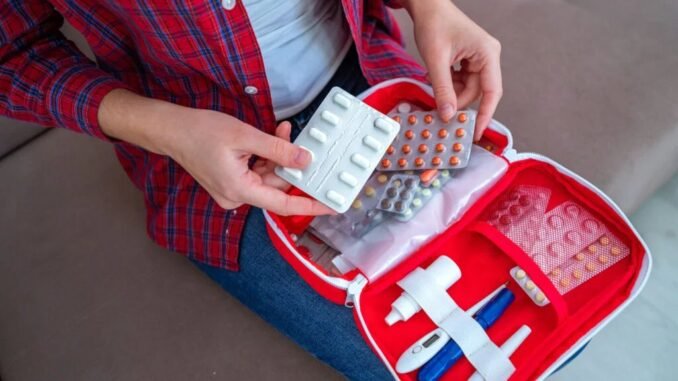
Here’s a scenario that ruins trips: you land in Japan with your Adderall and discover it’s prohibited — possession can mean detention. Or Dubai, where common US prescriptions (including some painkillers and anti-anxiety meds) are controlled substances requiring pre-approval. If you’re asking how do I travel with prescription medications internationally, the stakes are genuinely high — medication laws vary wildly, and “I didn’t know” isn’t a defense. Here’s the complete guide to traveling with prescriptions legally and safely.
The core principle: research every destination’s rules before you pack a single pill. What’s over-the-counter at home may be prescription-only abroad; what’s prescription at home may be outright banned abroad.
How Do I Travel With Prescription Medications Internationally? The Universal Rules
- Keep everything in original labeled containers. Pharmacy bottles with your name, the drug name, dosage, and prescribing doctor. Loose pills in a baggie look like contraband to every customs officer on earth — and in some countries, that’s exactly how they’re treated.
- Carry a doctor’s letter on letterhead stating: your name, the medications (generic names, not brand — brands differ globally), dosages, that they’re prescribed for your personal use, and the doctor’s contact info. For controlled substances, this letter is essential.
- Bring copies of prescriptions — paper copies plus photos stored in cloud/email. If medication is lost or stolen, a local doctor or embassy can help replace it with documentation.
- Pack meds in your carry-on. Always. Checked bags get lost; medications don’t have backups abroad. Split a backup supply between your carry-on and a travel companion’s bag if possible.
- Bring extra: trip length + 7–14 days buffer for delays. Running out abroad — especially of critical meds — is a crisis that’s entirely preventable.
- Know generic names: Tylenol = paracetamol/acetaminophen, Advil = ibuprofen. Pharmacists worldwide work from generic names; US brand names mean nothing in a Bangkok pharmacy.
Controlled Substances: The Danger Zone
This is where travelers get in real trouble. Medications with extra restrictions in many countries:
- ADHD stimulants (Adderall, Ritalin, Vyvanse): banned or heavily restricted in Japan, South Korea, UAE, Singapore, and others. Japan prohibits amphetamine-based medications entirely — no exceptions, no waivers. Alternatives: consult your doctor months ahead about non-stimulant options for the trip, or reconsider destinations.
- Opioid painkillers (codeine, oxycodone, etc.): codeine is OTC in some countries and a controlled narcotic in others. The UAE, Singapore, and Japan require pre-approval processes (weeks to months). Never assume.
- Anti-anxiety/sleep meds (Xanax, Valium, Ambien): controlled in most of Asia and the Middle East; some require import permits applied for in advance.
- Medical marijuana/CBD: do not travel internationally with any cannabis product, period. CBD that’s legal in the US can trigger drug-trafficking charges in Japan, Singapore, UAE, and others — penalties include years in prison. Leave it all home, no exceptions.
- Hormones, injectables: carry syringes with the prescription label and doctor’s letter; some countries require declaring them at customs.
How to check: contact the embassy of each destination country (email their consular section — they answer these questions routinely), check the State Department’s health abroad page, and consult the INCB country database for controlled-substance rules. For Japan specifically, the Ministry of Health’s “Yakkan Shoumei” import certificate process handles pre-approval. Start this research 2–3 months before departure — permits take time.
Country Spot-Checks (Always Verify Current Rules)
- Japan: stimulants banned; many common meds need Yakkan Shoumei pre-approval for >1 month supply. Pseudoephedrine (Sudafed) is prohibited.
- UAE/Dubai: strictest in the world — many Western prescriptions require pre-approval via the Ministry of Health portal. Tramadol, codeine, and anti-anxiety meds are controlled.
- Singapore: death penalty for drug trafficking (extreme, but illustrates the seriousness) — declare all controlled meds, carry approvals.
- Australia: declare all medications on arrival; most personal quantities (3-month supply) are fine with prescriptions.
- UK/EU: generally reasonable — 3-month personal supply with prescription documentation is standard.
Managing Meds Across Time Zones
- Keep a written schedule in both home time and destination time for the first few days — time-zone math errors cause missed or doubled doses.
- Gradual shifters (thyroid meds, etc.): move dose time by 1–2 hours daily toward the new schedule.
- Strict-interval meds (some antibiotics, etc.): maintain the interval regardless of local time — set phone alarms.
- Ask your doctor or pharmacist specifically about time-zone adjustments before the trip — they do this routinely. Pair with jet lag management since disrupted sleep affects medication timing too.
Storage and Practicalities
- Temperature: many meds degrade in heat — don’t leave them in parked cars or beach bags. Insulated pouches ($10–$15) for insulin and temperature-sensitive drugs.
- Humidity: tropical climates destroy pills — keep in sealed containers with desiccant packets, not open bathroom shelves.
- Refills abroad: possible with prescription copies at local pharmacies/clinics, but formulations and availability differ. Your embassy can recommend English-speaking doctors.
- Travel insurance with medical coverage: if a medication crisis requires a doctor visit abroad, travel medical insurance covers it. Non-negotiable when traveling with significant prescriptions.
Traveling With Medical Devices (CPAP, Injectables, and More)
Medications get the attention, but devices have their own rules. CPAP machines: carry on, always (checked CPAPs get destroyed). They’re exempt from carry-on limits as medical devices on most airlines — but carry your prescription or a doctor’s note, and call the airline ahead for international specifics. Bring a universal power adapter and check voltage: most modern CPAPs are dual-voltage, but verify. Distilled water is available at pharmacies worldwide — buy it there, don’t pack it.
Injectables (insulin, EpiPens, biologics): carry the prescription label on the medication itself, plus the doctor’s letter. Syringes and auto-injectors are allowed through security with documentation — declare them at screening. Cooling: insulin and many biologics need refrigeration — insulated medication travel cases ($20–$40) with gel packs keep them safe for 24+ hours. Hotel mini-fridges work; never use the freezer compartment. Wearable devices (CGMs, pumps): you can usually keep them on through body scanners, but carry the manufacturer’s travel card explaining the device — security agents worldwide recognize these, and the card speeds things up. Backup plan: know the generic name and dosage of everything, stored in your phone and email. If a device fails abroad, a local pharmacy or clinic can usually help — with documentation. Without it, you’re starting from zero in a foreign language.
The Bottom Line
Travel with prescriptions internationally by: keeping everything in original labeled bottles with a doctor’s letter, researching each country’s controlled-substance rules 2–3 months ahead (embassy + State Department), never carrying cannabis products across any border, packing all meds in carry-on with a 7–14 day buffer, and planning time-zone dose adjustments with your doctor. The research is tedious; the alternative — foreign detention over an Adderall bottle — is worse. Do the homework, then travel easy.
Leave a Reply