
It’s a question most people are morbidly curious about but rarely ask out loud: how long does it take a body to decompose? The honest answer is that it depends enormously — on temperature, moisture, burial conditions, and whether the body is exposed, buried, or submerged. Under the right conditions, soft tissue can disappear in weeks. Under others, a body can remain recognizable for years.
The General Timeline
Forensic scientists describe decomposition in stages, and each stage has a rough timetable under average temperate conditions:
- Fresh (1–2 days): The body looks essentially normal. Rigor mortis sets in within hours and fades within a day or two.
- Bloat (2–6 days): Bacteria in the gut multiply and produce gases. The abdomen swells, and discoloration spreads.
- Active decay (5–11 days): Tissues break down rapidly. Fluids purge, skin slippage occurs, and insect activity peaks.
- Advanced decay (10–25 days): Most soft tissue is gone. What remains is drier, leathery, and heavily reduced.
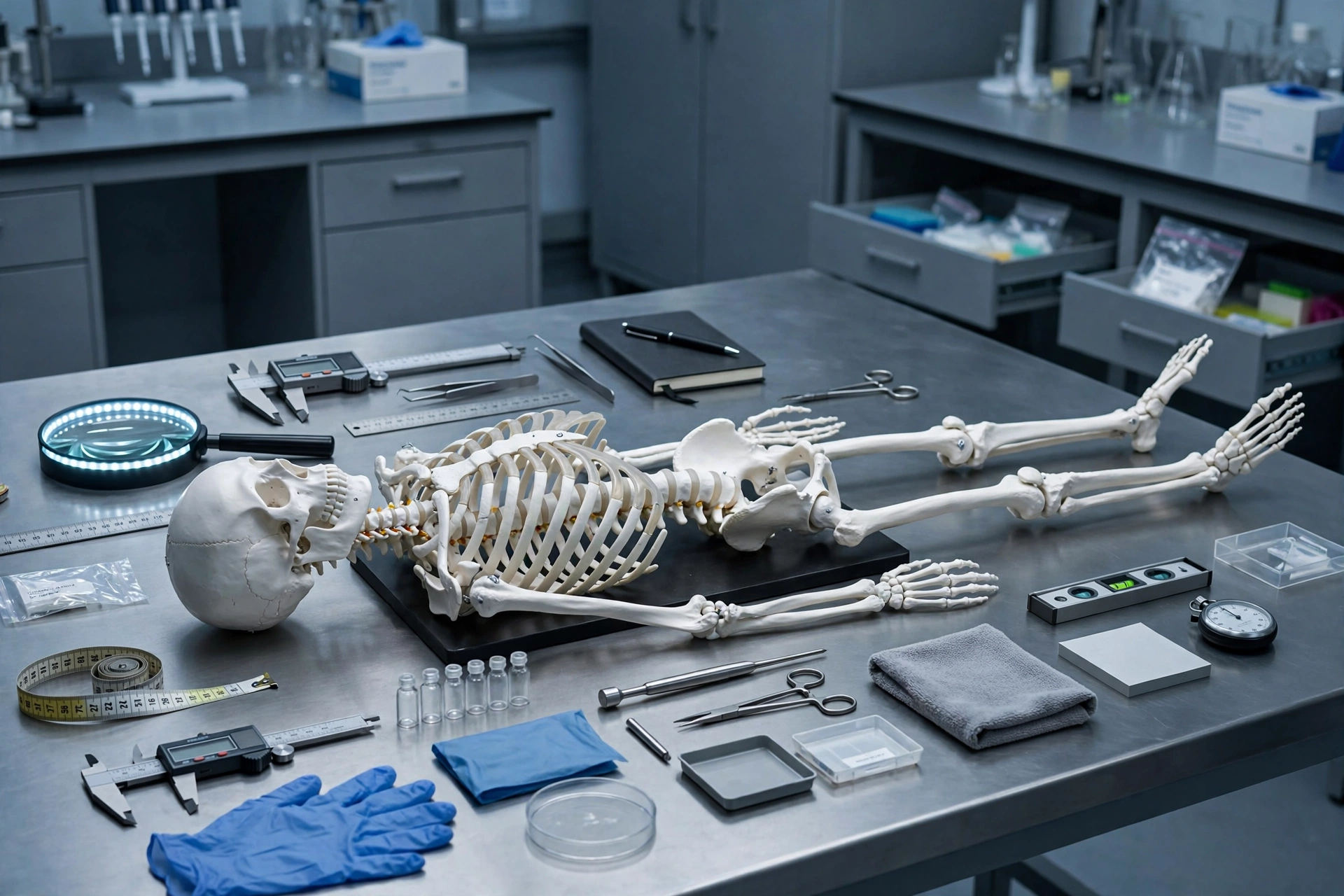
- Skeletonization (weeks to months): Only bones, cartilage, and dry tissue remain. In warm conditions with insect access, this can happen in as little as 2–3 weeks. In a sealed casket underground, it can take many years.
These are rough averages for a body exposed to the elements in a temperate climate. Change the conditions, and the timeline changes dramatically.
What Speeds Up Decomposition
Several factors accelerate the process:
- Heat. This is the biggest factor. Bodies decompose roughly twice as fast for every 10°C (18°F) increase in temperature. A body in summer heat can skeletonize in weeks; the same body in winter might barely change for months.
- Moisture and humidity. Bacteria thrive in damp conditions.
- Insect access. Blowflies arrive within minutes of death and their larvae consume soft tissue astonishingly fast.
- Scavengers. Animals can reduce a body to bones in days.
- Trauma or wounds. Breaks in the skin give bacteria and insects easy entry points.
- Shallow burial or surface exposure. More air, more insects, faster decay.
What Slows It Down
On the other hand:
- Cold. Freezing essentially pauses decomposition. Bodies recovered from glaciers or permafrost can be preserved for centuries.
- Embalming. The chemical preservatives used in funeral preparation delay decay significantly — one reason modern burials look “fresh” at viewings.
- Sealed caskets and vaults. A sealed metal casket inside a concrete burial vault limits oxygen, moisture, and insect access. Under these conditions, soft tissue can persist for years or even decades.
- Dry environments. Extreme dryness leads to natural mummification rather than decay — the body desiccates instead of rotting.
- Bogs. Acidic, oxygen-poor bog water tans skin like leather. Bog bodies thousands of years old have been found with skin and hair intact.
- Water. Submersion generally slows decay compared to air exposure, though warm water still allows relatively quick breakdown.
Buried in a Casket: The Realistic Timeline
Since most people asking this question are thinking about conventional burial, here’s the realistic answer: in a standard embalmed burial with a wooden or metal casket in a burial vault, soft tissue typically takes 10–15 years to fully decompose, and sometimes longer. Without embalming, in a simple wooden casket in soil, it may take 5–10 years. In a shallow grave with no casket, skeletonization can occur within a few years — or even months in warm climates.
These long timelines surprise people who imagine burial as a quick return to the earth. Modern funeral practices — embalming, sealed caskets, concrete vaults — are specifically designed to slow the process, largely to preserve the cemetery landscape and allow for exhumation if needed.
How This Compares to Cremation
Many people researching decomposition are weighing burial against cremation. The contrast is stark: while burial takes years, cremation reduces a body to ashes in about two to three hours. The cremation process uses intense heat (1,400–1,800°F) to accomplish in hours what nature takes years to do. If a quick, complete transformation matters to you or your family, that’s a meaningful difference worth understanding alongside the Cremation Association of North America’s resources on the process.
Why Forensic Scientists Study This
The science of decomposition isn’t just morbid curiosity — it’s the foundation of forensic entomology and taphonomy. Researchers at “body farms” (forensic anthropology research facilities) study donated bodies decomposing under controlled conditions to help solve crimes. By understanding exactly how long each stage takes under specific conditions, investigators can estimate time of death with remarkable accuracy.
The most famous facility, at the University of Tennessee, has contributed to thousands of criminal investigations. What they learn about insect succession, soil chemistry, and decay rates directly helps bring closure to families.
The Bottom Line
How long does it take a body to decompose? Anywhere from weeks (exposed in summer heat) to decades (embalmed in a sealed vault) to effectively never (frozen or mummified). The single biggest variables are temperature and whether insects and air can reach the body.
It’s a strange thing to think about, but understanding the process helps many people make informed, peaceful decisions about burial, cremation, and how they want to be remembered — which, in the end, is what preserving meaningful mementos and planning thoughtful farewells is all about.
Decomposition in Water
Bodies recovered from water follow a different timeline. Cold water dramatically slows decay — a body in a cold lake may remain preserved for months, while the same body in warm ocean water breaks down much faster. Water also introduces unique factors: adipocere (“grave wax”), a waxy substance formed when body fat breaks down in wet, oxygen-poor conditions, can actually preserve a body’s shape for years underwater.
Marine scavengers work quickly, though. In the ocean, crabs, fish, and other organisms can skeletonize exposed remains in weeks. This is why forensic oceanographers study “submerged body” timelines separately — the variables are entirely different from land decomposition.
The Role of Embalming in Modern Funerals
It’s worth understanding what embalming actually does, since it so profoundly affects the timeline. Embalming replaces blood with a preservative solution (typically formaldehyde-based) that kills bacteria and firms tissues. A well-embalmed body can look natural for a week or more above ground — which is the whole point for viewings and funerals.
But embalming is temporary preservation, not permanent. Once buried, even embalmed bodies eventually decompose; the chemicals just slow the process from months to years. This is one reason the “green burial” movement has grown — proponents argue for skipping embalming and sealed vaults to allow a faster, more natural return to the earth. Green burials, using biodegradable caskets or simple shrouds, can see skeletonization in under a decade.
Whether a family chooses traditional embalming, green burial, or cremation, understanding these timelines helps set realistic expectations — and helps explain why funeral directors ask the planning questions they do.
A Note on Respect
It’s easy to treat decomposition as a curiosity, but for forensic scientists, funeral professionals, and grieving families, it’s deeply serious work. The researchers who study decay do so to solve crimes and bring answers to families. The funeral directors who explain these timelines do so to help people make informed choices. Curiosity about the process is natural — just remember there’s always a human story behind it.
Leave a Reply