
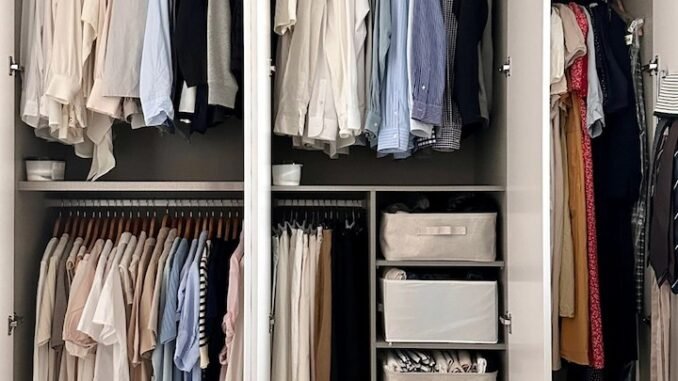
You stare into a closet full of clothes and think “I have nothing to wear.” Sound familiar? How do I build a capsule wardrobe on a budget? A capsule wardrobe — a small collection of versatile, mix-and-match pieces — solves the paradox of the overstuffed closet. Instead of 80 items where only 20 get worn, you build 25–35 pieces that all work together, so getting dressed takes 5 minutes and everything looks intentional. And despite the Instagram aesthetic suggesting you need $200 minimalist basics, a capsule wardrobe is actually one of the cheapest ways to dress well. I built mine for under $400 using thrift stores and basics retailers, and I get more compliments now than when I owned three times as much.
Here’s the step-by-step: the formula, the pieces, where to buy cheap, and how to keep it working.
How Do I Build a Capsule Wardrobe on a Budget? Start With the Formula
A classic capsule has roughly 25–37 pieces (excluding underwear, workout gear, and pajamas). The magic ratio:
- ~60% basics in neutrals: black, white, gray, navy, beige, olive. These are the workhorses — plain tees, simple sweaters, dark jeans, neutral trousers.
- ~25% elevated staples: a blazer, a good jacket, quality shoes, a structured bag. Slightly nicer pieces that make basics look intentional.
- ~15% personality: a few prints, colors, or trend pieces that feel like you. This is what keeps a capsule from feeling like a uniform.
The rule that makes it all work: every top should match every bottom, and every layer should work over every top. Before buying anything, ask: “Does this go with at least 3 things I already own?” If not, it doesn’t enter the capsule.
Step 1: Audit What You Own
Pull everything out. Try it on. Be ruthless: keep only what fits well right now, feels like you, and is in good condition. Box up the maybes for 30 days — if you don’t miss them, donate. You’ll likely discover you already own half a capsule hiding among the clutter. Pay attention to what you actually reach for; that’s data about your real style.
Step 2: Define Your Color Palette
Pick 2–3 neutrals as your base (e.g., black + white + gray, or navy + beige + white) plus 1–2 accent colors you love. Every new purchase must fit the palette. This single constraint eliminates 80% of bad purchases — that gorgeous mustard top is useless if nothing in your closet goes with mustard.
Step 3: Fill the Gaps — Cheap
A sample women’s capsule (~30 pieces): 5 tops (tees, blouses), 2 sweaters, 1 blazer, 1 denim jacket, 2 jeans, 2 trousers/skirts, 1 dress, 1 coat, 3 pairs of shoes, 2 bags, plus layering pieces. Men’s version: 5 tees/polos, 3 button-downs, 2 sweaters, 1 blazer, 1 jacket, 3 pants (jeans, chinos, dress), 1 suit or sport coat, 3 shoes, 1 coat.
Where to buy on a budget:
- Thrift stores first. Blazers, wool sweaters, leather bags, and denim are thrift gold — quality pieces for $5–$15. Check the best thrift store tips for beginners to shop them effectively.
- Basics retailers: Uniqlo, H&M, Old Navy, Target’s Universal Thread line. Plain tees $8–$15, sweaters $20–$30.
- End-of-season sales: buy coats in March, sandals in September — 50–70% off.
- Poshmark/ThredUp: secondhand specific brands in your size, often new-with-tags at 60% off retail.
Total realistic budget: $300–$600 for a complete capsule if you thrift strategically and already own basics. Compare that to the average American’s $1,500+/year clothing spend — most of it on things rarely worn.
Making It Work Day to Day
- Do a seasonal swap. Store off-season pieces in a bin. A 30-piece capsule per season feels abundant; 60 pieces year-round feels chaotic.
- Follow the one-in-one-out rule. New shirt in? An old one goes out. This maintains the capsule automatically.
- Invest alterations, not replacements. A $15 hem or taper makes a $10 thrift blazer look custom. Fit is 90% of looking expensive — which is also why tailoring clothes at home is such a valuable skill.
- Maintain what you own. Wash cold, hang dry when possible, depill sweaters, polish shoes. Capsule pieces get worn hard — care keeps them looking sharp.
- Let it evolve. Swap 3–5 pieces per season to reflect your life. A capsule isn’t a prison; it’s a framework.
Common Mistakes to Avoid
- Buying the “perfect” capsule all at once. Build over 2–3 months. Your style will clarify as you go.
- Ignoring your actual life. A work-from-home parent needs different pieces than a corporate litigator. Your capsule should match your real days, not an aspirational Pinterest board.
- All neutrals, no personality. The 15% accent rule exists for a reason — without it, you’ll get bored and binge-shop.
- Keeping aspirational sizes. “When I lose 10 pounds” clothes aren’t a capsule; they’re guilt storage. Dress the body you have.
- Forgetting shoes and outerwear. These are the most visible, most expensive-per-wear pieces — they deserve the most thought, not the least.
A capsule wardrobe also makes the rest of fashion easier: dressing professionally on a budget becomes automatic when everything coordinates, and packing a carry-on for a week is trivial when your whole wardrobe already mix-and-matches.
For inspiration on paring down thoughtfully, The Minimalists cover the philosophy well, and Who What Wear’s capsule guides show real seasonal examples across styles and budgets.
The 30-Day Capsule Trial
Not ready to commit? Run a 30-day trial: box up everything except 30 pieces that fit your palette and the season. Live with just those for a month. Track two things: how many mornings you felt frustrated (bet: almost none) and how many compliments you got (bet: more than usual). Most trial-runners never unbox the rest — they donate it directly. The trial works because it converts an abstract idea into lived experience; you stop theorizing about “enough clothes” and discover what enough actually feels like. If you miss specific boxed items, they earn their way back in. If you don’t think about them once, out they go. Thirty days from now, getting dressed will be the easiest part of your morning.
The practical takeaway: audit your closet, pick a 3–4 color palette, keep 25–35 versatile pieces where every top matches every bottom, fill gaps via thrift and basics retailers ($300–$600 total), and maintain with one-in-one-out. Getting dressed becomes a 5-minute non-decision — and you’ll look better than ever.
Leave a Reply