
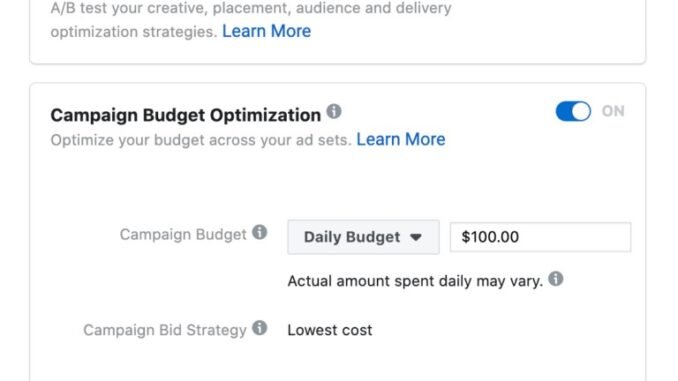
Asking how much does it cost to run Facebook ads for a small business is wise because the platform happily accepts any budget while rewarding only smart ones. I have managed small-business ad accounts and seen $300/month campaigns print money and $3,000/month campaigns burn it. The difference was never the budget; it was strategy. Here are the real costs and how to spend wisely.
How Much Does It Cost to Run Facebook Ads for a Small Business? The Real Numbers
- Average cost per click (CPC): $0.50-$2.00 for most small business campaigns. Competitive industries (legal, finance, insurance) run $3-$6+.
- Average cost per 1,000 impressions (CPM): $10-$25 in 2026, higher during holidays (Q4 CPMs can double).
- Average cost per lead: $5-$30 depending on industry and offer quality.
- Minimum viable budget: $300-$500/month ($10-$15/day). Below this, the algorithm cannot gather enough data to optimize, and you are essentially guessing.
- Comfortable testing budget: $500-$1,500/month. Enough to test multiple audiences and creatives with statistical meaning.
- Serious growth budget: $2,000-$5,000+/month, but only after proving profitable at smaller spend.
What Drives Your Costs Up or Down
- Targeting breadth: Hyper-narrow audiences cost more per result. Broader targeting (with good creative) is cheaper and often performs better since algorithm improvements.
- Creative quality: This is the biggest lever. Great creative (authentic video, clear offer) can halve your costs versus mediocre creative. The algorithm rewards ads people engage with.
- Industry competition: You bid against others for the same eyeballs. Local services in small markets are cheap; national e-commerce is pricey.
- Campaign objective: Awareness is cheap, purchases are expensive. Match the objective to your actual goal.
- Landing page experience: Sending traffic to a slow, confusing page wastes every click. Fix the destination before buying traffic.
- Seasonality: Q4 (holidays) costs 30-100% more. Plan budgets accordingly.
The Small Business Starter Playbook
- Install the Meta Pixel on your website before spending a dollar. It collects data that makes future campaigns dramatically more effective, including retargeting audiences.
- Start with retargeting: Show ads to website visitors and social engagers. Warm audiences convert 2-3x better than cold ones. A $150/month retargeting campaign is the highest-ROI starting point for most businesses.
- Test one offer, three creatives: Same offer, three different videos/images. Run for 7-14 days at $10-$15/day. Kill losers, scale the winner.
- Use video, shot on a phone. Authentic beats polished for small businesses. Customer testimonials, behind-the-scenes, and founder-talking-to-camera consistently outperform stock graphics.
- Keep targeting simple: Location + broad demographics + maybe 1-2 interests. Over-targeting strangles delivery. Let the algorithm find buyers.
- Set a clear conversion goal: “Get quote requests under $25 each” beats “get traffic.” Optimize for the action that makes money.
How to Not Waste Money (Common Burns)
- Boosting posts instead of using Ads Manager. Boosting is Facebook’s easy button with terrible targeting and optimization. Always use Ads Manager.
- No conversion tracking. If you cannot measure what a sale costs, you cannot improve it. Pixel + conversion events are mandatory.
- Testing too many things at once. Change one variable at a time or you will never know what worked.
- Killing campaigns too early. The algorithm needs ~50 conversions per ad set to optimize. Judging after 2 days and $20 is meaningless.
- Sending traffic to a bad website. Fix slow load times, confusing navigation, and missing calls-to-action first.
- No follow-up system. Leads that nobody calls within 5 minutes convert dramatically worse. Ads + slow follow-up = burned money.
When Facebook Ads Are NOT Worth It
- Your offer is not proven organically. Ads amplify; they do not fix a bad offer.
- Your margins cannot support the acquisition cost. If a customer is worth $30 and leads cost $25, the math fails.
- You cannot fulfill demand. Ads that bring customers you cannot serve create negative reviews.
- You need results tomorrow. Effective campaigns need 2-4 weeks of testing and learning.
The Bottom Line
Facebook ads cost small businesses $0.50-$2.00 per click on average, with $300-$500/month as the minimum viable budget and $500-$1,500/month for meaningful testing. Start with the Pixel installed, lead with retargeting warm audiences, test authentic video creative, use Ads Manager (never just boost), and scale only what proves profitable. Creative quality and offer strength matter far more than budget size. And if the math on customer value versus acquisition cost does not work, no amount of ad spend fixes it.
Quick Answers to Common Questions
What is a good cost per click for Facebook ads?
For small businesses, $0.50-$2.00 is typical; under $1.00 is good, under $0.50 is excellent. Competitive industries (legal, finance) see $3-$6+. But CPC alone misleads: a $2 click converting at 10% beats a $0.50 click converting at 1%. Track cost per acquisition (customer or lead), not just cost per click; the former is the number that determines profitability.
How long should I run Facebook ads before judging results?
Minimum 7-14 days with at least $10-$15/day spend before drawing conclusions, and ideally until each ad set reaches ~50 conversions for the algorithm to optimize. Judging after 2 days is meaningless noise. Plan a 30-day test budget you can afford to spend while learning; profitable campaigns emerge from tested data, not first-day luck.
Are Facebook ads still worth it in 2026?
Yes, with realistic expectations. Costs rose as targeting options narrowed post-iOS privacy changes, but Facebook/Instagram remains unmatched for local and interest-based reach at small budgets. The winners in 2026 lead with authentic creative, broad targeting, and strong offers. Businesses expecting 2015-era cheap clicks will be disappointed; those adapting to the current game still profit.
Should I boost posts or use Ads Manager?
Ads Manager, always. Boosting is a simplified interface with inferior targeting, optimization, and measurement; it exists to capture casual spend, not to perform. The learning curve for Ads Manager basics is a weekend, and the performance difference is dramatic. Every dollar spent boosting is a dollar that would have worked harder in Ads Manager. Learn the platform in Meta’s advertising help center.
Leave a Reply