
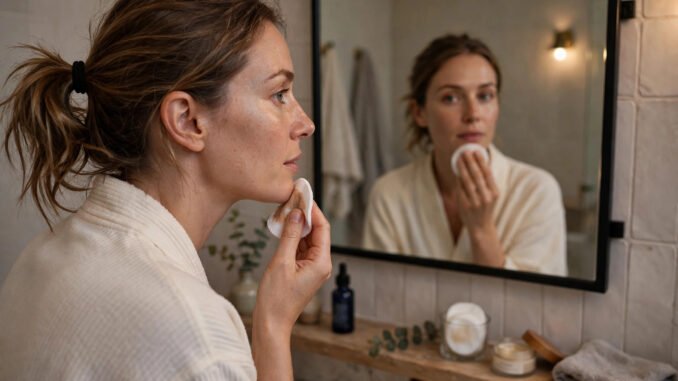
“I’ll just wash it off in the morning” — the lie every makeup wearer has told themselves at 1 AM. Here’s the uncomfortable truth dermatologists agree on: sleeping in makeup is one of the most damaging things you can routinely do to your skin, and removing it properly at night is one of the highest-value habits in all of skincare. Is removing makeup properly at night actually worth it for a beginner? Unequivocally yes — it’s a five-minute habit that prevents breakouts, premature aging, and eye infections, and it makes every other product you own work better. Here’s the complete guide.
What Happens When You Don’t (The Science)
Makeup doesn’t just sit on your skin — it mixes with the day’s accumulation of sebum, sweat, sunscreen, and environmental pollution, then marinates for eight hours. The consequences are well-documented:
Clogged pores and breakouts. Foundation, concealer, and powder trap oil and dead skin cells against the skin. Overnight, this occlusive layer turns pores into incubation chambers — the American Academy of Dermatology (AAD) lists sleeping in makeup among the top causes of adult acne flare-ups. One night won’t ruin your skin; a habit of it reliably produces congestion, blackheads, and breakouts.
Accelerated aging. The pollution particles trapped under makeup generate free radicals — unstable molecules that break down collagen, the protein keeping skin firm. A well-known study on pollution and skin aging found significantly more age spots and wrinkles in women with high pollution exposure. Sleeping in the day’s grime maximizes that exposure window. Your expensive anti-aging serum can’t outwork eight hours of trapped pollutants.
Eye damage. Mascara and eyeliner left on overnight flake into eyes, clogging the meibomian glands along the lash line that produce the eye’s protective oil layer. Consequences range from styes and irritation to chronic dry eye and, in contact lens wearers, increased infection risk. Waterproof mascara is the worst offender — its tenacious polymers are specifically designed not to come off easily, which means they don’t.
Lip and lash collateral. Lipstick left on dries and cracks lips overnight; mascara residue makes lashes brittle and prone to breakage. The “no-makeup” face you wake up with after sleeping in makeup is measurably worse than the one you’d have after proper removal.
The Proper Method: Double Cleansing (Worth the Hype)
Dermatologists’ consensus method is double cleansing — and it’s simpler than it sounds:
Step 1: Oil-based remover (dissolves makeup). Makeup is largely oil-soluble; water-based cleansers alone can’t fully dissolve it (which is why one quick face-wash leaves that telltale residue on your towel). Use a cleansing oil or balm: massage over dry skin for 60 seconds, focusing on heavy-makeup areas. The oil dissolves foundation, sunscreen, and even waterproof mascara without harsh rubbing. This step does the heavy lifting.
Step 2: Water-based cleanser (cleans skin). Follow with your regular gentle cleanser to remove the oil residue, sweat, and water-soluble grime. Sixty seconds of gentle massage, lukewarm water (hot water strips the skin barrier), pat dry — never rub — with a clean towel.
Total time: about three minutes. Total cost: a cleansing balm ($10–$20, lasting months) plus the cleanser you already own.
The eye area protocol: soak a cotton pad or reusable pad with eye makeup remover (or your cleansing oil), press gently over closed eyes for 20–30 seconds to dissolve, then wipe downward softly — never scrub back and forth. Waterproof mascara may need a dedicated waterproof remover; the press-and-hold technique matters more than the product. If you’re choosing eye products generally, the best sunscreen for sensitive skin matters here too — sunscreen around the eyes must come off completely each night, and gentle removal protects the delicate eye area.
What About Makeup Wipes? (The Honest Answer)
Wipes are better than nothing — the dermatologist consensus is clear on that hierarchy: proper double cleanse > wipes > sleeping in makeup. But wipes have real downsides: they mostly smear makeup around rather than dissolving it (that “clean” face still has residue — wipe with a toner afterward and see), the rubbing motion irritates skin and the eye area, they’re environmentally terrible, and they’re expensive per use compared to a balm that lasts months.
The verdict: keep wipes for emergencies, travel, and the nights you genuinely cannot do more. But don’t let the wipe become the routine — it’s a harm-reduction tool, not a cleansing method. If wipes are currently your whole routine, upgrading to a $12 cleansing balm is the single best skincare purchase you’ll make this year.
Beginner Mistakes That Undo Good Removal
Using hot water. Feels good, strips the skin’s lipid barrier, causes rebound oiliness and irritation. Lukewarm always.
Scrubbing, especially around eyes. The eye area skin is the thinnest on the body. Rubbing causes broken capillaries, accelerated wrinkling, and lash loss. Press, hold, wipe gently — patience replaces pressure.
Skipping the second cleanse. Oil cleanser residue left on skin can clog pores itself — the second cleanse isn’t optional, it’s the point.
Forgetting the hairline, jawline, and neck. Makeup migrates. Breakouts along the hairline and jaw are often just incomplete removal zones. Extend both cleanses past the face perimeter.
Reusing dirty towels and pillowcases. You can cleanse perfectly and re-dirty your face nightly on a week-old pillowcase. Change pillowcases 2–3 times weekly if you’re breakout-prone — it’s the unglamorous habit that amplifies everything else.
Micellar water as a complete routine. Micellar water is a fine first step but a poor standalone cleanse for full makeup — it doesn’t fully remove long-wear and waterproof formulas. If it’s your method, follow with a real cleanser.
After Removal: The 60-Second Night Routine
Proper removal sets up everything that follows. On clean skin, at night: moisturizer (at minimum — the AAD’s baseline recommendation), plus any treatment products (retinoids, serums) that now can actually penetrate instead of sitting on top of makeup residue. This is the multiplier effect beginners miss: your nighttime products are 2–3x more effective on properly cleansed skin. The $50 serum you’ve been disappointed by might just have been fighting through foundation.
If you’re building out the routine, understanding which colors look best on warm skin tones helps you choose makeup worth the removal effort — and the removal habit is what keeps that makeup from costing you your skin.
The AAD’s face-washing guidance and FDA cosmetics safety resources back every claim here — this isn’t beauty-blogger folklore, it’s dermatology.
Conclusion
Is removing makeup properly at night actually worth it for a beginner? It’s one of the few skincare habits with a genuinely lopsided payoff: three to five minutes of double cleansing prevents the breakouts, collagen damage, and eye problems that expensive products then try (and fail) to reverse. Oil cleanser to dissolve, gentle cleanser to clean, press-don’t-scrub on the eyes, lukewarm water, and wipes only as backup. Start tonight — your skin in ten years is being decided by what you do at 11 PM right now.
Frequently Asked Questions
Is it really that bad to sleep in makeup once in a while?
Occasionally, your skin recovers — one night isn’t a catastrophe. The damage comes from habit: regular overnight wear clogs pores, traps pollution against skin for 8 hours (accelerating collagen breakdown), and risks eye infections from mascara residue. Make proper removal the default and the occasional lapse harmless.
What’s the best way to remove waterproof mascara?
Press-and-hold with an oil-based remover or dedicated waterproof eye makeup remover: soak a pad, press over closed eyes for 20–30 seconds to dissolve the polymers, then wipe gently downward. Never scrub — the rubbing damages lashes and the delicate eye-area skin far more than the mascara itself.
Are makeup wipes enough to remove makeup?
They’re better than nothing but inadequate as a routine — they smear as much as they remove, the rubbing irritates skin, and residue remains (test with toner afterward). Keep wipes for travel and emergencies; use double cleansing (oil/balm + gentle cleanser) as the daily method.
What is double cleansing?
A two-step method: first an oil-based cleanser (oil or balm) massaged over dry skin to dissolve makeup and sunscreen, then a water-based gentle cleanser to remove residue and water-soluble grime. It’s the dermatologist-recommended standard because makeup is oil-soluble and won’t fully dissolve with water-based cleansers alone.
Should I wash my face with hot or cold water?
Lukewarm. Hot water strips the skin’s protective lipid barrier, causing dryness, irritation, and rebound oiliness. Cold water doesn’t dissolve oil-based grime effectively. Lukewarm cleans thoroughly without damaging the barrier.
Leave a Reply