
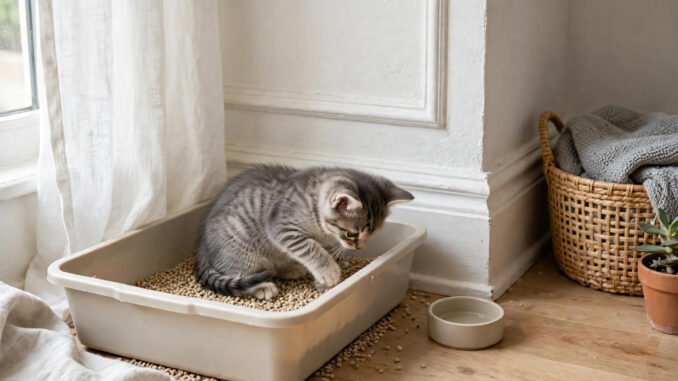
Seattle, Washington, has one of the highest cat ownership rates in the country — rainy days and apartment living make cats the perfect companion. And if you’ve just brought home a kitten, the good news about litter training is refreshingly simple: unlike puppies, kittens come with the software pre-installed. Mother cats teach their kittens to use litter, and most kittens arrive already knowing the basics. So can you litter-train a kitten on a tight budget in Seattle? Absolutely — the total startup cost can stay under $40, and the method is mostly about setup, not training. Here’s exactly how.
Why Kittens Are (Mostly) Pre-Trained
Kittens learn elimination habits from their mother starting around 3–4 weeks old. By the time a kitten is 8–12 weeks (the responsible adoption age), the instinct to dig, eliminate in a diggable substrate, and bury is firmly wired. Your job isn’t really “training” — it’s providing the right setup and preventing the few things that derail instinct.
The exceptions: orphaned kittens raised without a mother (bottle babies) may need a few days of gentle guidance, and kittens under 8 weeks still developing. For the typical adopted kitten, expect reliable litter box use within days — sometimes within hours — of coming home, provided the setup is right.
The Budget Setup: Under $40 in Seattle
Here’s the complete starter kit at tight-budget prices (Seattle-area Target, Walmart, or Chewy prices):
Litter box: $8–$12. One basic open pan per cat, plus one extra (the rule is n+1 boxes for n cats). For kittens, low sides matter — a tiny kitten can’t climb into a tall storage tote. Skip the covered boxes and self-cleaning gadgets for now; a $10 open pan works perfectly and most cats prefer them.
Litter: $10–$15 for a starter supply. Plain unscented clumping clay litter is the budget champion — roughly $0.50/lb in bulk. Avoid scented litters (many cats dislike them and they’re pricier), and skip “kitten-specific” marketing premiums. A 20-lb box of store-brand unscented clumping litter runs $10–$14 and lasts a single kitten over a month.
Scoop: $3–$5. Non-negotiable. Daily scooping is the single biggest factor in consistent litter box use.
Total: roughly $25–$35. That’s the entire startup cost. Ongoing: about $10–$15/month for litter. Seattle-specific tip: many Seattle shelters (Seattle Humane, PAWS) send new adopters home with a starter supply of the exact litter the kitten was using — always ask, and keep using that litter for the first week before transitioning.
Placement: Where the Box Goes Matters More Than Which Box
Quiet, accessible, escape-proof. Kittens won’t use a box next to the washing machine (sudden noises mid-squat create lasting aversions), in a high-traffic hallway, or anywhere they feel cornered. Ideal: a quiet corner of a low-traffic room with two exit routes — cats want to feel they can’t be ambushed while vulnerable.
Start small, then expand. For the first week, confine the kitten to one room with the litter box, food, water, and a bed. This isn’t punishment — it’s how kittens learn where things are. A kitten loose in a whole house will pick its own bathroom spot, and you won’t like the choice. Expand access room by room over 1–2 weeks as reliability is proven.
Food and litter: separate. Cats instinctively avoid eliminating near food. Keep the box well away from food and water bowls — different corners at minimum, different areas ideally.
One per floor. In a multi-story Seattle townhouse or apartment with a loft, a kitten won’t reliably trek downstairs. The n+1 rule plus one-per-floor keeps it simple.
The “Training” (Mostly Just Showing Them Once)
After meals, after naps, and after play sessions, gently place the kitten in the litter box. Let them sniff, dig, wander out — no forcing, no holding them in. Most kittens get it within 1–3 demonstrations. If you catch them starting to eliminate elsewhere, calmly carry them to the box mid-act (no scolding, ever — startling a kitten mid-elimination creates aversions).
For bottle-raised orphans without a mother’s teaching: after feeding, gently stimulate the kitten’s rear with a warm damp cloth (mimicking the mother’s tongue) while holding them over the litter. They’ll connect the sensation with the substrate within a few days.
Praise calmly when they use the box. Treats aren’t necessary — the digging and burying is self-rewarding for cats. Just don’t hover; privacy matters.
The Maintenance That Prevents 90% of Problems
Here’s the truth the budget guides bury: most litter box “training failures” are maintenance failures. The rules:
Scoop daily. Every day, no exceptions. Cats are fastidious; a dirty box is the #1 reason cats go elsewhere. This costs nothing and matters more than any product.
Full litter change + box wash every 2–4 weeks. Dump all litter, wash the box with mild soap and water (no harsh chemicals or strong scents), refill with 2–3 inches of fresh litter.
2–3 inches of litter depth. Too little and it doesn’t clump or cover; too much (6+ inches) and some kittens dislike the unstable footing.
Unscented always. Scented litters are made for human noses, not cat noses. Many litter box aversions trace to a switch to scented product. On a budget this is also cheaper — scented costs more.
Seattle apartment dwellers: if odor is the concern, daily scooping plus a $5 box of baking soda sprinkled in the litter beats any expensive “odor control” litter. And flooring options for homes with pets covers which surfaces survive the occasional miss during the learning week.
Troubleshooting on a Budget
Kitten eliminates next to the box, not in it: box sides too high, box too dirty, or box too small. Fix the setup, not the kitten.
Kitten was fine, now avoiding the box: the #1 medical rule — sudden litter box avoidance warrants a vet check for urinary tract infection, especially in male kittens (blockages are emergencies). After medical causes are ruled out, think: did anything change? New litter brand, box moved, new scary noise nearby? Cats are creatures of habit; find the change and undo it.
Kitten eats the litter: common in very young kittens with clay litter. Switch temporarily to a non-clumping, non-toxic option (paper pellets or plain clay non-clumping) until the phase passes, usually by 3–4 months.
Multiple cats, one box, problems: you need n+1 boxes. This isn’t optional advice — box guarding between cats is a top cause of house-soiling in multi-cat homes.
The ASPCA’s litter box guidance and Cornell Feline Health Center both confirm: setup and maintenance solve the vast majority of issues, and Seattle’s Seattle Humane offers low-cost vet services if a medical check is needed on a tight budget.
Seattle-Specific Budget Resources
Seattle is genuinely one of the best cities in America to own a cat on a budget. Seattle Humane and PAWS offer low-cost spay/neuter and vaccination clinics. The Seattle Animal Shelter’s pet food bank helps with supplies. Buy litter in bulk at Costco or restaurant-supply-adjacent retailers — the per-pound price drops dramatically at 40-lb sizes. And Seattle’s many Buy Nothing groups on Facebook routinely list free litter boxes, carriers, and supplies from owners whose cats have passed or whose kittens outgrew starter gear.
If you’re weighing the commitment overall, low-maintenance pets for apartment living puts cats in proper context — and the litter box is a big part of why they win that ranking.
Conclusion
Can you litter-train a kitten on a tight budget in Seattle? Yes — for about $25–$35 in startup costs and $10–$15 a month, because kittens arrive essentially pre-trained by their mothers and your job is setup, not schooling. Buy a low-sided open box, unscented clumping litter, and a scoop; place boxes in quiet spots with escape routes; confine the kitten to one room for the first week; scoop daily without exception. That’s the whole method. The expensive gadgets, the scented litters, the self-cleaning boxes — none of them outperform a $10 pan that’s scooped every day. In a city as cat-friendly as Seattle, with its shelter resources and low-cost clinics, budget is no barrier to a perfectly litter-trained kitten.
Frequently Asked Questions
How much does it cost to litter-train a kitten?
About $25–$35 for the complete starter setup (box, litter, scoop) and roughly $10–$15 per month for litter ongoing. Kittens learn largely by instinct, so there’s no training-product cost — the investment is all in setup and maintenance.
How long does it take a kitten to learn the litter box?
Most kittens use the box reliably within days — sometimes hours — because mother cats teach the behavior from 3–4 weeks old. Orphaned bottle-raised kittens may need a few days of gentle guidance with warm-cloth stimulation.
Should I get a covered or open litter box for a kitten?
Open. Most cats prefer open boxes (better airflow, multiple escape routes, no trapped odors), kittens specifically need low sides they can climb over, and open pans are cheaper. Covered boxes are a human preference, not a cat one.
Leave a Reply