
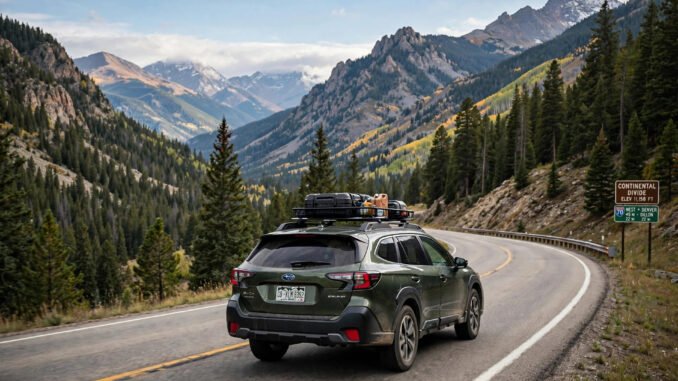
The mountains are calling, the group chat is buzzing, and someone just said “road trip from Denver.” Everyone is excited — until someone asks the practical question: how much does this actually cost? Planning a long road trip from Denver, Colorado has a real answer: roughly $150–$300 per person per day for a comfortable trip, or $800–$2,000 total per person for a week — with the spread depending almost entirely on choices you make before leaving.
This guide breaks down every cost category, Denver-specific considerations, the budgeting framework, and how to cut costs without cutting the fun.
The Cost Breakdown (Per Person, 7-Day Trip)
Fuel: $150–$350
The most variable cost. Denver road trips often mean mountain driving — elevation, grades, and headwinds punish fuel economy 15–25% versus flat highway cruising. Estimate: total miles ÷ your car’s realistic MPG (use 85% of the EPA highway rating for loaded mountain driving) × $3.20–$3.80/gallon (Colorado prices run near national average).
Example: 1,800-mile loop at 25 MPG real-world = 72 gallons × $3.50 = $252. Split four ways: $63/person. The car’s fuel economy dominates this line — taking the 35-MPG crossover instead of the 18-MPG truck saves $150+ on the same route.
Lodging: $280–$900
The biggest line item and the biggest lever:
Camping ($0–$35/night): Colorado’s national forests offer abundant dispersed camping (free) and developed campgrounds ($20–$35). A week of camping: $0–$150/person. The trade-off is gear and comfort — borrow before buying.
Budget motels/Airbnbs ($80–$150/night split): small-town motels along I-70 and US-50 run $80–$120; splitting an Airbnb 4 ways often lands $40–$70/person/night. Weekly: $280–$500/person.
Mid-range hotels ($150–$250/night): $75–$125/person/night split two ways. Weekly: $500–$900/person. Worth it selectively — splurge in the destination town, save on transit nights.
Food: $210–$490
Cook-heavy ($30/day): cooler with groceries, camp stove or Airbnb kitchens, one restaurant meal daily. Totally viable and honestly enjoyable — road-trip cooking is part of the adventure.
Mixed ($50/day): breakfast from the cooler, lunch on the road, dinner out. The sweet spot for most groups.
Eat-out ($70+/day): three restaurant meals daily. Fun, expensive, and the fastest way to double the trip budget. Healthy cheap road-trip snacks cut the grazing costs that silently add $15–$20/day.
Activities: $50–$300
National parks ($35/vehicle for 7 days — split the cost; the National Park Service site lists current fees and reservation requirements), state parks ($10–$15/day in Colorado), hot springs ($25–$40 — Colorado’s are world-class and worth it), guided activities (rafting $60–$100, etc.). Budget one or two paid experiences; fill the rest with hiking, scenic drives, and swimming holes (free).
The car itself: $0–$200
If using your own car: budget $0.10–$0.15/mile for wear (tires, depreciation, maintenance reserve) — 1,800 miles = $180–$270 in real vehicle cost, usually split. If renting: $50–$100/day plus insurance considerations. Denver’s rental market is competitive — book early for summer.
Denver-Specific Considerations
Altitude acclimatization: if your group includes sea-level visitors, plan an easy first 24 hours in Denver (5,280 ft) before heading to 10,000+ ft passes. Altitude sickness ruins trips and occasionally requires medical attention — the unplanned cost nobody budgets.
Mountain weather: Colorado mountain weather changes violently — snow in June at 12,000 ft is normal. Pack layers regardless of season, check National Weather Service mountain forecasts (not generic apps), and build a flex day into the itinerary. I-70 closures (especially Glenwood Canyon and the Eisenhower Tunnel approaches) can reroute you hours — have a Plan B route.
Timed entry reservations: Rocky Mountain National Park and other popular destinations require timed-entry permits booked months ahead in summer. Missing this detail has ruined many Denver road trips — check recreation.gov before finalizing dates.
Fuel planning in the mountains: gas stations thin out on US-50, US-160, and remote stretches — never pass a station below half a tank in the high country. Mountain towns charge $0.50–$1.00/gallon premiums; fill up in Denver, Grand Junction, or Pueblo.
The Budgeting Framework (Do This Before Booking Anything)
1. Set the per-person daily target. Get group agreement upfront: $150/day (budget), $200/day (comfortable), $300/day (splurge). Everything flows from this number — it determines lodging tier, food strategy, and activity budget.
2. Build the spreadsheet. One shared sheet: fixed costs (rental car, park passes, prepaid lodging) + variable estimates (fuel, food, activities) + 15% contingency. Assign one person as treasurer; use Splitwise for expense tracking. Money arguments kill more road trips than breakdowns.
3. Pre-pay the big rocks. Lodging deposits, rental cars, timed-entry permits, and any guided activities — booked and paid before departure. Pre-paid costs cannot spiral, and they force the itinerary into existence.
4. Carry the contingency in cash. Mountain towns have spotty card acceptance at small establishments and campgrounds. $200 in small bills per car covers the situations plastic cannot.
Cutting Costs Without Cutting Fun
Travel in shoulder season. Late May/early June and September offer Colorado’s best value — lower lodging rates, fewer crowds, mostly good weather. Avoid ski-season and mid-summer peak pricing (30–50% premiums).
Camp 2–3 nights, hotel the rest. The hybrid approach captures camping’s savings and scenery while preserving comfort and showers. Most groups find this the optimal mix.
Cook breakfast and lunch. Restaurant breakfasts and lunches are the worst value in travel food — $15–$20 for what $4 of groceries provides. Save the dining budget for dinners, where the experience justifies the cost.
Free activities first. Colorado’s best experiences are free: Million Dollar Highway, Trail Ridge Road, Maroon Bells (permit required but cheap), St. Elmo ghost town, Great Sand Dunes (park fee only). Build the itinerary around free wonders; add paid experiences sparingly.
Split everything. Fuel, lodging, park passes, groceries — four-way splits transform the economics. The per-person cost of a road trip drops ~40% going from two travelers to four. Pet-friendly hotels for road trips matter if the dog is coming — and planning a US road trip with stops covers the route-planning side in depth.
Sample 7-Day Budgets (Per Person)
Budget ($950): camping 5 nights + 2 budget motel nights ($150), fuel split 4 ways ($65), cook-heavy food ($210), free/cheap activities ($75), park passes split ($25), contingency ($125), car wear split ($60), misc ($240).
Comfortable ($1,600): Airbnb/motel mix ($450), fuel ($65), mixed food ($350), two paid activities ($150), park passes ($25), contingency ($200), car wear ($60), misc ($300).
Splurge ($2,400+): hotels throughout ($800), eat-out food ($500), multiple guided activities ($300), rental car upgrade, hot springs and fine dining — the sky (and the credit limit) is the limit.
Conclusion
Planning a long road trip from Denver costs $150–$300 per person per day — roughly $1,000–$2,000 per person for a week — driven by lodging choices, food strategy, and group size. Set the daily target as a group, pre-pay the big costs, build in mountain-weather flexibility and timed-entry permits, and split everything four ways. Do that, and the only surprise on your Denver road trip will be how much fun $150 a day buys in Colorado.
Frequently Asked Questions
What is the best time of year for a Denver road trip?
September (fall colors, fewer crowds, lower prices) and late May/early June (wildflowers, open high passes) are the sweet spots. Mid-summer brings crowds and peak prices; winter limits high-country access but enables ski-focused trips.
How do I handle altitude sickness on a Colorado road trip?
Acclimatize: spend 24 hours in Denver before ascending, hydrate aggressively, limit alcohol the first two days, and ascend gradually. If symptoms (headache, nausea, dizziness) appear, stop ascending — descend if they worsen. It is the most common trip-ruiner and the most preventable.
Do I need reservations for Rocky Mountain National Park?
In summer (roughly late May–mid October), yes — timed-entry permits are required and sell out quickly. Book on recreation.gov as soon as your dates are firm. Other Colorado destinations increasingly use similar systems; check each park’s current requirements.
Is it cheaper to camp or get hotels on a road trip?
Camping is dramatically cheaper ($0–$35/night vs. $80–$250) but requires gear and comfort trade-offs. The hybrid — camping some nights, hotels others — optimizes both cost and enjoyment for most groups. Borrow camping gear before buying.
How much should I budget for gas on a 2,000-mile road trip?
Divide miles by realistic MPG (use 85% of EPA highway rating for loaded/mountain driving), multiply by $3.50/gallon as a planning figure. 2,000 miles at 25 MPG ≈ 80 gallons ≈ $280 total, split among travelers. Mountain driving and headwinds can add 15–25%.
Leave a Reply