
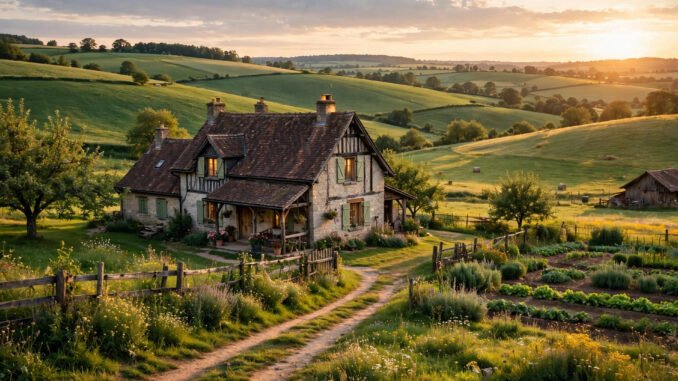
The city feels louder every year. Your apartment overlooks a parking lot, your “yard” is a balcony, and Zillow keeps showing you farmhouses with porches for less than your condo costs. The fantasy is powerful: trade traffic for starry skies, the commute for a garden, the noise for birdsong. But is moving to the countryside from the city actually worth it for a beginner at rural life? For many people, yes — profoundly. For others, it is the most expensive mistake of their lives. The difference is knowing which group you are in before you buy.
This guide gives you the honest framework: the real benefits, the real costs (financial and otherwise), the trial period that prevents regret, and how to know if you are a country person or just a tired city person.
The Real Benefits (Why People Do It and Love It)
Space and affordability. The math is undeniable in most markets: the price of a city condo buys a house with land in the countryside. More square feet, actual yards, room for gardens, workshops, animals — the physical freedom is the primary draw and it delivers.
Pace and quiet. Lower ambient stress is real and measurable — studies on urban vs. rural living consistently show reduced cortisol and improved self-reported wellbeing among those who genuinely prefer quieter environments. If the city’s constant stimulation drains you, the countryside restores.
Community depth. Rural communities run on relationships — neighbors know each other, help each other, and social life is participatory rather than transactional. Newcomers who engage find belonging faster than in cities where anonymity is the norm.
Self-sufficiency. Gardens, wells, wood heat, workshops — the countryside enables a hands-on life that cities prohibit. For people wired this way, it is not a lifestyle change but a homecoming.
The Real Costs (What the Fantasy Edits Out)
Employment and income. The number one practical constraint. Remote work has unlocked the countryside for millions — but verify your remote arrangement is permanent and location-independent. The USDA’s rural development programs support rural homebuyers with low-down-payment loans, and Census Bureau data helps you research a target county’s economic trajectory honestly.
Services and convenience. Healthcare (rural hospital closures are real — check distances to emergency care), high-speed internet (verify actual speeds at the specific address, not “coverage maps”), shopping (the 40-minute grocery run), schools (fewer options, longer bus rides), and tradespeople (good luck getting a plumber quickly). Visit the area’s practical infrastructure, not just its scenery.
Social recalibration. Cities offer tribe-by-interest — whatever your niche, 50 people share it. Rural areas offer community-by-proximity — your social circle is whoever is nearby. Extroverts who need constant novel social input often struggle; introverts who prefer deep local roots often thrive. Know yourself.
Maintenance reality. Septic systems, wells, long driveways, acreage, outbuildings, wildlife, weather vulnerability — rural properties demand more hands-on maintenance than city homes. Budget 2–3% of property value annually (versus the standard 1%) and honest self-assessment of your DIY willingness.
The hidden financials: higher car dependence (two reliable vehicles become essential — fuel, insurance, maintenance for rural mileage), heating costs (propane/oil heat is expensive), and potentially slower property appreciation (rural real estate is less liquid — selling takes longer). Making friends after a move applies doubly here — rural social integration takes deliberate effort.
The Critical Test: Are You a Country Person or a Tired City Person?
This distinction determines everything. Ask honestly:
Do you want the countryside, or do you want a vacation from the city? If your fantasy involves the farmers market and the cute downtown but not the septic tank and the 5 a.m. rooster (yours or the neighbor’s), you want a vacation, not a relocation.
Have you spent real time there — in winter? Every countryside is beautiful in June. Visit in February: the mud, the darkness, the isolation, the heating bills. If you still love it, proceed.
What will your days actually look like? Write out a typical Tuesday: work, errands, social life, healthcare, kids’ activities. If the logistics require heroic effort, the fantasy will not survive contact with reality.
Can you handle being the outsider? Rural communities can be warm but slow to accept newcomers — “you are not from here” is real in some places. It takes 1–3 years of showing up (volunteering, church, local events) to belong. Finding local events is the integration strategy — in the countryside, showing up is everything.
The Trial Period (How to Avoid the Expensive Mistake)
Rent for a year first. This is the single most important advice in this guide. A 12-month rental in the target area — through all four seasons — reveals everything the fantasy hides: winter isolation, summer insects, the real commute, the actual neighbors, the internet speeds, the healthcare distances. Moving twice costs a fraction of buying wrong.
Work remotely from there for a month. Before committing, do a trial month: rent a place, work your normal schedule, live the logistics. Video calls on rural internet, the grocery run cadence, the evening darkness — experience it, do not imagine it.
Talk to locals who moved from the city. They have lived your exact transition and will tell you the truth — what surprised them, what they would do differently, whether they would do it again. Find them at the diner, the hardware store, the library.
And if the trial confirms it is not for you? Small towns worth visiting make excellent vacation destinations — you can love the countryside without living in it.
Conclusion
Moving to the countryside from the city is worth it when you want rural life itself (not just escape from urban life), your income works remotely or locally, you have tested all four seasons, and you are prepared for the maintenance and social recalibration. It is a mistake when driven by burnout alone, untested by winter, or financed on fantasy math. Rent for a year, work a trial month, talk to the transplants — and then decide with clear eyes. The stars are real. So is the septic tank.
Frequently Asked Questions
Is it cheaper to live in the countryside?
Housing is dramatically cheaper; everything else is mixed. Higher transportation costs, heating expenses, and maintenance often offset housing savings partially. Do full-budget math (housing + cars + heating + services), not just mortgage math.
Can I work remotely from the countryside?
Often yes, but verify internet speeds at the specific address (not coverage maps) before committing — rural broadband varies from excellent fiber to unusable. Confirm your employer’s remote policy is permanent and location-independent.
How long does it take to feel at home in a rural community?
Typically 1–3 years of active participation — volunteering, local events, church or community groups. Rural belonging is earned through showing up consistently, not granted on arrival. Those who engage integrate; those who isolate stay isolated.
What is the biggest surprise for city-to-country movers?
Most report two: how much maintenance rural property requires (septic, wells, driveways, acreage — it never ends) and how dark and quiet nights actually are (wonderful for some, unsettling for others). Both are testable in a trial rental.
Will my property appreciate in the countryside?
Slower and less predictably than urban property. Rural real estate is less liquid — selling takes longer and the buyer pool is smaller. Buy countryside property as a home, not an investment; any appreciation is a bonus.
Leave a Reply