
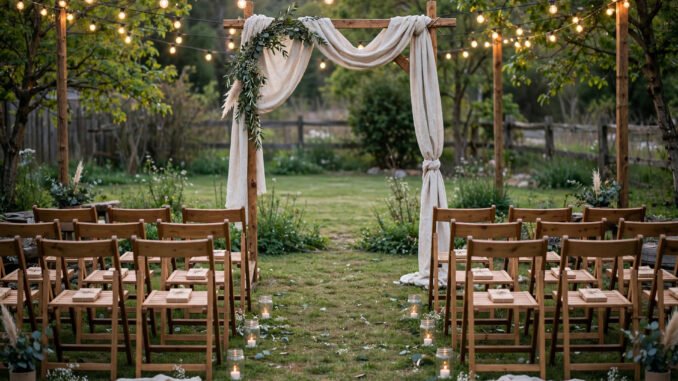
The average American wedding cost about $33,000 in 2025, and the wedding industry has a powerful incentive to convince you that number is the floor, not the ceiling. But here is what experienced planners quietly admit: guests remember how a wedding felt, not how much it cost. A $12,000 wedding with great food, good music, and a relaxed couple beats a $50,000 wedding with stressed hosts and a rigid timeline every single time.
This beginner’s roadmap shows how to start planning a wedding on a budget from zero: setting a realistic number, allocating it where guests actually notice, cutting where they do not, and avoiding the debt trap that follows one in three couples into married life.
Step 1: Set the Number Before You Plan Anything
The biggest budget-wedding mistake is planning first and pricing later. Reverse it: decide the total number first, in writing, with your partner (and any contributing family). A workable budget wedding in 2026 lands between $8,000 and $18,000 in most US markets — enough for 50–100 guests, real food, real photography, and a venue with character.
Fund it with cash, not credit. The Consumer Financial Protection Bureau consistently warns about starting marriages with consumer debt, and wedding debt is uniquely painful — you are paying interest on a party for years. If the number you can afford in cash feels small, that is information: shrink the guest list or extend the engagement, do not finance the gap. Our guide to creating a budget you can actually stick to is the right pre-work — the wedding budget should be a line item in your real financial life, not a fantasy spreadsheet.
Step 2: Allocate Where Guests Actually Notice
Post-wedding surveys consistently rank what guests remember: food and drink quality, music/dancing, and whether the couple seemed happy and present. What they do not remember: chair covers, elaborate favors, program booklets, or whether the flowers were peonies or carnations. Allocate accordingly:
Venue + food + drink: 45–55% of the budget. This is the wedding, functionally. Photography: 10–15%. Photos are the only thing that lasts; this is the worst place to cut corners. Music: 5–10%. A good DJ keeps the dance floor full; a bad one empties it by 9 p.m. Attire + beauty: 5–8%. Flowers + decor: 5–8%. Everything else (stationery, favors, transport, tips): the remainder. Notice what is missing: videography as a default (lovely but optional at this budget), live bands (2–3x a DJ), and anything described as “a must” by someone selling it.
The Big Three Savings: Venue, Food, Guest List
Venue
The venue is typically the largest single cost, and the easiest to slash. Non-traditional venues — public parks ($100–$500 permits), restaurants with private rooms (no venue fee, just a food minimum), art galleries, breweries, family backyards — routinely cost 50–75% less than dedicated wedding venues. Friday or Sunday weddings often discount 15–30% off Saturday pricing; off-season months (January–March, November) discount further. A 2 p.m. ceremony with a cocktail-style reception can halve catering costs versus a 6 p.m. seated dinner.
Food and drink
Plated dinners run $75–$150+/head; buffets $40–$80; food trucks or stations $25–$50. For 80 guests, the format choice alone swings $4,000–$8,000. Brunch weddings are the budget sleeper hit — morning food costs far less and mimosas beat open bars on price. Speaking of bars: beer, wine, and one signature cocktail costs roughly half of a full open bar and guests genuinely do not mind. NerdWallet’s wedding cost research breaks down these category averages with current data worth reviewing as you allocate.
Guest list
Every guest costs $75–$200 all-in (food, drink, rentals, favors). Cutting from 120 to 80 guests saves $3,000–$8,000 — more than any vendor negotiation. The rule that ends debates: if you have not spoken in a year, they get a kind announcement, not an invitation. Parents’ friends are negotiable; your college roommate’s plus-one is not owed.
Where to Cut Without Anyone Noticing
Flowers: Use in-season, local blooms; repurpose ceremony arrangements to the reception; single-variety centerpieces (all white hydrangeas, all eucalyptus) look expensive and cost little. Grocery-store floral departments ($5–$15/bouquet) assembled the morning of beat $200 florist centerpieces for most tables. Stationery: Digital save-the-dates and invitations (free–$50 total) — paper invitations are opened, admired for ten seconds, and recycled. Favors: Skip them, or do edible favors (local honey, cookies) under $3/guest. Unused favors are the most wasted money in weddings. Cake: A small display cake plus sheet cake from a bakery kitchen ($200–$400 total) versus a $800+ tiered showpiece — guests eat the sheet cake and photograph the small one. Decor: Candles (bulk LED or real), string lights, and greenery transform a room for a few hundred dollars.
Planning help: A month-of coordinator ($800–$1,500) is the best value in weddings — they run the day so you can enjoy it. A full planner ($3,000+) is a luxury at this budget. And for the celebration skills that transfer, our tips for planning a memorable birthday party on a budget share the same DNA: constrain the scope, spend on the experience, skip the trimmings.
Negotiation and Timing Tactics
Always ask vendors for their off-peak and Friday/Sunday rates — many discount 10–25% without advertising it. Bundle where sensible (venue + catering + rentals from one provider often beats three separate contracts). Get everything in writing: what is included, overtime rates, cancellation terms. Pay deposits by credit card for chargeback protection, then pay balances however earns you the least in fees. And build a 10% contingency into the budget — something always costs more than expected, and a buffer beats a panicked credit card swipe.
For the honeymoon that follows, the same budget discipline applies — our guide to planning a relaxing, affordable beach vacation keeps the trip joyful without restarting the spending.
Conclusion
Planning a wedding on a budget as a complete beginner comes down to sequence: set a cash-funded number first, allocate half to venue/food/drink where guests actually notice, slash costs through venue choice, food format, and a disciplined guest list, and cut ruthlessly where nobody looks (stationery, favors, elaborate florals). A $12,000 wedding planned this way feels abundant; a $30,000 wedding planned without a system feels thin. Start the marriage the way you want to live it: intentional with money, generous with what matters, and debt-free.
Frequently Asked Questions
What is a realistic budget for a wedding in 2026?
A comfortable budget wedding runs $8,000–$18,000 for 50–100 guests in most US markets. The national average is around $33,000, but averages are skewed by high-end weddings — most guests cannot tell a $12,000 wedding from a $30,000 one.
How can I cut wedding costs the most?
The three biggest levers are venue choice (non-traditional venues save 50–75%), food format (buffet or food trucks versus plated dinner), and guest list size (each guest costs $75–$200 all-in).
Should I go into debt for my wedding?
No. Starting a marriage with wedding debt is one of the most regretted financial decisions couples report. Set a cash-funded budget, shrink the scope to fit it, or extend the engagement to save more.
What should I not cut from a wedding budget?
Photography and food quality — photos are the only lasting artifact, and food is what guests remember most. A month-of coordinator is also high-value insurance for enjoying your own day.
Is a Friday or Sunday wedding cheaper?
Yes, typically 15–30% less for venues and sometimes vendors, versus Saturday. Off-season months (January–March, November) offer additional discounts.
Leave a Reply