
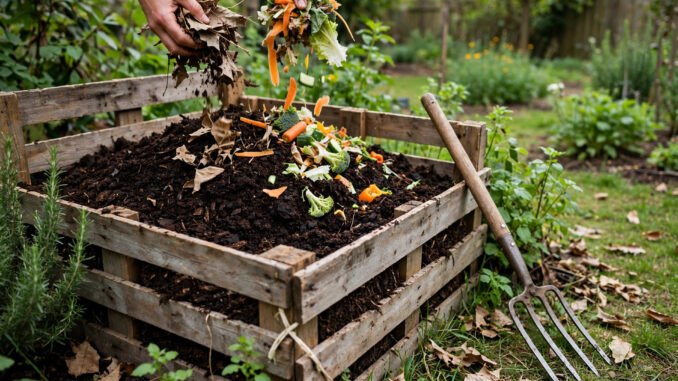
Americans throw away roughly 30–40% of their food supply, and most of it rots in landfills, where — deprived of oxygen — it releases methane, a greenhouse gas many times more potent than CO2. Composting short-circuits the whole tragedy: your peels, cores, and coffee grounds become dark, crumbly, garden-ready humus instead of landfill gas. And despite what the $200 countertop composters and subscription pickup services suggest, composting is nearly free. A pile, a bin, or a worm box, plus scraps you’d throw away anyway — that’s the entire budget. Here’s how to compost food waste at home without wasting money.
How Composting Actually Works
Composting is managed decomposition: microorganisms, fungi, and invertebrates breaking organic matter into stable humus. They need four things: greens (nitrogen-rich: food scraps, coffee grounds, fresh grass clippings), browns (carbon-rich: dry leaves, cardboard, newspaper, wood chips), moisture (like a wrung-out sponge), and oxygen (turning or passive airflow). The classic ratio is roughly 3 parts browns to 1 part greens by volume — beginners’ #1 mistake is too many greens, which goes slimy and smelly; when in doubt, add browns. Done right, a pile heats to 130–160°F as microbes feast, killing weed seeds and pathogens, then cools into finished compost in 2–6 months. Done lazily (the “pile it and ignore it” method), it still works — just slower, 6–12 months. The microbes don’t care about your equipment budget. They care about the ratio, the moisture, and the air.
Pick Your Method (All Cheap or Free)
The open pile ($0): pick a shady 3×3-foot spot, pile browns and greens, turn occasionally with a pitchfork. Free, effective, slightly rustic-looking. The DIY bin ($0–$20): four pallets wired into a square, a circle of wire fencing, or a trash can with drilled holes — containment without cost. Pallets are free behind most big-box stores (ask first). The worm bin / vermicomposting ($15–$40): the apartment-dweller’s answer — a plastic tote with air holes, bedding of shredded newspaper, and a pound of red wiggler worms ($25–$35 online or from local worm farms). Worms eat your scraps and produce castings, the single richest compost there is, with zero smell when managed right. It fits under a sink. Bokashi ($30–$50 setup): Japanese fermentation method — layer scraps with inoculated bran in a sealed bucket; the fermented result gets buried in soil or a compost pile. Great for apartments, handles meat/dairy scraps other methods can’t, but needs the bran refills ($15ish yearly). What not to buy: electric countertop “composters” ($200–$500) that mostly dehydrate and grind food into dry powder — not finished compost, and the energy use undercuts the point. The EPA’s composting basics cover all methods with government-grade practicality, and the US Composting Council has free guides for home composters.
What Goes In (and What Doesn’t)
Yes: fruit and vegetable scraps, coffee grounds and filters, tea bags (remove staples), eggshells (crushed), nutshells, plain rice/bread/pasta (in moderation — they can attract pests in open piles), yard trimmings, dry leaves, shredded newspaper and cardboard (tape removed), sawdust from untreated wood, hair. No: meat, dairy, and oils in open piles (pests, smell — fine in bokashi or hot-managed piles), pet waste from cats/dogs (pathogens), diseased plants, weeds gone to seed (unless your pile truly runs hot), glossy/colored paper, charcoal ash. The smell test: finished compost smells like forest floor — earthy and sweet. A working pile smells like nothing much. If it stinks (ammonia or rot), it’s too wet, too green, or needs turning — add browns and air, and the smell resolves in days. Troubleshooting is free; the pile tells you what it needs. Once you’re producing black gold, your garden will want it — start with the best plants for beginners with no gardening experience to put it to work, and keep the pipeline flowing by reducing food waste in your kitchen each week — less waste in, better compost out.
Speeding It Up: Hot Composting Basics
Patient composters get compost in 6–12 months; impatient ones get it in 6–8 weeks by going hot. The recipe: build the pile all at once (not gradual additions) to at least 3x3x3 feet — critical mass is what lets the core hit 130–160°F — with that 3:1 browns-to-greens ratio, water it to wrung-sponge dampness, and turn it every 3–7 days to re-oxygenate. A $10 compost thermometer (the one legitimate composting purchase) tells you when the core drops below 100°F and it’s time to turn. Hot piles kill weed seeds and pathogens, break down tougher materials like corn stalks, and produce finished compost fast enough to amend beds twice a season. The tradeoff is labor: hot composting is active management, not benign neglect. Most home composters land in the middle — a mostly-passive pile they turn when they remember, finished in 3–6 months. Both work. Match the method to your enthusiasm, not to anyone’s ideal.
The Apartment and HOA Playbook
No yard? No problem. The worm bin under the sink handles a household’s vegetable scraps indefinitely — a well-run bin processes roughly its worms’ weight in scraps weekly, produces no odor, and yields castings every few months that houseplants adore (or that community gardens will gratefully accept). Bokashi fits the same footprint and handles the scraps worms can’t. If even that’s too much, check for community composting: many cities have drop-off sites at farmers markets, community gardens accept scraps, and municipal curbside organics programs are expanding yearly — some free, some a few dollars monthly (still cheaper than any gadget). HOAs that ban “compost piles” almost always mean open piles; enclosed bins and indoor worm bins rarely violate anything — read the actual rules before assuming. And countertop collection is free: any bowl or bucket with a lid under the sink, emptied every few days. The barrier was never space or money. It was not knowing the worm option existed.
Composting food waste at home without wasting money is one of those rare life upgrades that’s free, easy, and genuinely consequential: your trash shrinks by a third, your garden soil transforms, and your scraps stop generating methane in a landfill. Greens, browns, moisture, air — that’s the whole science. The microbes have been doing this for a billion years without your money. Let them.
Frequently Asked Questions
Does composting smell bad?
A healthy pile smells earthy or like nothing. Bad smells (ammonia, rot) mean too many greens, too much water, or too little air — fixable by adding browns and turning. Worm bins smell like nothing when managed correctly. Persistent stink is a diagnostic signal, not a feature.
How long does compost take?
2–6 months for an actively managed hot pile, 6–12 months for a passive pile, 2–3 months for worm castings. Finished compost is dark, crumbly, and smells like forest soil — if you can recognize the original materials, it needs more time.
Can I compost in an apartment?
Yes — vermicomposting (worm bin) or bokashi fermentation both fit under a sink, handle a household’s scraps, and produce no odor when managed right. Alternatively, find community drop-off sites at farmers markets or community gardens.
What can’t I compost at home?
Meat, dairy, and oils in open piles (use bokashi instead); cat/dog waste (pathogen risk); diseased plants and seeded weeds (unless the pile runs truly hot); glossy paper and charcoal ash. Everything else organic is fair game.
Is a $300 electric composter worth it?
Usually not. Most countertop electric units dehydrate and grind scraps rather than producing finished compost — and they use significant electricity. A $20 DIY bin or $35 worm setup produces actual compost for a fraction of the price.
Leave a Reply