
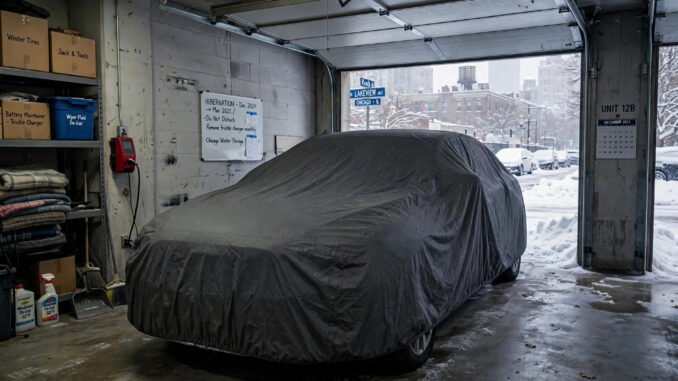
Chicago winters are brutal on cars — road salt, sub-zero cold snaps, and months of freeze-thaw cycles. If you own a convertible, a classic, a motorcycle-season-only vehicle, or simply a second car you will not drive from November to March, storing it properly over winter is not optional pampering. It is the difference between a car that wakes up in spring ready to roll and one that needs $1,500 in repairs from neglect. And in Chicago, storage itself is a real budget line — indoor space is expensive here.
This guide breaks down what storing a car over winter really costs in Chicago, Illinois in 2026 — from free driveway storage done right to premium heated facilities — plus the preparation checklist that protects your car regardless of where it sleeps.
Storage Options in Chicago: From Free to Premium
Your own garage or driveway: $0
The cheapest option is the one you own. A garage protects from snow, ice, and temperature swings; a driveway with a quality car cover ($80–$150 for a fitted, breathable cover) is the budget fallback. Downsides: Chicago garages are often unheated (fine — consistent cold beats freeze-thaw cycling), and street/driveway storage exposes the car to salt spray from plows. If driveway-storing, position away from the street and wash the undercarriage thoroughly before covering.
Outdoor storage lots: $50–$100/month
Fenced lots on the city’s outskirts and suburbs offer basic outdoor storage. Cheap, but the car sits in the elements all winter — acceptable only with diligent preparation and a good cover. Security varies enormously; visit before committing and check fencing, lighting, and access policies.
Indoor unheated storage: $100–$200/month
The sweet spot for most Chicagoans: warehouses and self-storage-style vehicle units in areas like the Southwest Side, Cicero, and suburban industrial parks. Protection from precipitation and salt, stable cold temperatures, reasonable security. For a November–March season (5 months), budget $500–$1,000.
Heated indoor / premium storage: $200–$400/month
Climate-controlled facilities catering to classics, exotics, and motorcycles — battery maintenance, regular start-ups, detailing, and concierge services. $1,000–$2,000 for the season. Worth it for vehicles worth $50,000+; overkill for a daily-driver sedan.
Realistic Chicago winter storage budgets: DIY at home: $100–$250 total (cover + supplies). Indoor unheated: $600–$1,200 for the season. Premium heated: $1,200–$2,000. Book by October — the good indoor spots fill fast once the first freeze hits.
The Preparation Checklist (Do This Regardless of Storage Type)
Skipping prep is how storage creates repair bills. Work through this in late October:
Fuel and fluids
Fill the gas tank completely and add fuel stabilizer ($8–$12) — a full tank prevents moisture condensation inside, and stabilizer keeps fuel from varnishing over months. Run the engine 5 minutes after adding stabilizer to circulate it. Change the oil if it is due — used oil contains contaminants that corrode internal surfaces during storage. Top off coolant with the correct antifreeze mix (critical — a freeze-cracked block totals an engine) and check that washer fluid is winter-rated.
Battery
Batteries self-discharge in cold; a dead battery that freezes can crack and die permanently. Best: connect a battery tender/trickle charger ($30–$50) — it maintains charge without overcharging. Good: disconnect the negative terminal (loses radio presets and some computer adaptations, but preserves the battery). Avoid: having a friend “start it weekly” — idling for 10 minutes does not recharge the battery and introduces condensation into the exhaust and oil.
Tires
Inflate to the maximum sidewall pressure (not the door-placard pressure) to resist flat-spotting during months of sitting. For storage beyond 4–5 months, consider placing the car on jack stands to unload the tires entirely — flat spots from modern tires usually round out within 50 miles of spring driving, but stands eliminate the question.
Exterior and interior
Wash and wax thoroughly — every salt crystal left on paint etches deeper over winter. Clean the interior and remove all food (mice find cars in winter; a crumb is an invitation). Place dryer sheets or peppermint-oil cotton balls as rodent deterrents, and stuff steel wool in the exhaust tip and air intake. Crack windows slightly if stored indoors (prevents moisture buildup); keep them sealed if outdoors. Do not engage the parking brake for long storage — brake pads can fuse to rotors; use wheel chocks instead.
Insurance adjustment
Call your insurer about reducing coverage during storage: dropping collision and liability while keeping comprehensive (fire, theft, falling objects) can save 40–60% on premiums for the stored months. Do not cancel entirely — an uninsured car in storage is a total loss waiting for a warehouse fire. Confirm the reduced-coverage rules with your insurer in writing.
Chicago-Specific Winter Threats
Road salt: Chicago uses enormous quantities of salt and brine. A pre-storage undercarriage wash (including wheel wells) is the single most valuable prep step — salt left on metal corrodes all winter in freeze-thaw humidity. Temperature swings: Chicago’s winter oscillates between deep freezes and 40°F thaws; each cycle pumps moisture into every crevice. Indoor storage’s stable cold is genuinely protective. Rodents: Urban garages harbor mice seeking winter shelter; the deterrents above are not paranoia in Chicago. Flooding: Spring thaws flood low-lying storage areas — ask facilities about drainage and never store in known flood-prone spots. The NHTSA’s vehicle maintenance resources and AAA’s winter car-care guidance cover seasonal care basics worth reviewing. And while you prep the car, prep the house too — our guide to winterizing your home before cold weather hits covers the parallel checklist.
For keeping your daily driver organized through the season, an organized garage makes winter car care (and spring recommissioning) dramatically easier.
Spring Recommissioning: Waking the Car Up
Reverse the process in March/April: remove covers and rodent deterrents, check tire pressures (reset to placard), reconnect the battery, check all fluid levels, look for nests/chewed wires during a careful engine-bay inspection, and take a gentle 20-minute drive to warm everything through before any hard use. Change the oil if it sat 6+ months. If the car was on jack stands, torque the lug nuts properly. Then enjoy the peculiar joy of a car that starts instantly after five months asleep — the reward for doing it right.
Conclusion
Storing a car over winter in Chicago really costs $100–$250 DIY at home, $600–$1,200 for indoor unheated storage, or $1,200–$2,000 for premium heated facilities — plus the preparation that matters more than the location: full tank with stabilizer, fresh oil, battery tender, inflated tires, thorough wash, rodent deterrents, and reduced insurance. Do the prep in October, book indoor space before the first freeze, and reverse it all in spring. Your car will thank you by simply working.
Frequently Asked Questions
How much does winter car storage cost in Chicago?
DIY home storage: $100–$250 total (cover + supplies). Indoor unheated facilities: $100–$200/month ($500–$1,000/season). Premium heated storage: $200–$400/month ($1,000–$2,000/season).
Should I start my stored car periodically over winter?
No — brief idling does not recharge the battery and introduces moisture into the exhaust and oil. Use a battery tender ($30–$50) instead and leave the car undisturbed.
Do I need fuel stabilizer for winter storage?
Yes. Fill the tank completely and add stabilizer ($8–$12) to prevent fuel varnish and moisture condensation during months of sitting. Run the engine 5 minutes afterward to circulate it.
Can I reduce insurance on a stored car?
Yes — most insurers let you drop collision and liability while keeping comprehensive during storage, saving 40–60% on premiums. Never cancel coverage entirely.
How do I prevent mice in a stored car?
Remove all food, clean the interior thoroughly, place peppermint-oil deterrents inside, and block the exhaust tip and air intake with steel wool. Check periodically if accessible.
Leave a Reply