
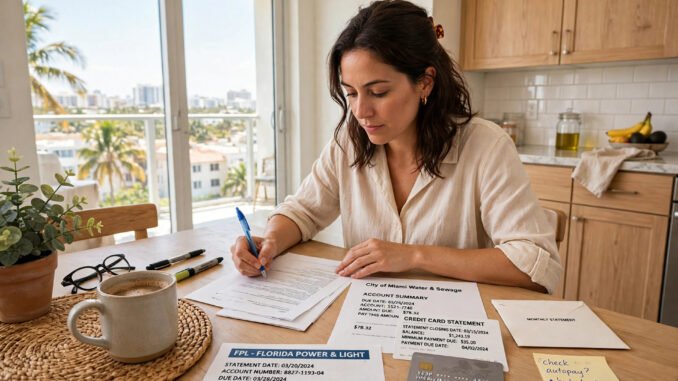
Building credit from zero feels like a catch-22: you need credit history to get credit, but nobody will give you credit without history. Add a tight budget and Miami’s high cost of living, and it can feel impossible. It is not. In 2026, there are several proven, low-cost paths from no credit file at all to a respectable score — most of them costing less than a monthly streaming subscription.
Why “No Credit History” Is Better Than Bad Credit
First, the good news. Having no credit file — what lenders call being “credit invisible” — is a cleaner starting point than having damaged credit. Roughly 26 million Americans are credit invisible, and the scoring models treat you as a blank slate, not a risk. A blank slate responds fast to good habits: many people reach a score in the high 600s within six to twelve months of opening their first account. There is nothing to repair, only something to build.
FICO rewards five behaviors, but beginners only need two: on-time payments (35% of your score) and low utilization (30%). Your whole strategy is creating accounts that demonstrate those two for as little money as possible.
Step 1: The Secured Credit Card (Your Fastest Tool)
A secured credit card is the single most effective credit-building product for someone with no history. You put down a refundable deposit — typically $200, though some cards start at $49 — and that deposit becomes your credit limit. You use the card, pay the bill, and the bank reports your payments to all three credit bureaus (Equifax, Experian, TransUnion). After 6–12 months of on-time payments, most issuers upgrade you to an unsecured card and refund the deposit.
What to look for in 2026
Choose a card with no annual fee, reports to all three bureaus, and a clear upgrade path. Avoid secured cards with annual fees above $35 or monthly “maintenance” fees — on a tight budget, those eat the money you should be saving. The Consumer Financial Protection Bureau publishes plain-language guidance on choosing credit cards that is worth reading before you apply.
The 30% rule that actually matters
With a $200 limit, keep your reported balance under $60 — ideally under $20. The simplest method: put one small recurring charge on the card (a $9.99 subscription, a tank-top-up of gas), set up autopay for the full statement balance, and put the card in a drawer. You are building history, not buying things. This pairs well with the discipline of creating a budget you can actually stick to — the card works best inside a budget, not instead of one.
Step 2: Become an Authorized User (Free Head Start)
If a family member or trusted partner in Miami has a credit card with a long, clean payment history and low utilization, ask them to add you as an authorized user. You do not even need the physical card — their account’s history appears on your credit report, instantly giving your blank file some age and positive history. This costs nothing and is the fastest legitimate head start available.
Two cautions: only do this with someone whose habits are genuinely excellent (their missed payments become yours), and confirm the issuer reports authorized users. This is a boost, not a standalone strategy.
Step 3: Credit-Builder Loans (Forced Savings That Build History)
Credit-builder loans flip the normal loan around: the lender holds the loan amount (say $500–$1,000) in a locked savings account while you make monthly payments of $25–$50. Each payment is reported to the bureaus. At the end of the term, you get the money back — minus a small fee or interest. Providers like Self and MoneyLion offer these online, and several Miami-area credit unions offer their own versions, often with lower fees.
On a tight budget, pick the smallest loan with the shortest comfortable term. A $25/month payment over 12 months builds the same payment history as a $100/month payment — the bureaus do not score you on loan size. Just make sure the provider reports to all three bureaus; some only report to one or two, which weakens the benefit.
Step 4: Get Your Rent and Bills Counted
Miami renters pay some of the highest rents in the country — that money should work for your credit. Services like Experian Boost (free) let you connect bank accounts so utility, phone, and streaming payments count toward your Experian score. Rent-reporting services (often $5–$10/month through platforms like Rental Kharma or Piñata) report your rent payments to the bureaus. Given Miami’s median rent, a year of reported on-time rent payments is powerful history.
Free beats paid here — start with Experian Boost and any free rent-reporting your landlord offers. If money is extremely tight, review ways to save money on groceries each month to free up the $25–$50 these tools require.
The Miami-Specific Traps to Avoid
Payday lenders and “no credit check” financing
South Florida has a dense concentration of payday lenders, title-loan shops, and rent-to-own stores along corridors like Flagler Street and in Hialeah. Florida law caps payday loan fees, but a typical $500 payday loan still costs around $55 in fees for two weeks — an APR near 300%. Worse, most of these lenders do not report on-time payments to bureaus, so they build nothing while risking everything. The FDIC’s consumer resources explain how to spot predatory lending and find legitimate alternatives.
Credit repair companies
You will see ads promising to “build your credit fast” for a monthly fee. With no credit history, there is nothing to repair — these companies cannot do anything you cannot do yourself with a secured card. Save the fee.
Applying for five cards at once
Each application creates a hard inquiry. On a blank file, a few inquiries are harmless, but a stack of denials from premium cards wastes inquiries and morale. Apply for one secured card, get approved, and stop applying for three to six months.
Your 12-Month Timeline (What to Expect)
Months 1–2: Open a secured card (and become an authorized user if possible). Set up autopay. Your first FICO score typically appears after about six months of reported history.
Months 3–6: Keep utilization under 30%, ideally under 10%. Consider adding a credit-builder loan if the monthly payment fits. Do not apply for anything else.
Months 6–9: Your first scores appear — often in the 640–680 range with clean habits. This is when Investor.gov’s guidance on credit scores becomes useful reading, since you will start receiving pre-approved offers.
Months 9–12: Ask your secured card issuer about upgrading to unsecured and getting your deposit back. With 12 months of perfect payments, many beginners reach 700+, which opens the door to real rewards cards and better apartment approvals in Miami’s competitive rental market.
Throughout, track your score for free with Credit Karma, your bank’s app, or Experian’s free tier — and remember that understanding how cash flow works month to month keeps the payments behind the score sustainable.
Conclusion
Building credit with no history on a tight budget in Miami comes down to three moves: a no-annual-fee secured card used lightly and paid in full, authorized-user status on a trusted person’s clean account if available, and getting your rent and bills reported. Total cost: a refundable $200 deposit (or less) plus maybe $10/month. Avoid payday lenders and credit-repair pitches, keep utilization low, automate every payment, and let time do the compounding. Twelve months of boring, perfect habits will take you from invisible to a score that opens doors.
Frequently Asked Questions
How long does it take to build credit from zero?
Your first FICO score usually appears after about six months of reported account history. With consistent on-time payments and low utilization, most people reach the high 600s to 700 within 9–12 months.
Can I build credit without a credit card?
Yes. Credit-builder loans, reported rent payments, and Experian Boost (which counts utility and streaming payments) all build history without a credit card. A secured card is simply the fastest single tool.
What is the minimum deposit for a secured credit card?
Most secured cards require $200, though some start as low as $49. The deposit is refundable — you get it back when you upgrade to an unsecured card or close the account in good standing.
Does checking my own credit score hurt it?
No. Checking your own score is a “soft inquiry” and never affects your score. Only applications for new credit create hard inquiries, and a few of those have minimal impact on a new file.
Leave a Reply