
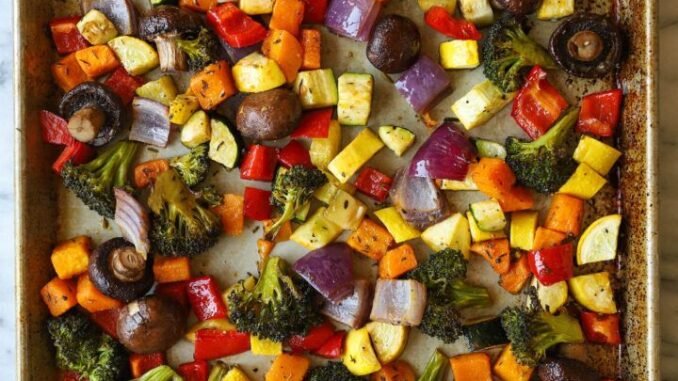
Sunday meal prep lives or dies on the vegetables. Pick the wrong ones and by Wednesday you’re staring at a container of gray, soggy sadness. If you’re wondering what are the best vegetables to roast for meal prep, the answer comes down to one trait: structure. The best meal-prep vegetables stay firm, caramelized, and genuinely good after four days in the fridge.
I roast vegetables every single week — usually two sheet pans at once — and I’ve learned exactly which ones reheat like champs and which ones turn to mush. Sweet potatoes, Brussels sprouts, and cauliflower are my holy trinity, but there’s a longer list worth knowing.
What are the best vegetables to roast for meal prep: The Short Answer
The best vegetables to roast for meal prep are sweet potatoes, Brussels sprouts, cauliflower, carrots, butternut squash, broccoli, red onions, and bell peppers. These hold their texture for 4–5 days refrigerated and reheat well. Roast at 425°F in a single layer with plenty of oil and space, and avoid delicate vegetables like zucchini, asparagus, and leafy greens, which go soggy within a day or two.
Why This Matters More Than You Think
Why do some roasted vegetables survive the week while others collapse? It’s about water content and cell structure. Dense, low-moisture vegetables like sweet potatoes and carrots have sturdy cell walls that stay intact through roasting, cooling, and reheating. High-water vegetables like zucchini keep releasing moisture in the container, essentially steaming themselves into mush. FoodSafety.gov’s storage guidelines The fix isn’t just picking the right vegetables — it’s roasting them correctly in the first place: high heat, enough oil, and absolutely no crowding the pan.
5 Tips That Actually Work
Roast at 425°F — no lower
High heat is what creates caramelization instead of steaming. At 425°F, natural sugars brown and surfaces crisp before the interiors overcook. Lower temps just slowly steam vegetables in their own moisture, which is exactly the soggy outcome you’re trying to avoid all week.
Give every piece personal space
This is the rule people break most. Vegetables need a full inch of space on all sides so hot air circulates. Crowded pans trap steam. Use two sheet pans instead of one overflowing one — I use Nordic Ware half-sheet pans, about $15 for two on Amazon, and they’ve lasted me years.
Cut pieces uniformly and generously
Aim for 1 to 1.5-inch chunks. Small pieces overcook and dry out by day three; uniform pieces cook evenly so you don’t get a mix of burnt bits and raw centers. Bigger chunks also reheat better, staying creamy inside instead of turning to cardboard.
Season boldly and oil generously
Meal-prep vegetables get eaten cold or reheated, both of which mute flavor — so season about 25% more aggressively than you would for dinner tonight. Two tablespoons of oil per sheet pan, kosher salt, garlic powder, smoked paprika. Toss halfway through roasting for even browning.
Cool completely before packing
Trapped steam is the enemy of crisp leftovers. Spread roasted vegetables on the pan for 10–15 minutes after they come out of the oven, then pack into containers. I use glass containers with locking lids — they don’t stain like plastic and reheat more evenly in the microwave.
My Favorite Tools and Brands
I only recommend gear I’ve actually used or that’s widely vetted by testing labs — Academy of Nutrition and Dietetics is worth checking before you buy.
- Nordic Ware half-sheet pans, 2-pack — ~$15 — The workhorse pans; warp-resistant and big enough to avoid crowding.
- Glass meal-prep containers — ~$25 for 10 — No staining, no warping, microwave and dishwasher safe.
- Avocado or olive oil spray — ~$8 — Even coating without over-oiling; faster than drizzling.
- Parchment paper sheets — ~$10 — Precut sheets make cleanup instant and prevent sticking.
Common Mistakes to Avoid
- Roasting zucchini or asparagus for the week. They’re great fresh but release water and go limp by day two. Roast those the night you eat them.
- Packing vegetables while warm. Condensation forms inside the container and undoes all your crisping work. Cool first, always.
- Using one pan for everything. Different vegetables cook at different rates. Give dense ones (sweet potatoes) a 10-minute head start over quicker ones (bell peppers).
- Skipping the reheat strategy. Microwave reheating steams; a 400°F oven or air fryer for 8–10 minutes re-crisps. Worth it when you have the time.
Frequently Asked Questions
How long do roasted vegetables last in the fridge?
Properly cooled and stored in airtight containers, roasted vegetables stay good for 4–5 days. If they smell sour or feel slimy, toss them — when in doubt, throw it out.
Can I freeze roasted vegetables?
Yes, though texture softens. Spread cooled vegetables on a sheet pan, freeze solid, then bag them — this prevents clumping. They’re best used in soups, grain bowls, or frittatas after thawing rather than eaten straight.
What’s the best oil for roasting vegetables?
Any neutral oil with a decent smoke point works: avocado, light olive, or even regular vegetable oil. Save expensive extra-virgin olive oil for finishing — its flavor compounds break down at roasting temperatures anyway.
My Actual Sunday Routine
Here’s what my meal-prep Sunday looks like in practice: oven at 425°F, two sheet pans, sweet potatoes and Brussels sprouts on one (they take 35 minutes), cauliflower and carrots on the other (25 minutes — they go in 10 minutes later). While they roast, I cook a grain and a protein. Ninety minutes total, and lunches are done through Friday. The vegetables are the backbone — everything else is just assembly during the week. Pro tip for the workweek: portion the vegetables into containers with your protein on Sunday night, so weekday lunches are grab-and-go with zero morning decisions. I also keep a jar of tahini-lemon dressing in the fridge door — it makes even day-four vegetables taste intentional.
Sweet potatoes, Brussels sprouts, cauliflower, carrots, and butternut squash are your meal-prep all-stars: roast them hot, spaced out, and well-seasoned, and they’ll carry your lunches all week. To round out your prep routine, check out cook the perfect steak at home without a grill, oil for high-heat cooking, and spices every home cook should own — a good system beats good intentions every time.
Leave a Reply