
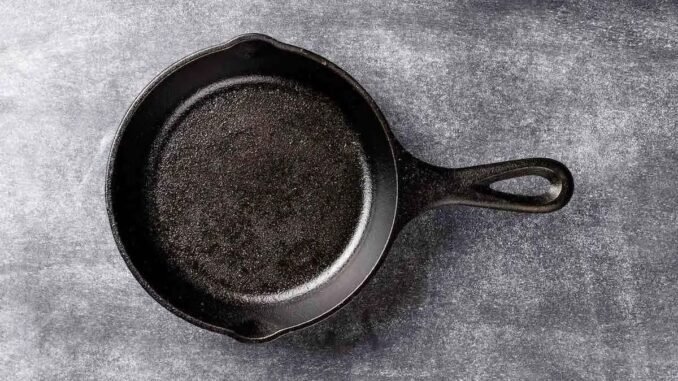
Cast iron lasts generations — but only if seasoned right. Learning how to season a cast iron skillet properly means understanding what seasoning actually is: not oil sitting on the surface, but oil polymerized (heat-bonded) into a hard, non-stick-like layer. Most seasoning failures come from too much oil (sticky, gummy pans) or too little heat (oil that never bonds). I’ve restored rusty flea-market skillets and maintained daily drivers for years — the method below works on new, old, and rescued pans alike.
What You Need
- High-smoke-point oil: grapeseed, canola, or Crisco shortening — the classics for a reason. (Flaxseed oil makes a beautiful initial seasoning that flakes off with use — the internet loves it, experienced users don’t.)
- Oven (or grill, for the smoke-averse)
- Paper towels or old rags (lint-free-ish; you’ll wipe a lot)
- Steel wool or chain-mail scrubber ($10–$15) for stripping old seasoning if needed
- Aluminum foil for the oven rack
The Oven Seasoning Method (New or Stripped Pans)
- Clean to bare metal (only for new unseasoned or restoration pans): scrub with hot water + steel wool. For rust: 50/50 white vinegar and water soak (1–2 hours max — longer etches the iron), then scrub. Dry immediately and completely — heat the pan on the stove 5 minutes to evaporate every drop (flash rust forms in minutes on wet iron).
- Oil it — then wipe it ALL off. Rub a thin coat of oil over every surface (inside, outside, handle). Then wipe it off like you made a mistake — buff with clean towels until the pan looks dry. This is the critical step: the correct amount of oil is almost none. Excess oil = sticky, gummy seasoning. What remains in the pores is exactly enough.
- Bake upside-down at 450–500°F (above your oil’s smoke point — that’s what triggers polymerization) for 1 hour. Put foil on the lower rack to catch drips.
- Cool in the oven (1–2 hours). The pan will look slightly darker, matte — not glossy. Glossy = too much oil.
- Repeat 2–3 times for a solid base. Each layer darkens and hardens.
Total active time: 20 minutes across an afternoon. The oven does the work.
Daily Maintenance (This IS the Seasoning)
Here’s the secret the tutorials bury: oven seasoning is just the foundation — cooking builds the real seasoning. Every time you fry, sear, or sauté, you’re adding micro-layers. The maintenance rules:
- Cook with fat: the first dozen cooks should be fatty foods — bacon, fried chicken, grilled cheese, cornbread with butter. These build seasoning fast.
- Clean while warm: hot water + stiff brush or chain mail. A small amount of dish soap is FINE (modern soap doesn’t contain lye — the old no-soap rule is outdated; Lodge itself says soap is fine). No dishwasher, no long soaks.
- Dry immediately: heat on the stove 2–3 minutes until bone dry.
- Oil lightly after drying: a half-teaspoon rubbed over the warm pan, buffed out. Every time. This 30-second habit prevents 99% of rust.
- Store dry: paper towel between stacked pans prevents moisture trapping.
How Do I Season a Cast Iron Skillet Properly? Troubleshooting
- Sticky/gummy surface: too much oil during seasoning. Fix: bake longer (2 hours at 450°F) to polymerize the excess, or scrub back and redo with less oil. Prevention: wipe like you made a mistake.
- Rust spots: scrub with steel wool, dry thoroughly, do a stovetop touch-up season (thin oil, heat until smoking, cool, wipe). Then recommit to the dry-and-oil habit.
- Flaking black bits: built-up carbonized food, not seasoning — scrub it off (chain mail), then cook normally. Real seasoning doesn’t flake.
- Food sticks: preheat properly (3–5 minutes over medium) and use enough fat — most “seasoning failures” are actually preheating failures. Also: acidic foods (tomato sauce simmered for hours) strip young seasoning — fine in well-established pans, avoid in new ones.
- Uneven coloring: completely normal — seasoning builds patchily and evens out over months of cooking. Don’t chase uniform black; chase performance.
A $25–$35 Lodge skillet with proper seasoning outperforms $200 non-stick pans and outlives you — my daily driver is older than my car. Thin oil, hot oven, cook with fat, dry and oil after every wash. Do that and your grandkids will fight over the pan.
Cast Iron Seasoning Mistakes to Avoid
- Too much oil: the #1 seasoning failure — excess oil doesn’t polymerize, it goes sticky and gummy. Apply oil, then wipe it off like you made a mistake — the correct amount is almost none.
- Flaxseed oil: the internet’s favorite makes a beautiful initial layer that flakes off with use — hard, brittle, unreliable. Grapeseed, canola, or Crisco — the boring classics that actually last.
- Never cooking with it: oven seasoning is just the foundation — real seasoning builds through cooking with fat (bacon, fried chicken, cornbread). A seasoned pan that sits in the cabinet never improves. Use it.
- Soaking and dishwashers: prolonged water exposure is cast iron’s enemy — no long soaks, no dishwasher. Clean while warm (hot water + brush; a little soap is fine), dry on heat, oil lightly — every time.
Cast Iron Seasoning FAQs
How often should I season my cast iron?
Oven-season 2–3 times for a new or restored pan (foundation). After that: cook with fat regularly (builds seasoning naturally) + light stovetop oil after every wash (30 seconds, prevents rust). Full oven re-seasoning only when seasoning is damaged (stripped, flaking, rusty) — not as routine maintenance.
Is dish soap really okay on cast iron?
Yes — modern dish soap is fine. The old no-soap rule dates to lye-based soaps that stripped seasoning; today’s mild detergents don’t. Lodge itself says soap is fine. Wash, dry on heat, oil lightly — the soap was never the problem; water left sitting was.
How do I fix a sticky cast iron pan?
Bake it longer — 2 hours at 450°F polymerizes the excess oil (stickiness = unpolymerized oil). If still gummy: scrub back with steel wool and re-season with less oil (wipe like you made a mistake). Prevention beats cure.
Can I use cast iron on a glass/ceramic stovetop?
Yes, with care: don’t slide it (lift to move — dragging scratches), don’t drop it (it’s heavy; cracks happen), and expect slower heat response. Flat-bottomed skillets work best. Millions cook on glass tops with cast iron daily — lift, don’t slide.
Leave a Reply