
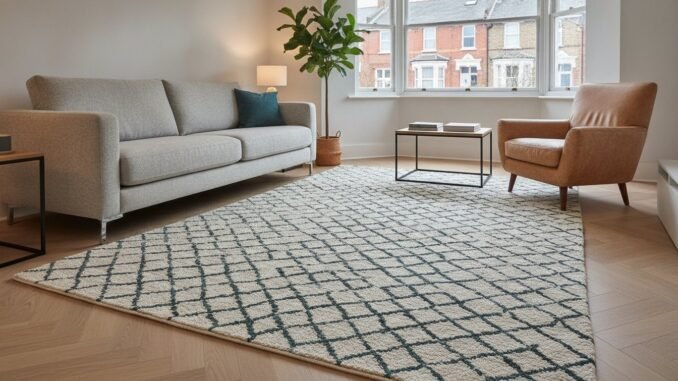
The #1 rug mistake isn’t color or pattern — it’s size. Learning how to choose the right size rug for your living room will do more for the space than any other single decor decision, because a too-small rug (the mistake in roughly 80% of living rooms) makes furniture look disconnected and the room feel smaller. I’ve made this mistake myself — a cute 5×7 floating lonely in a 14×18 room. Here’s the sizing system designers actually use.
The Golden Rule: Front Legs On
At minimum, the front legs of your sofa and chairs must sit on the rug. This one rule anchors the furniture into a single visual grouping — the difference between “furniture placed in a room” and “a designed living room.” Ideally, all legs on the rug (the full rug-under-everything look), but front-legs-on is the minimum that works.
Corollary: leave 12–18 inches of bare floor between the rug edge and the walls. Wall-to-wall carpeting vibes happen when the rug nearly touches the baseboards — the border of visible floor is what makes a rug look intentional.
Standard Sizes and What They Fit
- 5×7 / 5×8: only for small apartments and reading nooks — a loveseat plus one chair, max. Almost always too small for a full living room. (This is the size everyone buys first and regrets.)
- 8×10: the most popular living room size — fits a standard 3-seat sofa (84″) with front legs on, plus a coffee table and one or two chairs. The safe default for average rooms.
- 9×12: for larger living rooms or sectionals. Lets a full sectional plus chairs sit entirely on the rug with room to breathe.
- 10×14+: great rooms and open-concept spaces. Also useful for defining the living zone within an open floor plan.
Quick math: measure your seating grouping (sofa + chairs + coffee table footprint), then add 24 inches on each side. That’s your rug size. When in doubt, size up — designers universally say a slightly-too-big rug looks better than a slightly-too-small one.
How Do I Choose the Right Size Rug for My Living Room? Layout by Room Type
Standard sofa + 2 chairs
8×10 minimum. Center the rug on the sofa; coffee table fully on the rug; chairs with front legs on. The rug should extend 6–8 inches beyond the sofa on each side.
Sectional
9×12 for most sectionals — the L-shape eats rug fast. The chaise section should sit fully on the rug, not hang off the edge (the visual equivalent of a cliff).
Small living room / apartment
Counterintuitively, don’t go tiny — a 6×9 or 8×10 in a small room actually makes it feel bigger by unifying the floor. A postage-stamp rug chops the room into fragments.
Open-concept space
The rug defines the living zone. Size it to the seating group, and let the dining area have its own rug (or none). Two rugs in one open space is fine — they create “rooms” without walls.
Material and Practical Notes
- With kids/pets: low-pile, washable rugs (Ruggable, ~$150–$400 for 8×10) or indoor/outdoor rugs. You’ll thank yourself at the first spill.
- Rug pads: non-negotiable — a $40–$80 felt + rubber pad prevents slipping, adds cushion, and extends rug life. Size it 1 inch smaller than the rug on all sides.
- Budget reality: decent 8×10 rugs run $150–$400 (Rugs USA, Loloi, Safavieh on sale); designer looks start around $600+. Watch for the constant 60–70% off sales at online rug retailers — the “sale” price is the real price.
- Pattern vs. solid: in a small room, a subtle pattern hides wear and crumbs better than a solid light rug ever will.
Tape the outline on your floor with painter’s tape before buying — walk around it for a day. This 5-minute trick has saved countless people from the too-small rug regret. Get the size right, and everything else (color, pattern, style) becomes easy.
Rug Sizing Mistakes to Avoid
- Buying the 5×7 by default: it’s the most-purchased living room size and almost always too small — it floats disconnected under the coffee table while furniture sits awkwardly around it. 8×10 is the real default for living rooms.
- Measuring the room instead of the furniture grouping: rug size follows the seating arrangement, not the room dimensions. Measure sofa + chairs + coffee table footprint, add 24 inches per side.
- Skipping the rug pad: a $40–$80 felt + rubber pad prevents slipping (safety), adds cushion, and extends rug life. Non-negotiable on hard floors.
- Pushing all furniture against walls with a small rug: the “perimeter + postage stamp” layout makes rooms feel smaller. Float the seating on a properly-sized rug — even in small rooms, bigger rugs unify the space.
Living Room Rug FAQs
Should all furniture legs be on the rug?
Ideal: all legs on. Minimum workable: front legs on for sofas and chairs. Nothing on (rug floating under just the coffee table) looks disconnected — the most common rug mistake in existence.
How much floor should show around the rug?
12–18 inches between rug edge and walls. Less looks like wall-to-wall carpeting; more fragments the room. In open-concept spaces, the rug defines the living zone — size it to the seating group.
What rug material is best with kids and pets?
Low-pile, washable rugs — Ruggable ($150–$400 for 8×10, machine-washable cover) or indoor/outdoor rugs (hose them off). Avoid high-pile white rugs unless you enjoy anxiety.
Can I layer rugs?
Yes — it’s a designer trick: a large natural-fiber base (jute/sisal, inexpensive) with a smaller patterned rug on top. Adds texture and lets you use a smaller (cheaper) statement rug while still covering the right footprint.
Rug Shopping: Getting the Price Right
Rug pricing is theater — the “70% off” sale price is the real price, and it never ends. Never pay list price at online rug retailers; wait for (or find) the perpetual sale. Decent 8×10 rugs run $150–$400 on sale (Rugs USA, Loloi, Safavieh); designer looks start around $600+. Before buying, tape the outline on your floor with painter’s tape and live with it a day — the 5-minute trick that prevents the too-small regret. And order swatches ($5–$10, often credited toward purchase) — screen colors lie, especially with beige/gray undertones. A rug is a 5–10 year purchase; the $8 swatch is the cheapest insurance in decorating.
Leave a Reply