
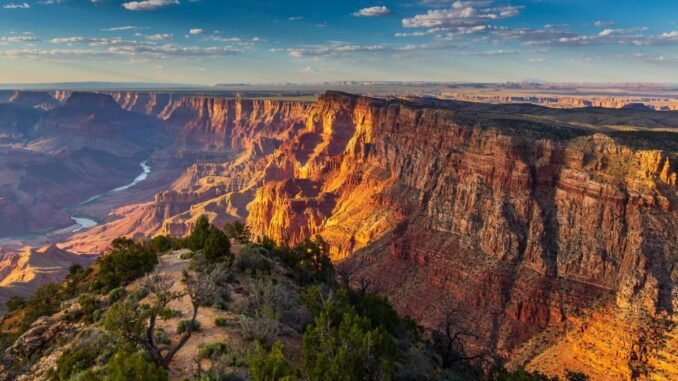
The Grand Canyon in July is a furnace packed with tour buses. The Grand Canyon in October is golden light, empty trails, and perfect hiking weather. Same canyon, completely different trip — timing is everything here. If you’re asking what is the best time of year to visit the Grand Canyon, the short answer: April–May and September–October for the best combination of weather, crowds, and accessibility. But the full answer depends on which rim, what you want to do, and how you feel about snow. Here’s the season-by-season truth.
Key fact first: the Grand Canyon has two developed rims with wildly different seasons. The South Rim (90% of visitors) is open year-round at 7,000 ft elevation. The North Rim (10% of visitors, higher at 8,000 ft) is only open mid-May through mid-October — it’s snowed in otherwise. The inner canyon (below the rim) runs 20–30°F hotter than the rim. Always check the NPS Grand Canyon page for current conditions and alerts.
What Is the Best Time of Year to Visit the Grand Canyon? Season by Season
Spring (March–May): excellent, with caveats
- Weather: South Rim highs 50–70°F, crisp mornings (30s), occasional late snow in March. Inner canyon warming up (70–90°F). Wildflowers in April.
- Crowds: moderate, building through May. Spring break (March) brings a spike — avoid that week if possible.
- Verdict: April–May is prime time. Great hiking weather, manageable crowds, North Rim opens mid-May. Book lodging 3–6 months ahead.
Summer (June–August): peak crowds, extreme heat below
- Weather: South Rim pleasant (80s), but the inner canyon hits 100–115°F — hiking below the rim in summer is genuinely dangerous. The NPS rescues hundreds of heat-exhausted hikers yearly. Afternoon thunderstorms (July–August monsoon) bring lightning — spectacular from the rim, deadly on exposed trails.
- Crowds: maximum. Parking fills by 10 AM, viewpoints are packed, lodging books out months ahead and costs peak rates.
- Verdict: fine for rim viewpoints and sunset-gazing, terrible for hiking. If summer is your only option: arrive before 8 AM, stick to the rim, carry twice the water you think you need, and never hike into the canyon midday.
Fall (September–November): the sweet spot
- Weather: September–October perfection — 60–70°F on the rim, 80–90°F below (hikeable!). Aspen gold on the North Rim in October. November cools (40–50°F) with possible early snow — dramatic and crowd-free.
- Crowds: September still busy, October thinning beautifully, November quiet.
- Verdict: September–October is the single best window — ideal hiking temps, thinning crowds, golden light. North Rim closes mid-October, so go early October for both rims.
Winter (December–February): the secret season
- Weather: South Rim highs 40s, lows in the teens–20s, snow common but usually light. The canyon with snow-dusted rims and empty viewpoints is surreal and gorgeous. Inner canyon: 50–60°F — actually pleasant hiking if you’re prepared.
- Crowds: minimal. Walk-up lodging availability, empty trails, private sunrises.
- Verdict: magical for rim viewing and photography; challenging for hiking (ice on trails — bring traction devices). Some facilities have reduced hours. If you hate crowds and don’t mind cold, winter is a revelation.
What You Want to Do Matters
- Hiking below the rim: September–October and April–May. Never midday in summer. The Bright Angel and South Kaibab trails are the classic descents — go 1–2 hours down, turn around (remember: down is optional, up is mandatory).
- Rim viewpoints + photography: year-round, but October and winter offer the best light and fewest people. Sunrise at Mather Point, sunset at Hopi Point.
- Colorado River rafting: April–October season; book 6–12 months ahead for multi-day trips.
- North Rim: mid-May–mid-October only; October aspens are the prize.
- With kids: spring and fall — summer heat and crowds test everyone’s patience. Our national parks with kids guide covers the family logistics.
- Stargazing: new-moon nights, any season — the Grand Canyon is a certified Dark Sky Park. Winter has the longest, clearest nights.
Practical Timing Tips
- Book in-park lodging the moment reservations open (up to 13 months ahead for El Tovar, Bright Angel Lodge). In-park beats gateway towns enormously for sunrise/sunset access.
- Arrive early daily: viewpoints before 9 AM or after 4 PM dodge both crowds and harsh light.
- Shoulder-season pricing: November–February and (to a lesser extent) April/May offer the best lodging rates — 20–30% below summer.
- Check the NPS conditions page before and during your trip — trail closures, prescribed burns, and water availability change seasonally.
Grand Canyon Photography Tips (From the Rim)
You don’t need pro gear — you need timing and position. Golden hours are everything: the canyon’s colors ignite at sunrise and sunset when low light rakes across the formations. Midday sun flattens it into a postcard; dawn and dusk turn it into art. Mather Point at sunrise, Hopi Point or Pima Point at sunset — arrive 30 minutes early for a spot. Include foreground: the classic mistake is photographing only the vast distance. Frame with a juniper branch, a rock formation, or (carefully, behind railings) the rim edge — foreground gives the immensity scale.
Weather is your friend: storm clouds over the canyon are the jackpot — dramatic light beams, rainbows, lightning in the distance. Monsoon season (July–August) afternoons deliver this regularly; just shoot from sheltered viewpoints. Night skies: the canyon is a certified Dark Sky Park — on moonless nights, the Milky Way over the gorge is staggering. A phone on night mode on a tiny tripod ($15) captures it. People shots: put a person at the rim edge (safely back from it) — the human silhouette against the void conveys scale no landscape shot can. And the family logistics of getting everyone to sunrise viewpoints are covered in our national parks with kids guide — because the best camera is the one your whole family actually makes it to the viewpoint with.
The Bottom Line
Visit the Grand Canyon in September–October for the perfect combination of hiking weather, thinning crowds, and golden light — or April–May for spring wildflowers and mild temps. Summer is for rim views only (never hike midday in 110°F heat); winter is the crowd-free secret season for the cold-tolerant. Book in-park lodging as early as possible, arrive at viewpoints early or late, and let the canyon’s scale do the rest. No photo prepares you for the first look over the rim.
Leave a Reply