
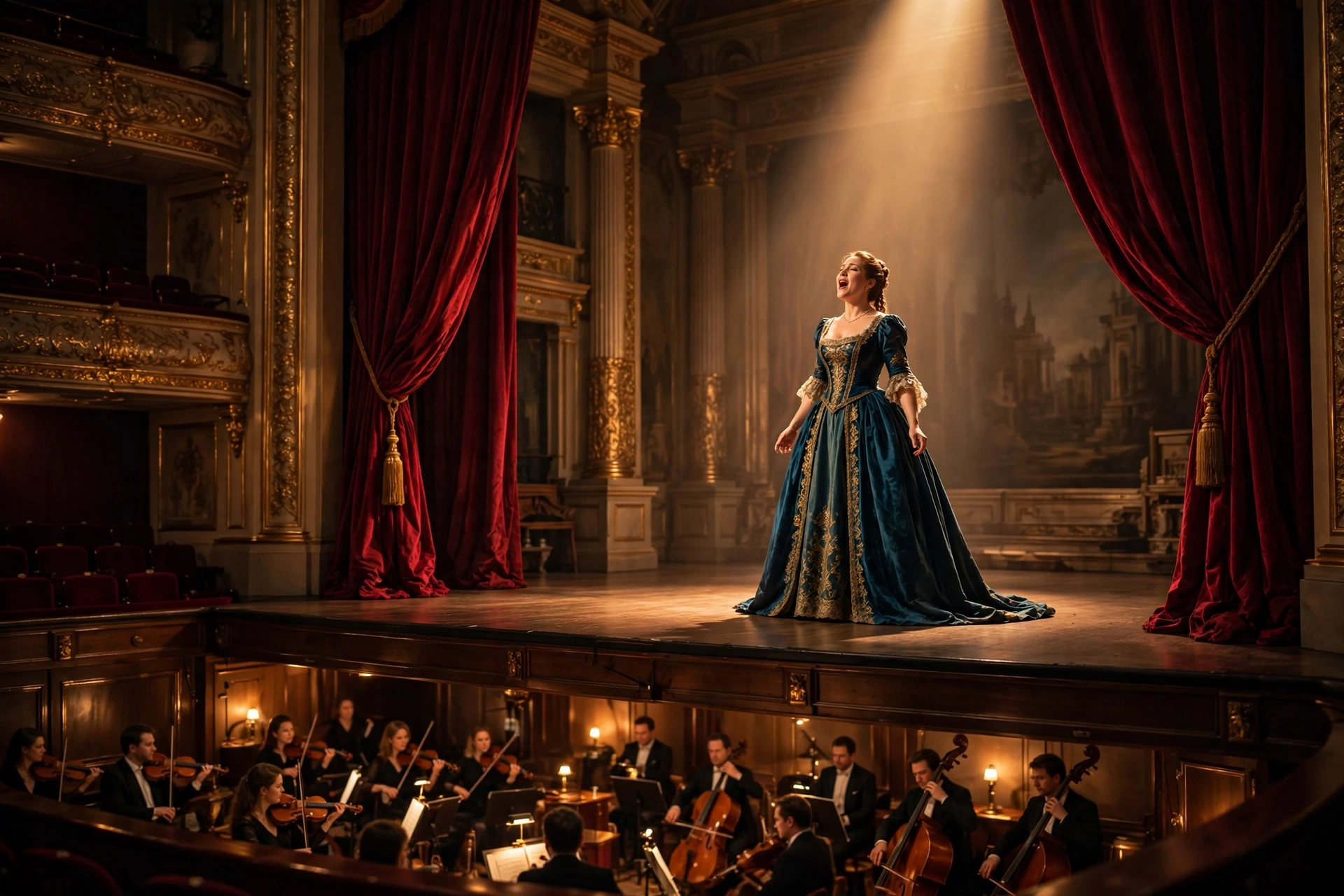
Writing an opera sounds like something only a genius locked in a Vienna garret could attempt. In reality, it’s a craft — a big, demanding, thrilling craft — but one that ordinary determined musicians learn step by step. If you can write a song, you can start learning how to write an opera. The leap is real, but it’s made of small, learnable steps.
Start With the Story, Not the Music
Every opera begins with a libretto — the text, the words the singers will sing. Before you write a single note, you need a story worth singing about. Opera magnifies emotion; small, subtle stories often work better on stage than sprawling epics, because music needs room to expand a feeling.
Look at what makes a good operatic story:
- High emotional stakes. Love, betrayal, revenge, sacrifice — opera lives in big feelings.
- Clear dramatic situations. Confrontations, revelations, decisions. Each scene should turn on something.
- Singable moments. A character alone with their thoughts (perfect for an aria), two people in conflict (a duet), a crowd in chaos (an ensemble finale).
- A manageable cast. Four to six principal roles is plenty for a first opera. Every role you add multiplies your workload.
Many first-time opera writers adapt existing stories — myths, folk tales, short stories, even news events. Adapting gives you a proven dramatic spine so you can focus on the music. Just make sure you have the rights if the source isn’t in the public domain.
Learn the Architecture of Opera
Opera has a structure refined over 400 years. You don’t have to follow it rigidly, but you should understand it before you break it:
- Acts and scenes: Most operas have 2–3 acts, each containing several scenes. Acts end with a dramatic peak or cliffhanger.
- Recitative: Speech-like singing that moves the plot forward quickly. Think of it as musical dialogue.
- Aria: A solo song where a character expresses deep emotion and time seems to stop. The showstoppers.
- Ensembles: Duets, trios, quartets — multiple characters singing simultaneously, each expressing different feelings. Magical when done well.
- Chorus: A group voice representing crowds, townspeople, soldiers, spirits.
- Overture/prelude: Orchestral opening that sets the mood and introduces musical themes.
Study scores of short operas to see this architecture in action. Menotti’s Amahl and the Night Visitors (about an hour) and Britten’s chamber operas are perfect models — small casts, clear structures, and proof that opera doesn’t have to be four hours long.
Write the Libretto First
Write all the words before composing. This is the discipline that separates finished operas from abandoned sketches. Your libretto should be:
- Concise. Sung words take far longer than spoken ones. A page of dialogue becomes several minutes of music. Cut ruthlessly.
- Vivid and singable. Open vowels sing beautifully; consonant clusters don’t. “Ah!” soars; “strengths” dies on stage.
- Structured for music. Mark where arias, duets, and ensembles go. Give your composer-self clear targets.
Read your libretto aloud. If it sounds clunky spoken, it will sound worse sung. Many composers write their own librettos (Wagner did), but collaborating with a librettist is also honorable — some of the greatest operas were partnerships.
Compose for the Voice
This is the heart of the craft. Opera singers are vocal athletes, and writing well for them is a technical skill:
- Know the voice types. Soprano, mezzo-soprano, tenor, baritone, bass — each has a range and a character. Write within real human ranges, not theoretical ones.
- Respect the tessitura. It’s not just the highest note that matters, but where the voice sits most of the time. Parking a soprano at the top of her range for ten minutes is cruel.
- Let them breathe. Singers need places to take breaths. Long unbroken phrases look fine on paper and kill in performance.
- Match emotion to vocal writing. Agitated characters get jagged rhythms; lovers get long, flowing lines.
The golden rule: if possible, try singing your own vocal lines (even badly). If you can’t get through a phrase in one breath, neither can a professional.
Use Leitmotifs and Musical Architecture
Great operas feel unified because composers weave recurring musical ideas — leitmotifs — through the score. A character, an emotion, or an object gets its own musical fingerprint, and audiences feel the connections subconsciously.
You don’t need Wagner’s hundred-motif system. Even three or four recurring themes — a love theme, a fate theme, a character’s personal melody — give your opera coherence. Introduce them early, transform them as the drama develops, and bring them back at key moments.
Also plan your big musical peaks. An opera needs 2–3 unforgettable moments — the aria everyone hums leaving the theater, the ensemble that raises the roof. Compose these first if you like; they’re the pillars everything else supports.
Orchestrate Wisely
Full orchestra is glorious and expensive. For a first opera, consider:
- Chamber orchestration: 10–15 players. Cheaper to perform, easier to get programmed, and intimate in the best way.
- Piano reduction first: Compose everything for voice and piano, then orchestrate. This is how most operas are actually written.
- Don’t drown the singers. The orchestra must support, never cover, the voices. This is the most common beginner mistake.
Remember that every instrumental part is a musician you (or a producer) must hire. Practicality isn’t selling out — it’s what gets your opera performed instead of sitting in a drawer.
Workshop, Revise, Repeat
No opera arrives perfect. The path from draft to stage looks like this:
- Singe-throughs: Get singers to read through your vocal lines with piano. You’ll instantly hear what works and what doesn’t.
- Workshops: Universities and opera companies run workshops for new works. Apply to everything.
- Revise brutally. Cut the aria you love if it stops the drama. Shorten the finale. Rewrite the weak duet. Opera history is full of composers who revised for years.
- Staged reading: Before a full production, a concert or semi-staged performance reveals pacing problems.
Puccini rewrote the endings of his operas repeatedly. If he needed revisions, so do you.
Getting Your Opera Performed
The practical reality: large opera houses rarely premiere unknown composers’ full-length works. But the ecosystem for new opera is healthier than ever:
- University opera programs constantly need new short works.
- Fringe and indie opera companies specialize in premieres.
- Competitions and calls for scores offer performance opportunities and prize money.
- Self-production — renting a small theater and hiring singers — is how many composers launch.
Start small: a 20-minute one-act for three singers is infinitely more producible than a three-hour epic. A performed short opera beats an unperformed masterpiece every time.
Keep Learning From the Masters
Study scores with recordings in hand. Notice how Mozart builds an ensemble, how Verdi paces an act, how contemporary composers like John Adams or Missy Mazzoli handle modern stories. Every opera you study teaches you something about dramatic musical storytelling — and the curiosity that drives great trivia lovers is the same curiosity that makes a great opera student.
Writing an opera is a marathon, not a sprint. Expect a year or more for a short work. But there’s nothing like hearing singers bring your music to life for the first time — it’s worth every difficult measure.
Leave a Reply