
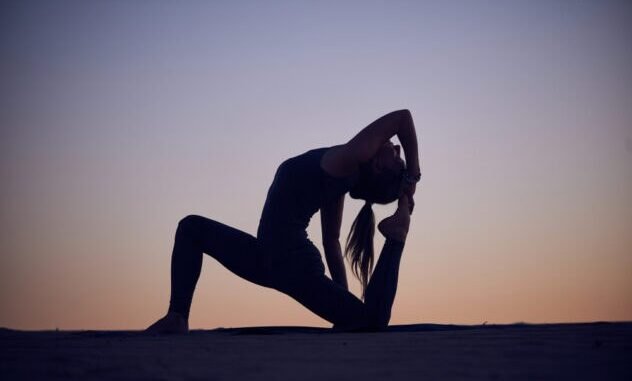
You climb into bed and your body files its nightly complaints: tight hamstrings from sitting all day, achy lower back, stiff neck from hunching over a laptop, shoulders living somewhere near your ears. What are the best stretches to do before bed? A short evening stretching routine — 10 minutes, no equipment, in your pajamas — is one of the simplest upgrades to both how your body feels and how fast you fall asleep. Gentle stretching activates your parasympathetic nervous system (the “rest and digest” mode), releases the muscular tension your body accumulated all day, and gives your racing mind something calm to focus on instead of tomorrow’s to-do list.
I’ve done some version of this routine for years. It’s not yoga class — it’s maintenance. Here’s the sequence, in order, designed to flow from one position to the next without getting up.
What Are the Best Stretches to Do Before Bed? The 10-Minute Sequence
Hold each stretch 30–60 seconds per side, breathing slowly and deeply. Never push into sharp pain — evening stretching should feel like a 4 or 5 out of 10 intensity, relaxing, not athletic.
1. Child’s Pose (60 seconds)
Kneel, sit your hips back toward your heels, and walk your hands forward, forehead resting on the floor or a pillow. Let your whole back round and your shoulders melt. This gently decompresses the spine after a day of sitting and signals your nervous system to downshift. Walk your hands slightly to each side for an added oblique stretch.
2. Cat-Cow (10 slow rounds)
On hands and knees, inhale as you drop your belly and lift your head (cow), exhale as you round your back and tuck your chin (cat). Move slowly — one full breath per position. This mobilizes every segment of the spine and feels incredible after 8 hours in a chair. If your lower back aches from sitting all day, this is your nightly reset button.
3. Thread the Needle (30 seconds per side)
From hands and knees, slide your right arm under your left, resting your right shoulder and temple on the floor. This opens the upper back and shoulders — the exact area that tightens from keyboard work. Repeat on the other side.
4. Low Lunge / Kneeling Hip Flexor Stretch (45 seconds per side)
Step your right foot forward into a lunge, left knee on the floor (put a pillow under it). Tuck your pelvis slightly under and lean gently forward until you feel a stretch in the front of your left hip. Tight hip flexors are the desk worker’s curse — they tilt the pelvis, compress the lower back, and contribute to that stiff feeling when you stand up. This stretch is the antidote.
5. Figure-4 Stretch (45 seconds per side)
Lie on your back, cross your right ankle over your left knee, and gently pull the left thigh toward you. This targets the piriformis and deep hip rotators — the muscles behind that deep buttock ache and much sciatica-like discomfort. Keep your head and shoulders relaxed on the floor.
6. Supine Hamstring Stretch (45 seconds per side)
Lie on your back, loop a towel or belt around one foot, and gently straighten the leg toward the ceiling. Keep a soft bend in the knee if your hamstrings are very tight — no bouncing. Tight hamstrings pull on the pelvis and contribute to lower back pain, so this one’s doing double duty.
7. Supine Spinal Twist (60 seconds per side)
Lie on your back, hug your right knee to your chest, then guide it across your body to the left, arms out in a T. Look toward your right hand. This wrings out the lower back and obliques like a towel. Breathe into the twist — you’ll feel it deepen with each exhale.
8. Legs Up the Wall (2–3 minutes)
Scoot your butt against a wall and rest your legs up it, arms at your sides. This gentle inversion drains the legs (wonderful if you’re on your feet all day), calms the nervous system, and is deeply relaxing. Close your eyes and breathe slowly. This is how you end the routine — many people feel drowsy before the two minutes are up.
9. Neck Releases (in bed)
Sitting or lying down, gently tilt your right ear toward your right shoulder (don’t lift the shoulder), hold 30 seconds, switch sides. Then chin to chest for 30 seconds. The neck holds enormous tension — from screens, from stress, from clenching your jaw all day. Finish with 5 slow shoulder rolls backward.
Why This Helps You Sleep
The mechanism is straightforward: gentle sustained stretching lowers cortisol, reduces muscle tension that keeps your body in low-grade “alert” mode, and the slow breathing that accompanies it activates the vagus nerve — shifting you from sympathetic (fight-or-flight) to parasympathetic dominance. It’s the physical equivalent of dimming the lights. Pair this routine with the other fundamentals in how to fall asleep faster without pills — consistent wake time, cool dark room, screens handled — and you’ve built a genuinely effective sleep system.
Tips to Make It Stick
- Anchor it: do it right after brushing your teeth, every night. Habit stacking beats motivation.
- Keep it short: 10 minutes is the sweet spot. A 30-minute routine you’ll skip beats a 10-minute one you’ll do.
- Make it pleasant: dim lamp, no phone, maybe quiet music. This is wind-down, not workout.
- Breathe through your nose slowly — 4 counts in, 6 counts out. The extended exhale is what calms the nervous system.
- Modify freely: bad knees? Do the hip stretches lying down instead of kneeling. Can’t get on the floor? Most of these adapt to a bed or chair.
If you wake up stiff despite evening stretching, your daytime setup may need attention too — improving desk posture reduces the tension you’re trying to stretch out each night.
The Sleep Foundation’s guide to stretching before bed covers the sleep science, and the Johns Hopkins overview of stretching benefits explains why flexibility work matters at every age.
Adapting the Routine for Stiff Beginners
If you’re starting from zero flexibility, don’t force the full routine on day one. Begin with just child’s pose, cat-cow, and legs up the wall — three stretches, five minutes. Add one new stretch per week as your body adapts. Use props freely: pillows under knees, a belt instead of touching your toes, a wall for balance. Flexibility improves faster than you’d expect with daily gentle practice — most people notice real change within 3–4 weeks. The goal was never touching your toes; it’s moving without the creaks.
The practical takeaway: 10 minutes, 9 stretches, in order, every night after brushing your teeth — child’s pose through legs-up-the-wall. Gentle intensity, slow nasal breathing, no phone. Your muscles release the day, your nervous system downshifts, and sleep comes easier. It’s the highest-ROI 10 minutes in your evening.
Leave a Reply